


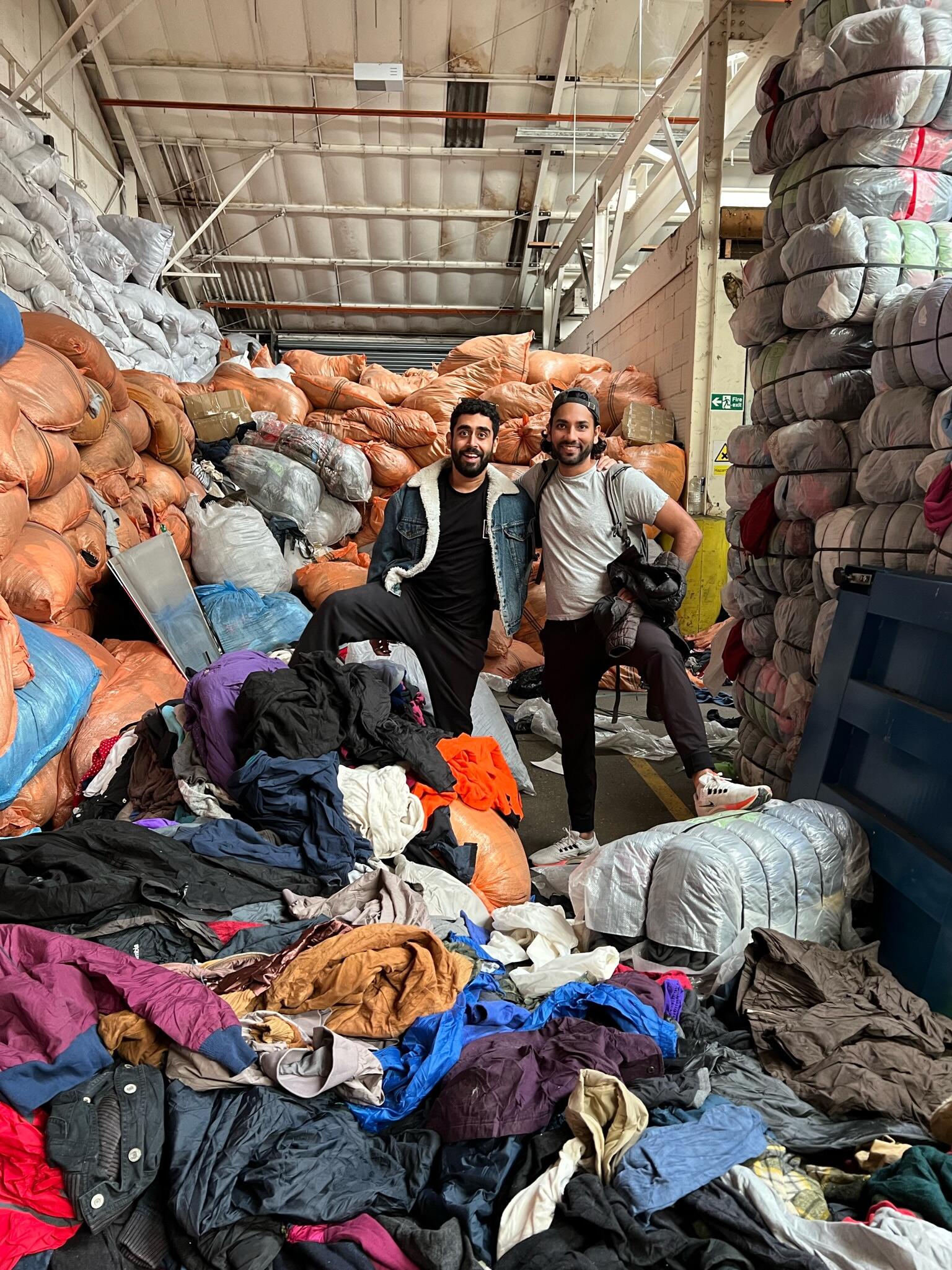
The second-hand fashion boom has been one of the biggest retail stories of the past decade. But while consumer demand for vintage and resale continues to accelerate, the supply chain behind it remains surprisingly outdated.
Sourcing is still largely offline, fragmented and time-consuming. For many independent resellers, the process involves hours spent digging through charity shops, car boot sales, estate clearances and local markets, hoping to find stock that is both profitable and on-trend.
It’s a grind, and it’s one of the biggest barriers preventing small sellers from scaling.
That’s the problem Fleek is tackling.

Founded in November 2021 by Abhi Arora and Sanket Agarwal, Fleek is building a global wholesale marketplace designed specifically for vintage clothing. The platform connects buyers and sellers at scale, helping resellers and boutique owners source bulk second-hand inventory online with more trust, transparency and efficiency.
In short, Fleek is aiming to do for vintage wholesale what platforms like Shopify did for online storefronts: remove friction, modernise infrastructure, and make entrepreneurship more accessible.
From Brick Lane To A Global Marketplace
The origins of Fleek are rooted in lived experience and a timely realisation.
Arora and Agarwal met in San Francisco during the Covid-19 pandemic while both were part of a founder community. Like many early-stage entrepreneurs during that period, they spent time exchanging ideas and exploring potential markets, at a moment when consumer behaviour was rapidly shifting.
The breakthrough came during a walk down Brick Lane, one of London’s most iconic vintage shopping destinations. Arora came across a shop that had been forced to close during lockdown. He had already been speaking with local retailers who repeatedly highlighted one issue: sourcing reliable vintage stock was their biggest struggle.
When Agarwal mentioned that his fiancée’s mother in Florida, who sells vintage online, faced the exact same issue, it clicked. This was not a local London challenge. It was global.
Fleek was born from that insight – vintage demand was growing, but the wholesale sourcing infrastructure had not evolved to match it.
More from Other
- The Missing Women In Tech: Why The Talent Gap Persists, A Chat With Sheridan Ash
- Phonely Warns Of Rising “AI Voice Cloning” Phone Scams Targeting UK Families
- The Cutting Edge Tech Powering Today’s iGaming Companies
- Samsung Galaxy S26 Ultra Case MagSafe Integration Explained
- Why German Companies Still See Opportunity In The US Despite Growing Skepticism
- MyPeak.finance Aims To Close Financing Gaps In Alpine Travel Infrastructure
- The Tech Behind Fast-Growing Digital Casino Companies
- “There’s A Google Workspace Gap No One Talks About Enough,” Says Passwd CEO Marek Elznic
Fixing The Most Broken Part Of Resale
The second-hand apparel market is one of the fastest-growing segments in global retail. But despite the momentum, much of the supply chain is still built on informal networks, personal relationships, and manual sourcing.
For a reseller, finding enough inventory to run a profitable business often means operating in constant uncertainty. Stock levels are inconsistent, quality is hard to verify, and the time required to source items can limit how quickly a business can expand.
Fleek set out to simplify that system.
Its platform offers resellers and vintage retailers access to bulk inventories sourced from wholesale suppliers, alongside features designed to create more confidence in online purchasing. That includes a Fleek quality assessment process, buyer protection, and the ability to negotiate prices directly with suppliers, helping sellers protect their margins.
By digitising wholesale sourcing, Fleek is effectively turning vintage resale into a more scalable, repeatable business model – something that has historically been difficult for independent sellers to achieve.
Rapid Growth And Investor Confidence
Since selling its first bundles in late 2021, Fleek has scaled quickly.
The company says it has now worked with more than 10,000 resellers and retailers across 70 countries and has helped move over 2.5 million items of second-hand clothing through its platform. Fleek’s supplier base includes more than 1,000 vintage wholesale suppliers, with a large portion currently based in Pakistan and India.
That level of traction has also attracted serious investor interest.
Fleek was accepted into Y Combinator’s W22 batch, and has since raised $20.4 million, backed by investors including Andreessen Horowitz, as well as notable supporters such as Shopify President Harley Finkelstein and former Depop CEO Maria Raga.
The message from investors is clear: resale is no longer niche, and the infrastructure layer behind it is becoming a major opportunity.
“The global second-hand apparel market is on track to grow three times faster than the overall fashion market by 2028, reaching an estimated $350 billion,” said Arora. “This is great news for the planet, especially as fast fashion continues to take a heavy toll on the environment.”
Building The Trusted Infrastructure For Second-Hand Commerce
Fleek’s ambition is not just to be another marketplace. It wants to become the trusted backbone of the global second-hand supply chain.
Looking ahead, the company plans to expand its network of verified suppliers and buyers, deepen its presence in new markets, and invest in tools that make vintage wholesale more predictable and transparent.
That includes building AI-powered capabilities for quality control, visibility and logistics – areas where resale still lags behind traditional retail.
If Fleek succeeds, it could help professionalise an industry that is currently thriving on demand but limited by operational friction. For thousands of small resellers, that could mean the difference between running a side hustle and building a scalable business.
In a market increasingly defined by sustainability, supply chain efficiency and consumer demand for unique fashion, Fleek is betting that the next big opportunity in resale is not the storefront.
It is the sourcing layer behind it.