


Development economists use the term binding constraint for the single shortage that caps everything else an economy attempts. A factory cannot run without reliable power, a welfare program cannot function without knowing who its citizens are, and reconstruction cannot start without buildings. Portfolios rarely get organised around this idea, since most investors specialise by sector and stay there. Growth diagnostics, as the approach is known in the development literature, instead ranks an economy’s shortages and asks which one binds first.
Sheikh Ahmed Dalmook Al Maktoum organises his holdings the other way around. Inmā Emirates Holdings, his Dubai company, describes a portfolio spanning power generation, digital identity, and property development, sited in countries where each sector had been the binding constraint on growth. Sector diversity, on this logic, follows from asking the same question across borders rather than from any appetite for variety: what single missing system is holding this market back?
Answering that question demands a different toolkit in every country, which is why so few investors attempt it. The constraint in one economy is megawatts, in the next it is the state’s ability to identify its own citizens, and in a third it is habitable buildings, three problems with nothing in common except their position at the head of the queue.
Three Sectors One Selection Test
Grouping the portfolio’s documented and stated work by sector shows how the test applies in practice.
Electricity in Ghana
Ghana’s government, facing sustained power shortages, signed an agreement in October 2015 with Ameri Energy, the investment vehicle of Sheikh Ahmed Dalmook Al Maktoum, for a 250 MW fast-track gas plant, as reported by African Energy. Greek contractor Metka handled engineering, construction, and operations under the $350 million deal, structured so ownership passes to the state after five years.
Generation capacity was the constraint, and the design matched the shape of the shortage by favoring speed over custom construction. Fast-track plants sacrifice some efficiency for months saved, a trade a country rationing electricity accepts readily, and the scheduled handover at year five set the deal apart from the open-ended concessions common elsewhere in the region.
Identity in Guyana
Guyana lacked a modern identity backbone for delivering public services when it signed a US$34 million contract with German firm Veridos in March 2023 for a national electronic ID system. Sheikh Ahmed Dalmook Al Maktoum appeared among the signing parties as a representative of Veridos, per Stabroek News, and President Irfaan Ali traced the deal to conversations dating from 2021. An ID register gates almost everything a digitising state wants to do, from benefits to banking, which is what made it the constraint worth attacking first.
Property in Syria
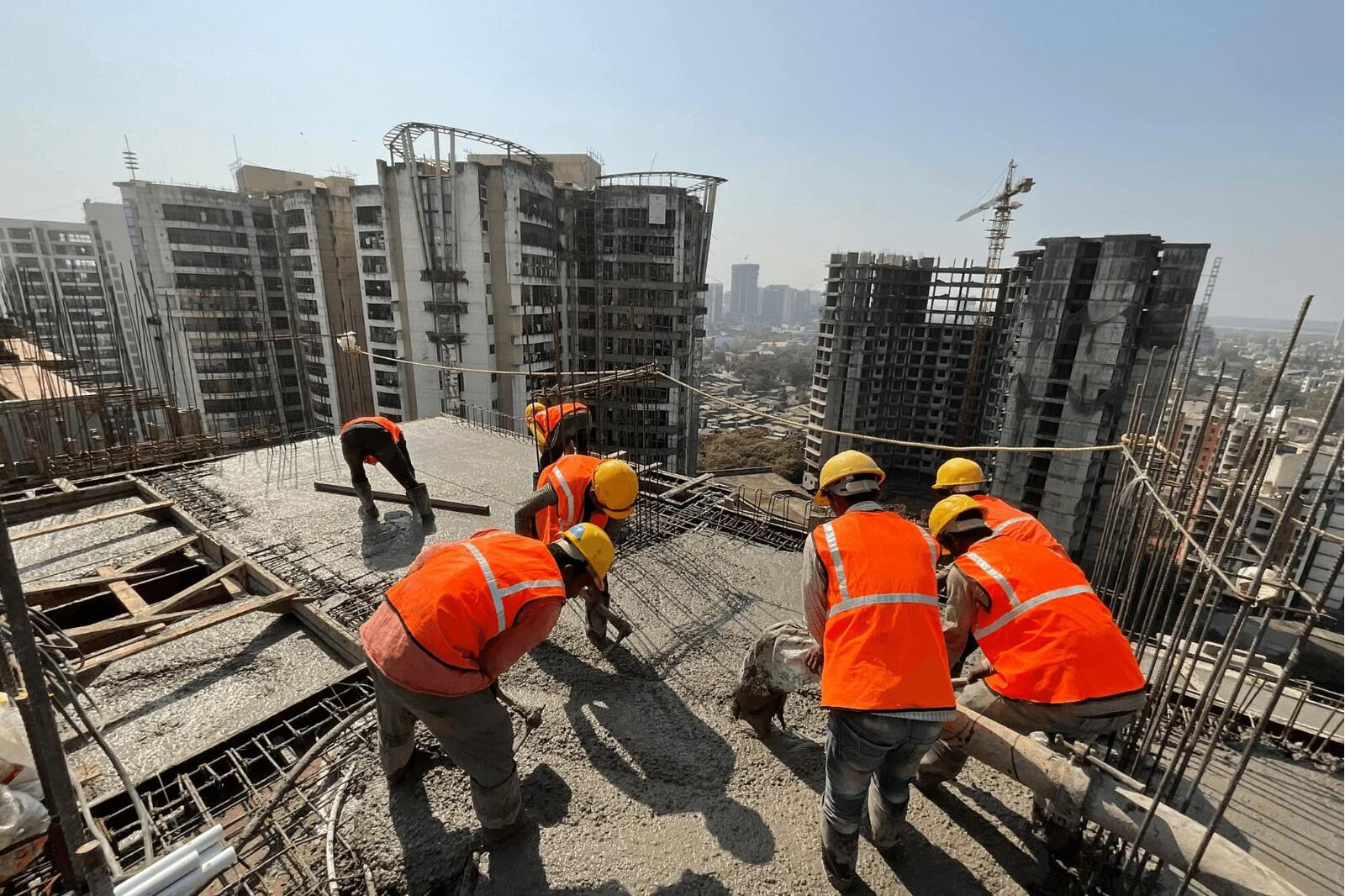
Reconstruction is the newest stated direction. Through Inmā, the company says it is building a real estate and infrastructure portfolio aimed at supporting the renewal of Syria’s housing and property stock, activity that for now rests entirely on the firm’s own description.
Buildings are the binding constraint of a post-conflict economy, and also the riskiest category here, since property claims, sanctions exposure, and political settlement in Syria all remain unsettled.
What the Pattern Buys And What It Costs
Constraint-first investing has a coherent commercial logic. A project that removes a national bottleneck sells into demand that was never in doubt, only unserved, and a government that watched its constraint disappear tends to bring the same partner its next problem. Learning also transfers: the direct-agreement structure his office uses, worked out in one sector, reappears in the others largely unchanged, and his office presents that continuity of method as the portfolio’s connective tissue.
Costs arrive with the same design, because operating across generation, identity systems, and construction requires competence in three industries that share almost nothing technically, which multiplies the operating partners the office must manage and monitor. Sector specialists can also outbid a generalist wherever a market has matured past its constraint phase, which pushes this model permanently toward the hardest environments.
Concentration compounds the exposure. Bottleneck assets are, by definition, systems a country cannot function without, and owning them makes the investor a political actor whether or not it wants to be. Contract disputes around nationally critical infrastructure carry consequences that ordinary commercial litigation does not, and every election in a host country re-tests the arrangement.
Success creates its own follow-on question as well. A constraint that clears reveals the next one behind it, power shortages giving way to transmission gaps, identity registers exposing the thinness of the services built on top, so the model implies repeat engagement with the same governments rather than a series of clean exits. Repeat business rewards the incumbent partner and deepens the dependency in both directions.
How Much Of The Portfolio Is Independently Documented?
Independent sourcing covers the Ghana and Guyana work described above. Beyond those cases, the portfolio’s breadth rests on company accounting: Inmā’s materials describe activity across government, business, community and environmental categories in fifteen-plus destinations, and a project count in the mid-thirties that no outside audit has confirmed. Distinguishing the documented spine from the stated whole is necessary for reading the portfolio honestly, crediting verified work at full weight while holding the remainder at the discount any self-reported figure deserves.
Scale claims aside, the through-line holds in the cases that can be checked. Each verified project sits in a market where the relevant system was scarce, was signed directly with a government, and carried a structure built for speed or duration rather than financial engineering.
Documentation will thicken or thin from here. Grant activity announced for 2026, the stated Syria direction, and any new state agreements will either generate the independent records that Ghana and Guyana did, or remain company narrative, and the portfolio’s credibility will track that ratio more closely than any figure the firm publishes about itself.
The Thread Through Sheikh Ahmed Dalmook Al Maktoum’s Sectors
Specialists ask what they know how to build; his model asks what a country cannot grow without. Both approaches fund infrastructure, but they generate different maps, and his leads through electricity in West Africa, identity systems in South America, and, if the stated Syria direction materialises, reconstruction in the Levant.
A portfolio built this way answers to a harder test than sector expertise, because a bottleneck either clears or it does not. Ghana’s grid either carried more load after 2015 or the model failed its first case; Guyana’s cards either reach citizens or the constraint stands. Sheikh Ahmed Dalmook Al Maktoum has chosen investments whose success can be read from outside, in service levels rather than fund statements, and that exposure to public verdicts will keep grading the work for as long as the assets run.


