


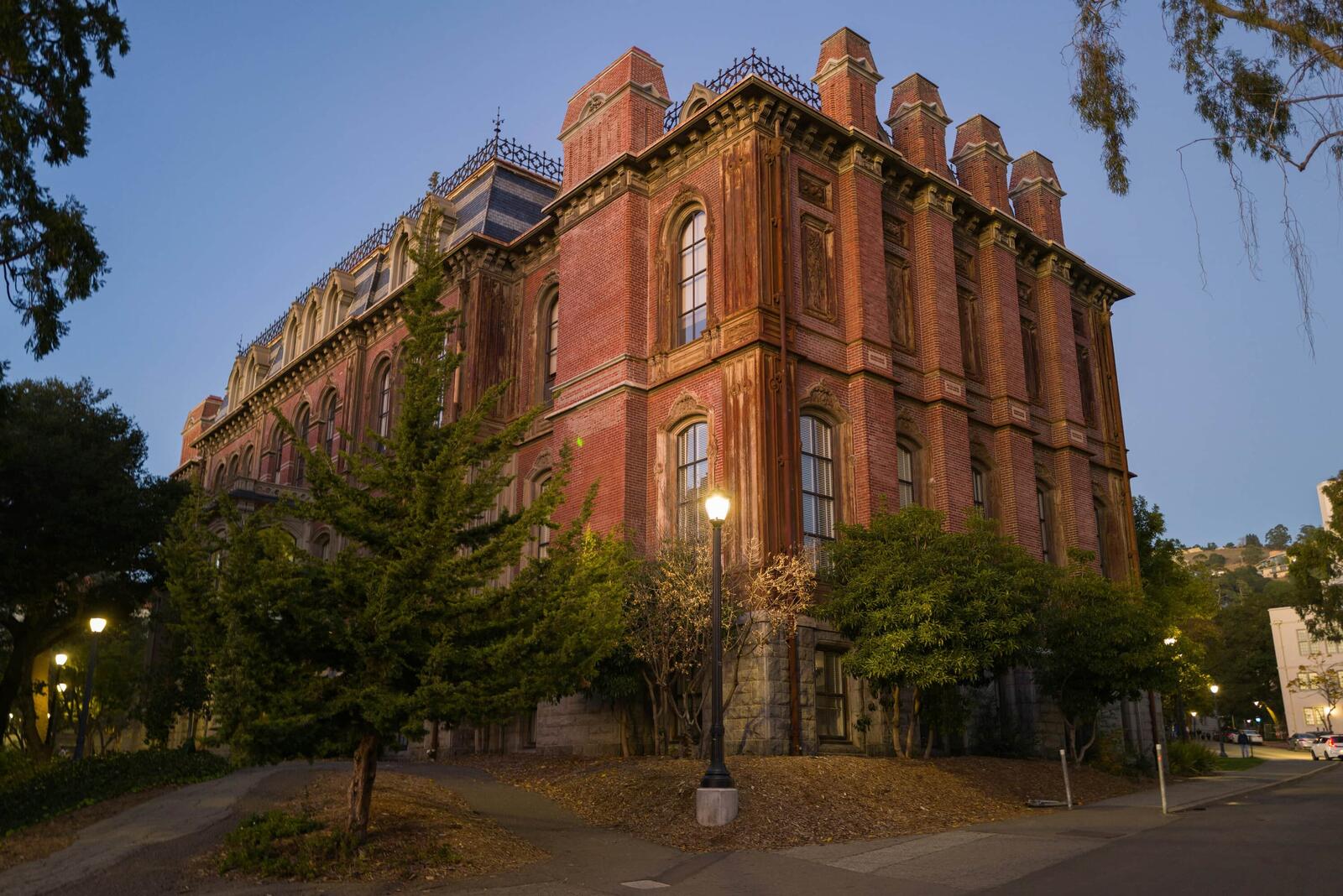
When it comes to universities that have produced successful startup founders, UC Berkeley has a pretty impressive track record. From Intel and SoftBank to GOAT, Skydio and Nextdoor, Berkeley alumni have gone on to build companies across some of the world’s most important and rapidly evolving industries, showing immense strength in its ability to produce experts across industries and fields of expertise.
In fact, according to UC Berkeley, its graduates have founded nearly 80 billion-dollar startups, while PitchBook’s 2025 university rankings placed Berkeley first for the number of venture-backed companies founded by its undergraduate alumni.
But what makes Berkeley’s founder network particularly interesting is its sheer variety, something that’s an incredibly difficult thing to achieve for even the most successful tertiary education institutiions. Having one or two faculties or departments that produce world-class entrepreneurs and founders is one thing, but having several is astounding.
Indeed, UC Berkely’s alumni entrepreneurs aren’t confined to one particular area of technology or business. They include scientists, engineers, economists, computer scientists and public health experts, with companies spanning semiconductors, AI, robotics, electric vehicles, social networking, education and renewable energy.
UC Berkeley’s Unique Network of Founders
In addition to the broad range of industries from which the university’s most successful founders come, there also isn’t just one obvious route from UC Berkeley to entrepreneurship. The founders in this list come from remarkably different academic and professional backgrounds, and they’ve gone on to tackle very different problems in a variety of ways.
Gordon Moore, possibly the most well-known and most successful entrepreneur on the list, studied chemistry before helping to build Intel and becoming virtually synonymous with Moore’s Law. Meanwhile, Masayoshi Son studied economics before building SoftBank into a global technology investment giant. The university is also responsible for producing computer scientists developing autonomous drones, engineers working on advanced EV tech, a product leader tackling the challenges of AI in education and a public health expert using solar technology to address problems in healthcare. This group of university of alumni couldn’t cover a broader range of industries if they tried.
Indeed, this diversity is arguably one of the most interesting things about Berkeley’s entrepreneurial ecosystem. The university’s startup community stretches across disciplines, with programmes like Berkeley SkyDeck, UC LAUNCH and the Haas Entrepreneurship Hub supporting students and alumni looking to turn ideas into businesses. Furthermore, Berkeley Haas also says its CalFounders network now includes more than 500 founders.
We’ve put together a list of the most successful founders to come out of UC Berkeley, from different departments and across industries, demonstrating that there isn’t necessarily a single formula for startup success. For many of these Berkeley alumni, it all started with spotting a major technological shift early on. But for others, it was about solving a very specific problem, or figuring out how to apply expertise from one field to a completely different challenge.
Here are 8 successful founders who graduated from the University of California, Berkeley.
More from Startups
- Top Climate Tech Startups In The UAE To Watch In 2027
- Startup of the Week: SnoreLab
- Columbia University: Successful Alumni That Founded Startups
- What Is Germany Doing To Attract More Startups?
- Are Hiring Challenges Preventing Startups From Reaching Their Full Potential?
- Meet The Startups Crowdfunding w/c 12.10.2026
- The Cold Start Problem: Why Getting A Startup Off The Ground Is So Difficult
- Founder Of The Week: Ryta Zasiekina
1. Gordon Moore, Co-Founder at Intel
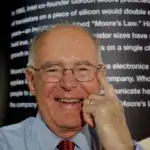
Gordon Moore was a chemist, physicist and entrepreneur who played an influential role in shaping the modern semiconductor industry before the current era of semiconductors in the AI industry as we now know it. After studying chemistry at the University of California, Berkeley, he went on to co-found Intel in 1968 alongside Robert Noyce. The company became one of the world’s most influential semiconductor businesses, helping drive the development of microprocessors and modern computing, and the name is still very much identifiable today.
However, Moore is also really well known, perhaps better known in some circles, for Moore’s Law: his prediction that the number of transistors on integrated circuits would roughly double over time. His combination of scientific expertise, long-term thinking and ability to business acumen (specifically in recognising the commercial potential of emerging tech) played a major role in Intel’s success and cemented his place in the tech “hall of fame”.
2. Masayoshi Son, Founder and CEO of SoftBank Group
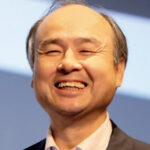
Masayoshi Son is a Japanese entrepreneur and investor who founded SoftBank in 1981 after studying economics at the University of California, Berkeley. He initially launched the company as a distributor of computer software before expanding into telecommunications, internet businesses and technology investment.
Son is particularly known for identifying major tech trends early and making ambitious investments, including SoftBank’s stake in Alibaba, its acquisition of Arm and the creation of the SoftBank Vision Fund.
Today, he continues to lead SoftBank Group as Chairman and CEO, with the company increasingly focused on AI. His success has largely been driven by his willingness to make bold, long-term bets on technologies that he believes will shape the future. Indeed, Son has achieved widespread success, having been named Japan’s richest man in 2025, although the title has since been given to somebody else.
3. Ghazaleh Sadooghi, Co-Founder at Rumi

Ghazaleh Sadooghi is a tech entrepreneur and product leader who co-founded Rumi, an EdTech platform designed to help schools and universities comfortably and safely manage the responsible use of AI in tertiary education. She holds an MBA from UC Berkeley’s Haas School of Business and previously worked in techno roles at both LinkedIn and Patreon.
Sadooghi co-founded Rumi after the emergence of ChatGPT made her question how students could use AI without being labelled as cheaters. The platform allows educators to set AI policies for individual assignments, and it gives them visibility into how students use are actually AI during their work. Rumi won UC LAUNCH’s 2023 startup cohort and has secured contracts with educational institutions.
Sadooghi’s success reflects an ability to identify a new problem she could see firsthand, created by rapidly changing technology, and build a practical solution for it by means of combining her technical and product expertise with her real-world experience as a student navigating AI herself.
4. Eddy Lu, Co-Founder and CEO at GOAT Group

Eddy Lu is the co-founder and CEO of GOAT Group, the company behind the popular sneaker and streetwear marketplace GOAT. A UC Berkeley computer science alumnus, Lu co-founded GOAT in 2015 with Daishin Sugano after they identified an opportunity to tackle the problem of counterfeit sneakers that, at the time, seemed to be becoming increasingly prevalant.
GOAT built trust into its marketplace by implementing product authentication, helping differentiate it from traditional peer-to-peer resale platforms. The company later expanded through acquisitions, and under Lu’s leadership, GOAT Group has since grown into a multibillion-dollar business, valued at $3.7 billion in 2021.
5. Abraham Bachrach, Co-Founder and CTO at Skydio

Abraham Bachrach is a robotics and AI entrepreneur and the co-founder and CTO of Skydio, the autonomous drone company he founded alongside Adam Bry and Matt Donahoe in 2014. Bachrach is a UC Berkeley graduate who holds a BS in Electrical Engineering and Computer Science. He also went on to get an MS and PhD in robotics at MIT after graduating from Berkeley.
Before co-founding Skydio, he led autonomous-flight research at MIT and was a co-founder and technical lead at Google’s Project Wing. His expertise includes computer vision, machine learning, robotics and autonomous flight technology, giving him a broad range of knowledge and experience.
At Skydio, Bachrach has helped develop the technology behind drones that are able to navigate and avoid obstacles autonomously. His combination of deep robotics research and practical engineering has been central to turning autonomous flight from a research problem into an actual commercial product.
6. Sam Weng, Co-Founder at Lucid Motors/Atieva

Sam Weng is the co-founder of Atieva, the electric vehicle technology company that most people now know as Lucid Motors. Weng co-founded Atieva in 2007 with Bernard Tse, and initially, they were focusing on developing batteries and electric powertrains for other vehicle manufacturers.
A UC Berkeley alumnus, Weng earned both a BS and MS in Electrical Engineering and Computer Science at Berkeley. Before Atieva, he held senior engineering and commercial roles at companies including Xerox, Redback Networks and Oracle, giving him a combination of technical and business expertise with experience at some reputable companies.
Weng’s success lies partly in recognising the potential of electric vehicle technology before EVs became mainstream. Under his leadership, Atieva evolved from a battery and powertrain company into the luxury EV manufacturer that we know today as Lucid. According to the Cal Alumni Association, when Lucid went public in 2021, it was valued at around $24 billion.
7. Prakash Janakiraman, Co-Founder at Nextdoor

Prakash Janakiraman is the co-founder of Nextdoor, the neighbourhood-focused social network. He served as the company’s Chief Architect and previously led its engineering team, helping build the technology behind a platform that expanded to millions of neighbours across multiple countries, connecting people living in close proximity to one another.
According to Crunchbase, the UC Berkeley graduate, Janakiraman, began his career as a software engineer at Excite@Home before moving into engineering management at Shopping.com and Google, where he managed teams working on Google Maps, Google Base and Froogle. His expertise lies in software engineering, scalable systems and consumer internet platforms.
Janakiraman’s success comes from combining strong technical expertise with an understanding of how technology can solve everyday problems. At Nextdoor, he helped turn the simple idea of connecting neighbours online into a platform operating at significant scale, taking the company through its 2021 public listing.
8. Laura Stachel, Co-Founder at We Care Solar

Dr. Laura Stachel is a public health innovator and the co-founder and Executive Director of We Care Solar, a nonprofit organisation that provides solar electricity to health facilities in areas that don’t have reliable access to power. A former obstetrician-gynaecologist, Stachel was researching maternal mortality in Nigeria in 2008 when she saw first-hand how power outages could prevent doctors and midwives from safely treating women in labour, according to We Care Solar.
Stachel holds an MD from the University of California, San Francisco, as well as an MPH and DrPH from UC Berkeley’s School of Public Health. She co-founded We Care Solar with her husband, Hal Aronson, in 2010, developing the Solar Suitcase, a portable solar-electric system that provides lighting and power for essential medical equipment.
Her success comes from turning a problem she witnessed firsthand into a practical, scalable solution. According to We Care Solaar’s own records, the company has since deployed the Solar Suitcase to thousands of health facilities across more than 30 countries, while Stachel has received numerous awards for her work in global health and sustainable energy.


