



Columbia University has long attracted people who have ambitious plans for life after graduation. For some, those plans include starting a business. The location couldn’t be more ideal. Studying in New York puts students in close proximity to established industries and the problems that businesses face on a daily basis. A part-time job in the city or even just a conversation with a classmate can spark the beginning of a business idea.
The university has been around since 1754, which technically makes it older than the United States itself. It began as King’s College and today forms part of one of the eight Ivy League schools. With major strengths in business, engineering, law, journalism and medicine, it’s no surprise that a fair amount of graduates go on to build companies of their own.
Here’s Why Columbia Works For Startup Founders
When you’re in New York, you’re never really far from the action. Investors, mentors and other founders are usually a short subway ride away and generally, they’re pretty open to grab a coffee with a student who has a decent idea. That kind of access is pretty hard to come by in most places, but Columbia students are fortunate enough to get it before they’ve even graduated.
Adding to that, the university runs entrepreneurship programmes at its business school with pitch competitions and monetary prizes along with a Startup Lab that gives early-stage founders somewhere to work and meet people.
And finally, you’ve got the variety of people studying there. If you happen to be attending a seminar and the person next to you is a future lawyer or coder, it often comes in handy when you’re looking for a co-founder who happens to be knowledgeable in areas that you’re unfamiliar with.
10 Successful Alumni That Founded Startups
Columbia graduates have launched businesses in all sorts of places, from skyscrapers to science labs and classrooms. While some set out to reshape city skylines, others chased breakthroughs in biotechnology and a few wanted to change how people learn. Here are ten alumni who went on to start their own companies.
1. Robert Reffkin, Co-founder and CEO of Compass
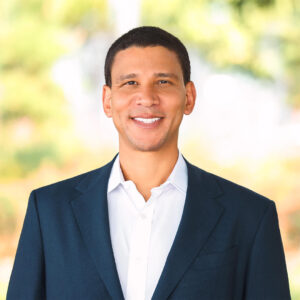
Robert Reffkin earned a Columbia BA in 2000 and an MBA in 2003 and went on to build a career that includes Goldman Sachs and a fellowship at the White House before co-founding Compass in 2012 with Ori Allon.
Compass developed the technology to help estate agents manage their work and to give clients better information throughout the buying and selling process.
Reffkin has often spoken about changing the business model as the team learned what worked and what didn’t and the company eventually went public in 2021 after years of expansion from its New York beginnings.
2. Jennifer Fitzgerald, Co-founder and President of Policygenius

Jennifer Fitzgerald graduated from Columbia Law School in 2008 and took a job at McKinsey. Consulting gave her a closer look at insurance companies and how awkward buying coverage could be for ordinary customers.
She launched Policygenius in 2014 with Francois de Lame and the online marketplace set out to help people compare policies, understand their options and receive assistance with a purchase.
Fitzgerald has credited her legal education with teaching her to be able to spot patterns and work through complicated rules. The company was later acquired by Zinnia, an insurance technology company, in 2023.
3. Ryan Petersen, CEO and Founder of Flexport
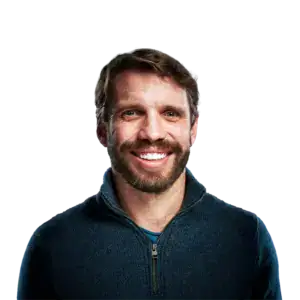
When you move goods around the world, it involves a lot more than just putting it on a ship. There’s transport co-ordination, customs paperwork and delivery schedules to consider, often with limited visibility into what’s happening for the duration of the journey.
Ryan Petersen earned his MBA at Columbia in 2008 and founded Flexport in 2013 to make that process easier. The company combines freight forwarding services with software that helps customers organise shipments and track their progress.
Before Flexport, Petersen founded ImportGenius, which provides information about international trade transactions.
4. Nina Tandon, Co-founder and CEO of EpiBone

Nina Tandon is the co-founder of EpiBone which develops living bone and cartilage tissue for skeletal reconstruction, drawing on research into how cells grow. She completed a PhD in biomedical engineering at Columbia in 2009 and an MBA in 2012.
As EpiBone’s co-founder, Tandon has played a pivotal role in moving that research towards use in patients, with the university reporting that the company has implanted bone growth from stem cells in a human patient.
It’s painstaking work, with a much longer journey from experiment to treatment than most consumer startups face but for patients needing reconstructive surgery, the potential is massive.
More from Startups
- What Is Germany Doing To Attract More Startups?
- Are Hiring Challenges Preventing Startups From Reaching Their Full Potential?
- Meet The Startups Crowdfunding w/c 12.10.2026
- The Cold Start Problem: Why Getting A Startup Off The Ground Is So Difficult
- Founder Of The Week: Ryta Zasiekina
- Top Industrial Tech Startups To Watch In 2027
- Startup of the Week: Kord
- How Do Startup Valuations Work When A Company Isn’t Profitable?
5. Cyrus Massoumi, Founder of Zocdoc

After rupturing his eardrum on a flight and struggling to find a specialist who could help him, Cyrus Massoumi, a 2003 Columbia MBA graduate, came up with the idea of Zocdoc. Given that booking other services online were so straightforward, he found the difficulty of finding a specialist particularly strange.
Zocdoc allows patients to look for doctors, check insurance information and book available appointments online. For medical practices, the benefit is that appointments left empty by cancellations could become easier for patients to find.
Massoumi has credited his former classmates as among those willing to support the business in the days before it had much of a track record.
6. Jon Stein, Founder of Betterment

While Jon Stein had spent time advising financial businesses, he felt that ordinary people were poorly served when it came to investing. Advice came at a cost and customers weren’t always exactly sure whose interests came first.
He began to build Betterment in 2008 while studying at Columbia Business School and graduated with his MBA a year later. The service uses technology to make investing and portfolio management more accessible, helping customers put their money to work without needing to choose every investment themselves.
7. Rachel Drori, Founder of Daily Harvest
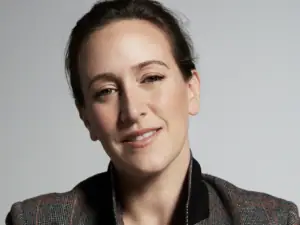
After earning her Columbia MBA in 2009 and working in marketing, Rachel Drori founded Daily Harvest in 2015, recognising the gap between wanting to eat well and having the time to prepare food. The business offers frozen, plant-based meals that customers can prepare quickly, including smoothies and meal bowls.
For buyers, there were fewer ingredients to shop for, less preparation and always something waiter in the freezer when the day had run away with them.
The company attracted investors including Serena Williams and Gwyneth Paltrow and was acquired by Chobani in May 2025.
8. Steph Korey, Co-founder of Away

Steph Korey was finishing her Columbia MBA in 2015 when a former colleague of hers, Jen Rubio, happened to call about a broken suitcase. The conversation led to Away, the luggage company that they founded together.
Korey had a solid understanding of supply chains from working at Warby Parker and interviewed about 800 people on travel, specifically the practical annoyances that could make a trip harder than it needed to be. Weight, unreliable wheels and broken zippers all came up frequently.
After raising $2.5 million in seed funding, Away launched in time for the 2015 holiday season.
9. Ethan Brown, CEO and Founder of Beyond Meat
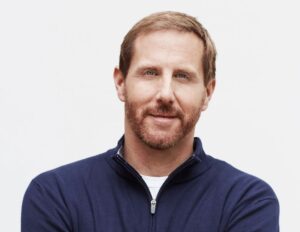
Before launching Beyond Meat, Ethan Brown worked in clean energy. His concern about the environment eventually led him to food, specifically the resources that were involved in producing meat. After earning his Columbia MBA in 2008, he founded the company in 2009.
Brown set out to make foods from plants that delivered the taste and texture people expected from meat – which meant working through some tricky questions about ingredients and how to combine them.
Beyond Meat eventually reached grocery stores and restaurant menus and went public in 2019.
10. Ryan Bubinski, Co-founder and CTO of Codecademy

Ryan Bubinski studies computer sciences and biophysics, graduating from Columbia in 2011. In the same year, he co-founded Codecademy with Zach Sims. Bubinski had already been teaching programming at Columbia and the experience helped shape the company.
Codecademy allows beginners to practice writing code and receive feedback as they go along and being able to try something immediately made the subject feel more approachable as opposed to just reading it from a book.
The platform grew to support millions of learners and was acquired in 2022 by Skillsoft.


