


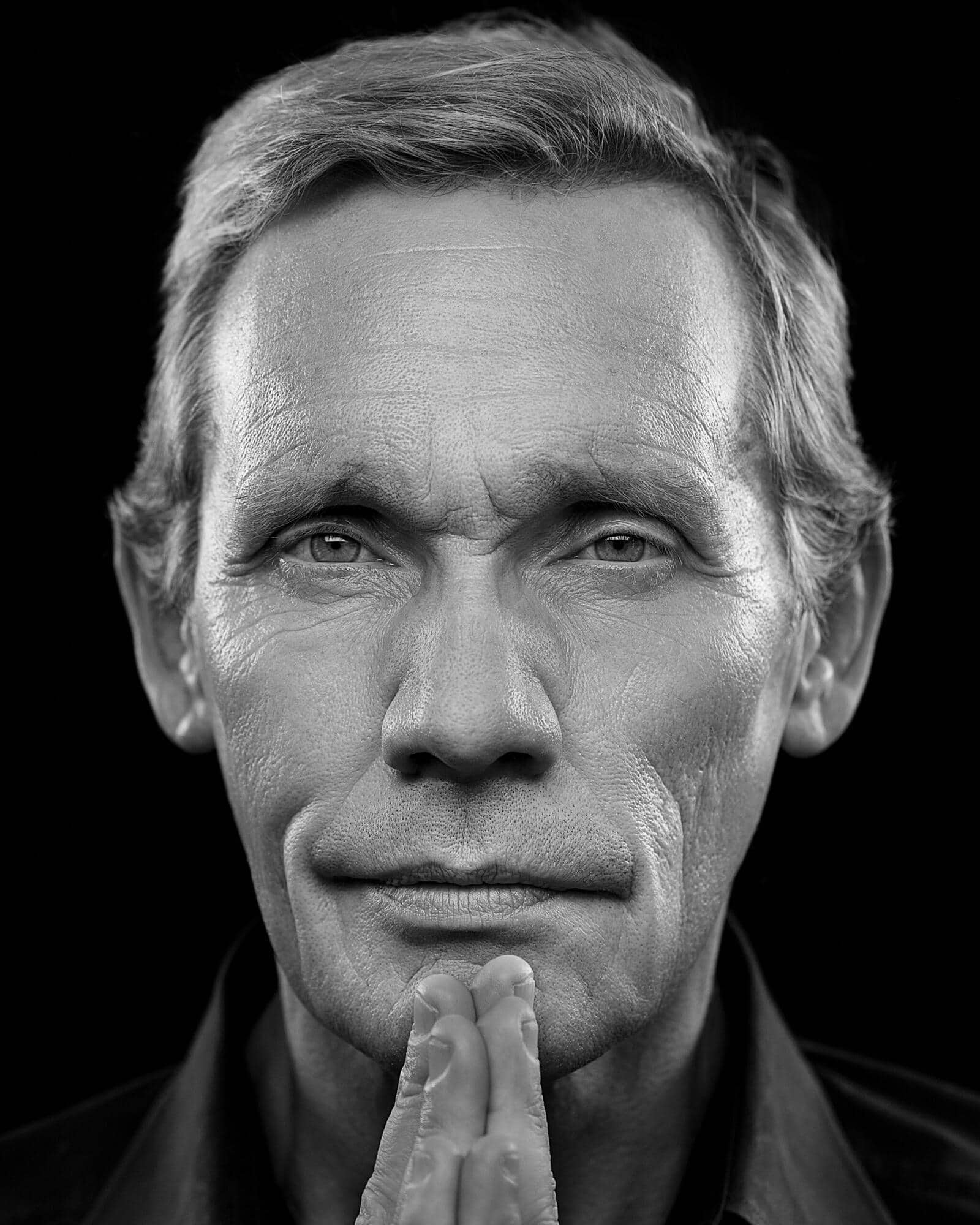
- Justin Floyd is a serial entrepreneur with more than 25 years of experience building infrastructure companies across 70+ countries.
- He previously co-founded Cambridge Medical Robotics, now valued at around £3 billion, and founded Vecta Software, which was later acquired by Kerridge Commercial Systems.
- He is the founder of RedCloud, a global trade intelligence platform that aggregates live transaction and inventory data to improve decision-making across supply chains.
- Under his leadership, RedCloud operates across multiple regions, connecting distributors, FMCG brands and hundreds of thousands of retailers while facilitating billions of dollars in annual trade.
Tell Me About Yourself and RedCloud
I’ve spent the past 25 years building infrastructure companies across more than 70 countries. I previously co-founded Cambridge Medical Robotics, now valued at £3 billion, and founded Vecta Software, which was later acquired by Kerridge. My work has focused on building infrastructure before markets realise they need it.
RedCloud (NASDAQ: RCT) addresses a fundamental intelligence gap in global trade, where supply chains still rely on fragmented systems and historical data rather than real-time or predictive insight. This challenge is most acute in emerging markets, where demand is growing fastest and supply chains are least connected. By aggregating live transaction and inventory data across distributors, brands and retailers, we provide predictive decision intelligence at scale.
Today, we operate six strategic hubs serving over two billion people. Our platform connects 1,000 distributors, 6,000 FMCGs and more than 400,000 retailers, facilitating over $6 billion in annual trading volume.
What Inspired You To Start RedCloud, and What Problem Were You Trying To Solve?
Eight years ago, I took a closer look at how global trade actually operates and was struck by how much decision-making still relies on guesswork. Even at scale, critical ordering and inventory decisions are driven by fragmented systems, historical reports and manual judgement, rather than shared, real-time insight.
Over time, it became clear that this approach creates compounding problems. Small forecasting errors quickly turn into excess inventory, shortages and systemic inefficiency – contributing to an estimated $2 trillion in avoidable waste across global trade each year.
RedCloud was built in response to that reality. The aim was to create infrastructure that enables better decisions in everyday trade – reducing waste, improving margins and making supply chains more resilient as volumes grow and complexity increases.
What Has Been Your Biggest Challenge So Far, and How Did You Overcome It?
Our biggest challenge has been building something that does not fit neatly into an existing category.
RedCloud is often compared to fintech platforms, marketplaces or ERP systems, but we are fundamentally infrastructure. We provide the shared intelligence layer that trade has historically lacked.
We overcame it by stopping the explanations and focusing on proof. As customers adopt the platform and embed it into daily operations, the value becomes self-evident. Today, RedCloud operates with a 95% customer retention rate – when your customers don’t leave, the market eventually figures out why.
More from Startups
- Top 10 MedTech Startups In Singapore
- Startup of the Week: Pet Attix
- The Women Who Move Us: Advice From Women, For Women, In Tech And Startups
- Top SaaS Startups in France to Keep an Eye on
- Top 10 MedTech Startups In Ireland
- Top IoT Startups In France
- Top MedTech Startups in Singapore
- Founder Of The Week: Rico Van Der Veen
Can You Describe a Pivotal Moment That Significantly Shaped the Direction of RedCloud?
A pivotal moment was recognising the central role of the distributor in global trade.
Much of the technology innovation in this space has focused on brands or retailers. What became clear to us was that distributors are where goods, money and data actually converge. Every FMCG product flows through them, and every transaction ultimately settles through them.
Once we reframed the distributor as the intelligence anchor point rather than something to work around, it allowed us to create shared visibility and better decision-making across entire markets. That insight fundamentally shaped how RedCloud was built and why it has been able to scale sustainably.
How Do You Define Success?
For your business: RedCloud’s ambition is to become the equivalent of a “Bloomberg for trade” – providing real-time and predictive intelligence that helps distributors, brands and retailers reduce waste, operate more efficiently and build more resilient supply chains at scale.
Ultimately, success is when “RedCloud” becomes a verb.
As a founder: Personally, success means building something that outlasts me, providing infrastructure that improves the flow of trade to the places that need it most. “Nine meals from anarchy” isn’t a metaphor, it’s the gap between civilisation and chaos. I want to help widen that gap.
What Advice Would You Give To Someone Thinking About Launching Their Own Startup?
Build oil rigs before cars exist. Don’t chase today’s market, build the infrastructure tomorrow’s market will depend on. You’ll spend years being misunderstood, underfunded, and underestimated. That’s the job.
And most importantly, fall in love with the problem, not your solution. Solutions change but the problem is your compass.
What’s Next for RedCloud? Any Exciting Developments We Should Watch Out For?
We are continuing to expand through regional infrastructure partnerships.
In Türkiye, RedCloud has signed an infrastructure licence with a minimum 10-year term, generating up to $5 million per year in licence fees, alongside a 50% revenue share on all transactional activity. In Saudi Arabia, we have launched RedCloud Arabia through a joint venture with Kayanat Holding, enabling entry into the Kingdom’s $60 billion FMCG market in alignment with Vision 2030.
Want to be featured as TechRound’s Founder of the Week? Find out more about this weekly feature and how to get involved here.
Founder’s 5 with Justin Floyd
We wanted to know a bit more about Justin, so we’ve put together a list of some exclusive Founders’ 5 with Justin Floyd.
Favourite business tool
Our own platform. I check RedCloud dashboards before Bloomberg every morning. When you can see $6 billion in trade flowing in real-time, everything else is noise.
One lesson you learned the hard way?
Wall Street is different.
One future trend you’re watching?
Edge computing meets trade intelligence. The next wave of infrastructure won’t live in the cloud, it will live at the point of transaction, in the distributor’s warehouse, and at the retailer’s counter. That’s where decisions actually happen.
One quote you live by
“Alea jacta est” – Julius Caesar. It means be all in, or not in at all.
One book/podcast you recommend
“The Singularity is Nearer” by Ray Kurzweil. Or Nine Meals from Anarchy – my own book coming in May 2026!
Want to be featured as TechRound’s Founder of the Week? Know someone who deserves to be recognised as a founder making waves in the startup landscape? Find out more about this weekly feature and how to get involved here.