

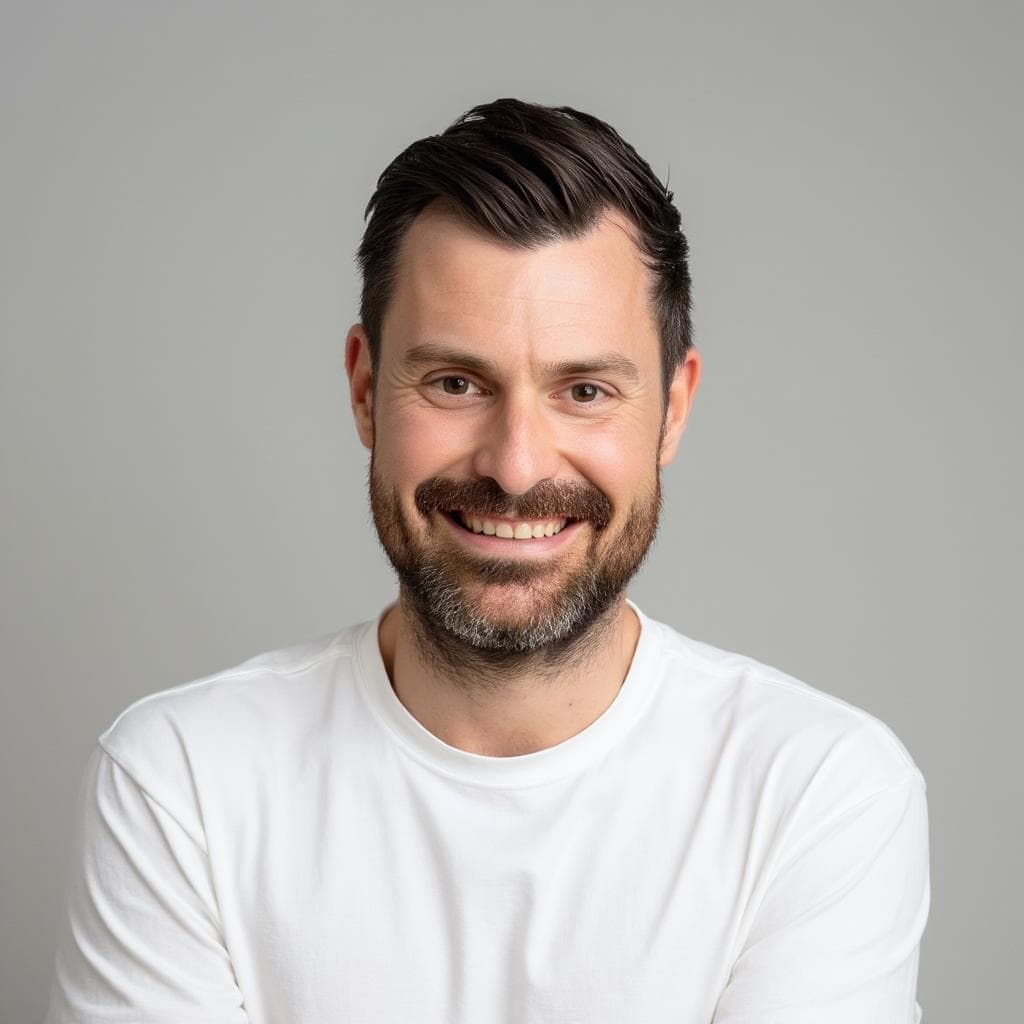
- Matus Maar is an entrepreneur and investor with more than a decade of experience building and backing technology companies across health, fintech and consumer internet. He co-founded Talis Capital and helped early-stage businesses such as Darktrace and Onfido scale internationally.
- He is the founder of NUL, an alcohol-reduction tele-health company that combines evidence-based medication, proprietary therapy and a seamless digital experience. The company helps people change their relationship with alcohol in a discreet, science-led and non-judgemental way.
- Matus started NUL to modernise alcohol treatment and move beyond outdated, abstinence-only models. His goal is to make proven medications like naltrexone accessible through a digital-first approach often described as the “Ozempic for alcohol”.
- Matus He is focused on building a scalable, clinically validated business with real-world impact. Early UK traction has confirmed strong demand, while partnerships with NHS organisations are supporting clinical trials and future expansion in the UK and US.

Tell Me About Yourself and Nul
I’m an entrepreneur and investor who has spent the last decade backing and building technology companies across health, fintech and consumer internet, including co‑founding Talis Capital and helping early companies like Darktrace and Onfido scale globally. After years of supporting founders from the investor side, I wanted to tackle a problem that felt personally meaningful and massively underserved: alcohol use disorder.
NUL is an alcohol‑reduction tele‑health company that combines evidence‑based medication, proprietary therapy and a frictionless digital experience to help people change their relationship with alcohol in a way that is discreet, humane and grounded in science.
What Inspired You To Start Nul, and What Problem Were You Trying To Solve?
Alcohol is one of the most harmful legal drugs in society, yet treatment options are still dominated by 90‑year‑old abstinence‑only models like AA and expensive in‑patient rehab with very high relapse rates. At the same time, only a tiny fraction of people with alcohol use disorder ever receive medication, despite decades of data showing that drugs like naltrexone can reduce cravings and support lasting change.
Having seen how tele‑health and GLP‑1s transformed obesity care, the idea with NUL was to create the “Ozempic for alcohol”: a modern, digital‑first programme that makes proven medication and therapy accessible, non‑judgemental and genuinely effective.
What Has Been Your Biggest Challenge So Far, and How Did You Overcome It?
The biggest challenge has been changing perceptions around what “getting help” for drinking looks like, because many people either do not identify with the label of alcoholism or feel that traditional rehab and AA are not for them. To overcome this, NUL has focused heavily on education and brand: clear, stigma‑free language, content in mainstream outlets, and a product experience that feels more like a modern wellbeing service than a clinic.
By giving people the option to keep living their lives, continue drinking while they reduce, and engage privately via fast online consultations and discreet medication delivery, we lower the psychological barrier to starting treatment.
More from Startups
Can You Describe a Pivotal Moment That Significantly Shaped the Direction of Nul?
A pivotal moment was seeing the early cohort data from our UK test launch in 2025, where just a few months of small‑scale marketing produced over 100 paying customers and a revenue run‑rate of roughly £250k with strong unit economics. That traction validated both the demand for a science‑based alcohol‑reduction programme and the scalability of our subscription model, convincing us to accelerate plans for clinical trials with NHS partners and to prepare for a larger UK and future US rollout. It was the point at which NUL shifted from an experiment to a company with the potential to build the leading global brand in alcohol‑reduction tele‑health.
How Do You Define Success?
For your business: For NUL, success means helping large numbers of people drink less, feel better and avoid the long‑term health and social harms associated with alcohol, while proving this rigorously through clinical trials and real‑world data. Commercially, it is about building a sustainable subscription business with excellent unit economics, low customer‑acquisition costs and the scale to become the default digital destination for anyone looking to change their relationship with alcohol.
As a founder: Personally, success is doing work that matters enough to feel uncomfortable: leaving a successful investing career to build NUL only made sense because the mission is bigger than any single funding round or valuation. If, in ten years, millions of people can access effective alcohol support as easily as they access food delivery or streaming services today, and NUL has meaningfully contributed to that shift, that will feel like time well spent.
What Advice Would You Give To Someone Thinking About Launching Their Own Startup?
Start with a problem that is both painfully real and structurally mis‑served, because conviction about the problem is what carries you through the inevitable volatility of startup life. Then be brutally honest about distribution and economics from day one: at NUL we designed the product around tele‑health, generic medication and subscription pricing precisely so that helping people at scale would also make business sense. Finally, surround yourself with people who are smarter than you in their domain – from addiction medicine and therapy to brand – and give them the context and autonomy to build.
What’s Next for Nul? Any Exciting Developments We Should Watch Out For?
The next chapter is about deepening the clinical backbone of NUL and scaling access. We are working with NHS Manchester University NHS Foundation Trust and researchers from King’s College London and Manchester Metropolitan University on first‑of‑their‑kind clinical trials to measure the impact of NUL’s programme on surgery outcomes and alcohol intake. Alongside that, we are gearing up for a full UK launch, continued growth marketing, and laying the groundwork for expansion into the US, with a view to raising a larger round to scale rapidly once the model is fully proven.
Want to be featured as TechRound’s Founder of the Week? Find out more about this weekly feature and how to get involved here.
Founder’s 5 with Matus Maar Of Nul
We wanted to know a bit more about Matus, so we’ve put together the exclusive Founders’ 5 with Matus Maar of Nul.
Favourite business tool
Notion and Figma together are hard to beat: one gives the team a shared brain for documents, product specs and investor updates, and the other allows rapid iteration on brand and product experience without heavy engineering cycles.
One lesson you learned the hard way?
In both investing and building companies, waiting for “perfect” information usually means missing the window; at NUL we learned to launch, test and iterate quickly rather than over‑engineering the first version of the programme.
One future trend you’re watching?
The convergence of tele‑health, behavioural science and generics – the same forces that enabled GLP‑1‑based obesity treatments – is starting to transform addiction care, with medications like naltrexone finally getting the “Viagra moment” they deserve. This will normalise evidence‑based treatment for alcohol in the same way digital health has normalised therapy and weight‑loss drugs.
One quote you live by
“Progress is more important than perfection,” which captures the philosophy behind NUL’s approach of helping people drink less on their own terms rather than demanding instant, absolute abstinence.
One book/podcast you recommend
For founders, “The Hard Thing About Hard Things” by Ben Horowitz is still one of the most honest accounts of what it feels like to build through chaos. For anyone interested in addiction and behaviour change, reading about The Sinclair Method and pharmacological extinction gives a very different, hopeful lens on alcohol treatment.
Want to be featured as TechRound’s Founder of the Week? Know someone who deserves to be recognised as a founder making waves in the startup landscape? Find out more about this weekly feature and how to get involved here.