


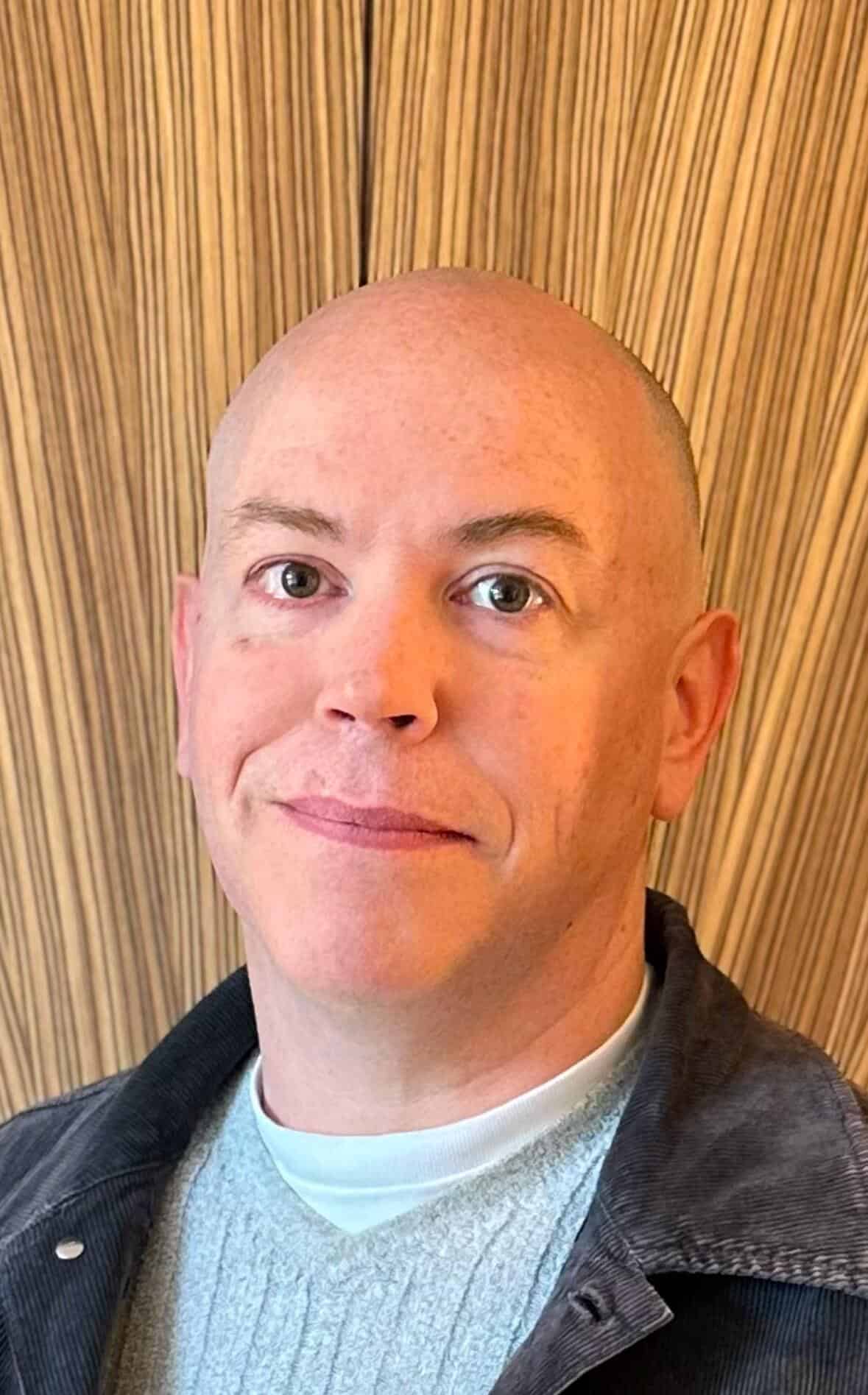
- Simon Bones is a seasoned founder who previously ran and sold an international consulting firm after nearly 20 years, bringing deep commercial experience to his entrepreneurial journey.
- Bones founded Genous to fix the broken home retrofit market, inspired by his own difficult experiences upgrading properties and a desire to make energy efficiency easier for homeowners.
- Through Genous, he focuses on delivering high-quality, purpose-led solutions that save people money, improve homes and benefit the planet, rather than chasing hype or vanity metrics.
- His approach as a founder is pragmatic and values-driven, with a long-term ambition to scale impact responsibly and make retrofit more accessible through innovations such as mortgage-backed finance.

Tell Me About Yourself and Genous
I used to run an international consulting firm, which I worked at for nearly 20 years and then sold, and have separately been involved in a small way in climate change academia, so I’m what might be called a ‘mature entrepreneur’.
Genous is a business that helps people to make their homes more energy efficient – saving them money, improving their properties and benefitting the planet.
We mostly focus today on people whose budgets allow them to invest enough to secure better returns and who have more willingness to pay for better solutions, but we have spent years trying to democratise the market, largely through mortgage finance, and should be able to talk about a real success there shortly, which we’re very excited about!
What Inspired You To Start Genous, and What Problem Were You Trying To Solve?
I wanted to do something completely different from consulting and with a genuine purpose behind it. Given my interest in climate change and experience retrofitting three properties (none of them were straightforward, and all of them incurred large quantities of pain) I decided to set up Genous to make it easy for people.
I had had lots of experience working with B2B and B2G companies and was therefore determined to work with homeowners – because I don’t think companies or government are as courageous as individuals and they tend to make worse procurement decisions for fear of getting things wrong.
What Has Been Your Biggest Challenge So Far, and How Did You Overcome It?
Our business model, which is what I used to call a ‘tech-enabled services’ model in my previous (professional) life, is very attractive to late-stage investors and corporate acquirers, but almost impossible to fund through the venture capital market, which fixates on software and product businesses.
Given Genous’s approach is structurally loss-making until we get more scale, that means we’ve been effectively unfundable from an institutional perspective, which is probably why we have no direct competitors! The reason we exist is solely because I, and people I have known for a long time and with whom I’ve built a level of mutual trust, have been prepared to fund the business while it builds out its capability and technology.
More from Startups
- How Denmark’s Minimalist Culture Built Maximum SaaS Impact
- Top Sustainability Startups in South Africa
- Top Fintech Startups In Japan
- How Finland Is Rewriting The Rules Of Finance
- Top Blockchain Startups in Norway to Watch
- Founder Of The Week: Amy Knight
- Top Blockchain Startups in the Netherlands
- Could A SpaceX IPO Redefine What A Startup Exit Looks Like?
Can You Describe a Pivotal Moment That Significantly Shaped the Direction of Genous?
Realising how awful the home retrofit market truly is! We work with some great installers, but most of the market is genuinely terrible – that realisation dispatched any ideas of referral models or B2B SaaS, because that just puts lipstick on the proverbial pig.
We realised we needed fundamentally to change the way the whole market works; much harder to do, but the only way to make it work, and an obvious explanation of why the intelligent retrofit barely exists today.
How Do You Define Success?
For your business: We want to be the company you go to if you want to do retrofit properly, and we need to live up to the standards we set ourselves. I’m not obsessed with customer numbers or profits; I know we don’t do a good enough job yet and that we’re not well enough known and those are the things I’m determined to fix. Once we’re living up to the promise, and people know what we do, the work will sell itself; after all, intelligent retrofit has compelling financial and environmental returns and makes your home better. If done properly, there is genuinely no downside assuming you can afford it
As a founder: It would be great to have enough funding and team depth that the business would be secure without me, and that other people would be able to move it faster than I could. Good founders should always be trying to put themselves out of a job.
What Advice Would You Give To Someone Thinking About Launching Their Own Startup?
Assuming it’s not profitable from the start, don’t do it. Not unless you can’t face doing anything else. All the odds are against you, it’s much harder than working for someone else and you’re likely to fail, probably having taken money off people you love, like or at least who trust you. That sucks so, assuming you’re not someone with a narcissism that means you don’t care about that, just do something else.
Of course, if you can’t think of anything else, go ahead, but don’t say you weren’t warned!
What’s Next for Genous? Any Exciting Developments We Should Watch Out For?
We’re about to announce a partnership with a mortgage company that will be the most amazing offer in retrofit ever put forward in the UK. It’s so good that I’m not sure who will have the cojones to follow it, but I’m excited at what it might do to a market that continues otherwise to lag what we need it as a country to do.
More broadly, we are looking to scale up over the next few months as we get some additional funding in, hire new people, launch some exciting tech we’ve been developing and grow our customer base (which we’ve deliberately kept relatively constrained over the last few months while we sort out the underlying capability).
Want to be featured as TechRound’s Founder of the Week? Find out more about this weekly feature and how to get involved here.
Founder’s 5 with Simon Bones
We wanted to know a bit more about the man behind Genous, so we’ve put together the exclusive Founders’ 5 with Simon Bones.
Favourite business tool
Not a tool so much as a perspective: see the world, and your business, from the perspective of the person you’re selling to, or negotiating with, or hoping to work with or to recruit. If you’re trying to do the other guy over so that you win at their expense, you’ll eventually be found out and you won’t succeed.
One lesson you learned the hard way?
Cash matters more than anything else from a business perspective.
Always ensure you have enough of it as the day you can’t pay a bill and can’t / won’t fund it personally, you’re done for.
One future trend you’re watching?
The legitimisation (or otherwise) of destructive, anti-social and unpleasant behaviour on the justification of perceived self-interest.
While it seems that these trends are currently unstoppable, they require both a societal tolerance and blinkered view of what that self-interest is that I like to hope are unsustainable. I’m not calling peak-***hole, but I prefer to think that (even though it’s literally untrue) ‘the darkest hour is just before the dawn’.
One quote you live by
When you know a thing to recognise that you know it; and when you do not, to know that you do not know,- that is wisdom (Confucius)
One book/podcast you recommend
I’ve never listened to a podcast and I don’t think I’ve ever read a business book, so I’m not well placed to answer the spirit of this question. On the basis that my interest in 19th Century Russian fiction is of limited broader interest, I’d suggest ‘Capital in the Twenty-First Century’ by Thomas Piketty – the solutions may not be right (to my mind) but the diagnosis and analysis is spot-on.
Want to be featured as TechRound’s Founder of the Week? Know someone who deserves to be recognised as a founder making waves in the startup landscape? Find out more about this weekly feature and how to get involved here.