


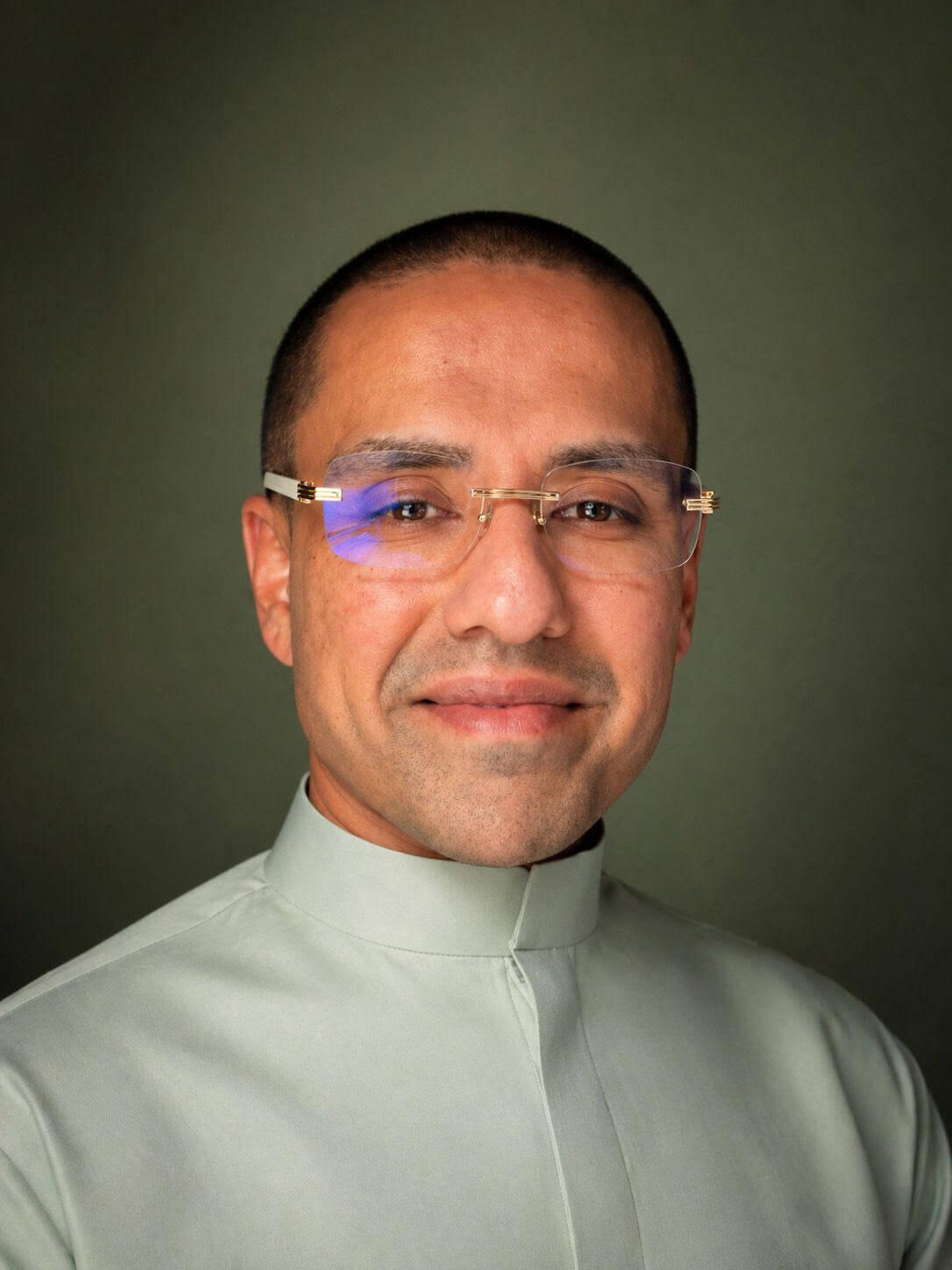
Neel Khokhani’s largest position is up roughly a hundredfold. He bought into Iris Energy in late 2022, when the AI-data-centre operator was trading at a market cap of around $100– 200 million and the consensus view dismissed it as a struggling Bitcoin miner.
The company, now renamed IREN, recently signed a $9.7 billion contract with Microsoft to provide AI cloud capacity from its Childress, Texas campus. Its market cap currently sits in the $15–20 billion range.
The IREN trade is the most visible expression of a discipline Khokhani has been refining since well before he started managing capital. His path didn’t begin in markets. It began in cockpits.
From Cockpit To Capital
Khokhani’s first ambition was to fly, and he did. But his lessons at various Australian flight schools were a study in operational neglect: businesses run by aviators who tolerated the business side rather than embraced it. He started his own school to do it properly.
“I thought there was a better way, one run with the same discipline aviation demands. That became the pilot training business I built before I ever managed capital. The same instinct guides me now. If something is mispriced or mismanaged, an opportunity usually sits underneath.”
The school taught him something most founders learn too late, he says: capital and revenue come after the physical layer. There is no flying school without aircraft, hangars, and simulators. The financial structure exists to serve the physical structure, not the other way around, a lesson that would later define how he thinks about real-asset investing.
Building Epochal
Khokhani is now based in Dubai, where he runs Epochal Corporation, the investment platform he has been compounding capital through for over eight years. Over that period the firm has returned roughly 24% annually, a track record built on concentrated, high conviction positions rather than diversified exposure to themes.
The ambition is unambiguous. Khokhani is building Epochal in the spirit of Berkshire Hathaway: a multi-decade compounding vehicle that owns both listed equities and unlisted operating businesses, treats every position as a long-duration commitment, and measures
success across cycles rather than quarters. The operating businesses he owns sit inside the same architecture as his concentrated public equity positions. They are not separate buckets. They are the same idea expressed in different forms: real assets, bought at fair prices, held through volatility.
“I am not in the business of asset gathering,” he says. “I am in the business of compounding capital. The two are different sports. One scales by raising money. The other scales by being right and waiting.”
Alongside the portfolio, Khokhani publishes primary-source research under the Epochal banner on X and on Substack. The writing is partly a discipline imposed on himself, partly a way to attract counterparties and collaborators who think the same way. “If you cannot defend a position in writing to a smart, hostile reader, you don’t actually understand the position. The act of writing it is the test.”
More from Startups
- 5 Startups Crowdfunding w/c 19.10.2026
- Quite Contrary: The Fastest Way To Scale A Business Is To Slow Down, Says John Messer
- Founder Of The Week: Matt McLuckie
- Top Climate Tech Startups In The UAE To Watch In 2027
- Startup of the Week: SnoreLab
- Columbia University: Successful Alumni That Founded Startups
- What Is Germany Doing To Attract More Startups?
- Are Hiring Challenges Preventing Startups From Reaching Their Full Potential?
The Operating System
If the discipline has a single defining feature, it is this: Khokhani treats investing the way a commercial pilot treats flying. Not as a craft of intuition, but as a system of codified procedures executed under a checklist.
Every pilot in the world flies with Jeppesen manuals. Standardised approach plates, airport diagrams, enroute charts, departure and arrival procedures, performance tables. The manuals reduce a thousand judgement calls per flight to a small number of repeatable decisions. The point isn’t to suppress thinking. It’s to free thinking for the few moments when judgement actually matters.
“You don’t survive a long career in the air by improvising,” he says. “You survive by trusting a system that other pilots have stress-tested for decades. The pilots who improvise have shorter careers. Investing is the same. Most blow-ups are not bad ideas. They are good ideas executed without a system.”
Epochal’s investing operating system is built on the same principle. Every position begins with primary-source diligence rather than sell-side framing. For IREN, that has meant pulling Australian corporate filings on undisclosed subsidiaries, working through the NSW Planning Portal to track transmission corridor permits, identifying transformer models from satellite imagery of the Childress and Sweetwater sites, and matching hardware specifications to publicly known GPU architectures.
For his short book, it has meant the same discipline applied in reverse: environmental permit databases, regional planning authorities, earnings call transcripts cross-referenced against published construction timelines.
Every position is sized to a documented thesis. Every thesis carries an explicit catalyst window and an exit condition. Every portfolio is reconciled across custodians on a fixed
schema, every quarter, the same way. None of this is glamorous. All of it is what compounding actually looks like before it becomes a number on a statement.
“The Jeppesen manual doesn’t tell you whether to fly,” Khokhani says. “It tells you how to fly safely once you’ve decided. The investing equivalent is the same. The decision to take a position is the easy part. The system is what keeps you in it when the position is down forty percent and the market is shouting that you’re wrong.”
The Checklist
Inside the operating system sits the checklist itself. A real asset behind the price. A valuation that gives you room to be wrong about timing. Insiders with meaningful skin in the game. A clean balance sheet. Real net income. A plausible catalyst within one to two years. And critically: no leverage. “Debt turns volatility into danger. It is a ticking clock you cannot reset.”
What he looks for, ideally, is a business sitting in “a quiet corner of the map”: neglected, mispriced, but with productive assets that can be redirected toward a different and larger use case. Returns, on this view, are a byproduct of getting the entry right. They are not a target to be hit through cleverness in the trade itself.
The intellectual foundation came largely from Poor Charlie’s Almanack. “Munger’s idea of consistently not being stupid changed how I thought about risk. Buffett’s farmer mentality changed how I thought about time. Neither of them was clever in any flashy sense. They were just systematic for longer than anyone else was willing to be.”
IREN And The Cost Of Patience
IREN is the system’s clearest output. Khokhani built the position when the market valued the company below the replacement cost of its physical infrastructure: power-connected sites, transformers, cooling capacity, fibre and land. The thesis was not that Bitcoin would recover. The thesis was that the underlying asset base was redirectable, that AI compute would eventually need exactly this kind of infrastructure, and that the market was pricing the company as if neither the assets nor the optionality existed.
That thesis took years to surface. The position fell significantly after he established it. The original underwriting did not change.
“The temperament required to hold was the same one I built crossing Bass Strait at night. You do not survive that flight by listening to your inner ear. You trust the instruments.”
Core Scientific, his other large data-centre position, was a similar pattern. He acquired exposure during the company’s Chapter 11, a window most investors avoid by reflex, and treated it as a real business at a fraction of replacement cost. The harder part, in both cases, was holding. The system is what holds you.
The Physical Layer
What Khokhani is building toward, increasingly, is a body of work around what he calls the physical layer of intelligence. “The age of AI is framed as a software story. I believe it is a physical one: power, land, transformers, substrates, cooling, fabrication. The model weights get the headlines. The transformer that delivers ninety megawatts to the rack is what actually decides who wins.”
He plans to keep writing about that thesis, and investing behind it, for as long as the cycle runs. The discipline, he says, is unchanged from the flying school. Get the airframe right first. Trust the manuals. The operating system carries the rest.


