


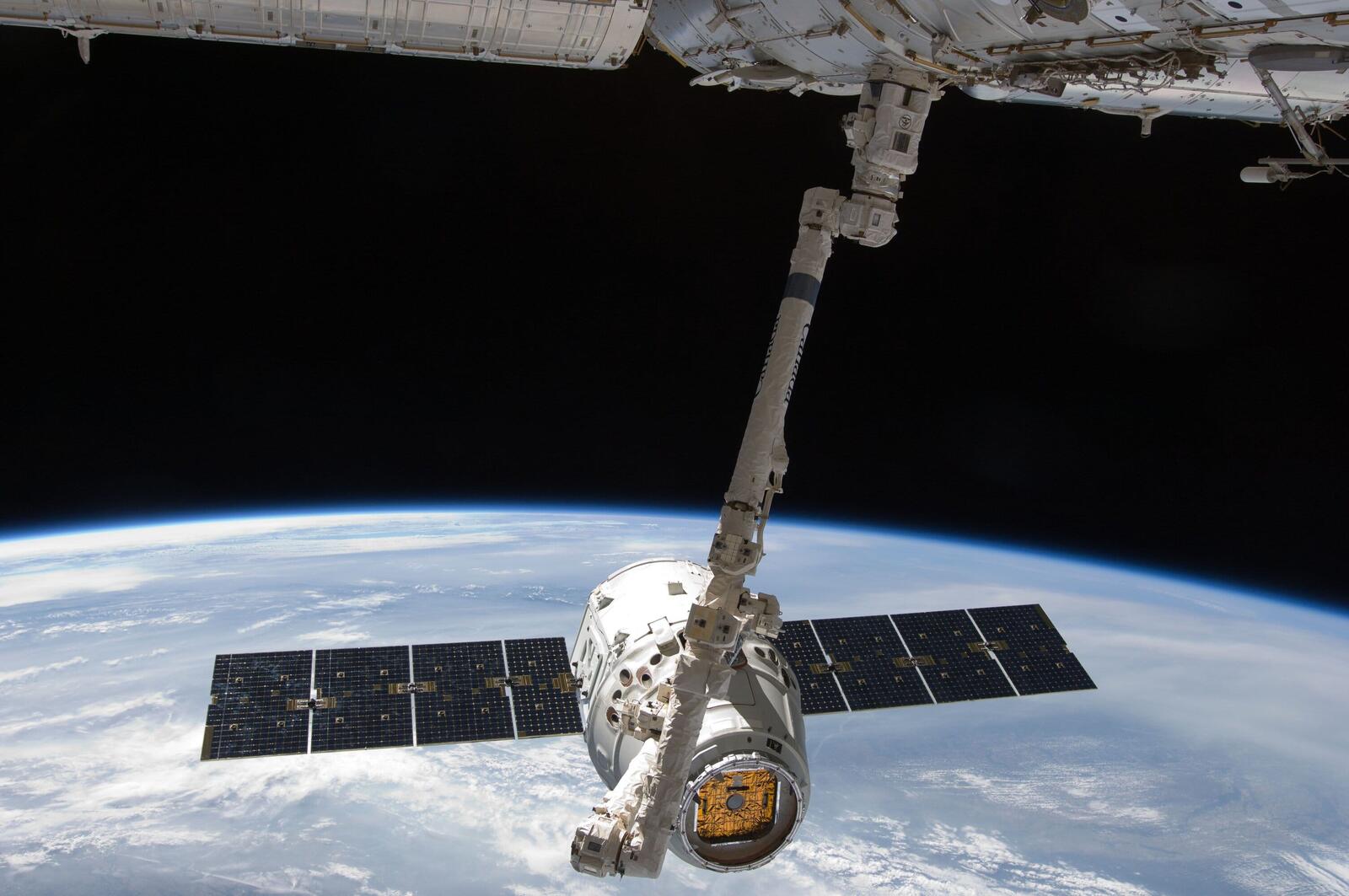
For decades, the global space story has been told by national agencies such as NASA and China’s state-owned aerospace giant, the China Aerospace Science and Technology Corporation (CASC). Today China is becoming a world aerospace power with a vibrant wave of commercial ventures. Backed by the government, private Chinese aerospace start-ups are rapidly closing the innovation gap with their global competitors on the back of large capital injections and ambitious megaconstellation deployments.
These companies are building the infrastructure for low-Earth orbit (LEO), green propulsion and urban air mobility, from methane-powered orbital launch vehicles to passenger grade autonomous flying taxis.
Development Of China’s Aerospace Industry
Deliberate policy design, state-directed capital and massive industrial scaling gave birth to China’s commercial aerospace industry. Before 2014, space activities in China were almost entirely the business of state institutions. Document 60 was a policy directive from Beijing in late 2014 that explicitly opened the space sector to private capital and marked an important turning point.
Since then it has grown at an accelerated pace. Municipal governments, sovereign funds and venture firms poured money into private rocket and satellite engineering labs. Cities including Beijing, Shanghai, Huzhou and Yantai built dedicated aerospace industrial parks, providing subsidised manufacturing facilities for startups and access to testing stands.
In addition, China’s efforts to build its own national satellite megaconstellations, including Guowang (State Network) and Qianfan (Thousand Sails), gave it an instant, guaranteed customer base. With plans to put more than 25,000 satellites in low-Earth orbit for global broadband coverage, state-owned launch capacity alone was not enough. The void was filled by private startups that developed from experimental laboratories into mass producers capable of producing standardised engines, satellite buses and launch vehicles.
The Future Of Chinese Aerospace Startups
The future of Chinese aerospace startups lies in three aspects: rapid reusability, the expansion of the low-altitude economy and global market competition.
The Race For Reusability
Reusability is still the major bottleneck for commercial viability. Startups such as LandSpace, Space Pioneer and Deep Blue Aerospace are perfecting VTVL stage landings using liquid methane and kerosene engines to match the cost dynamics pioneered by global leaders. Reliable booster reuse will be essential to support the high cadence launch manifests needed for LEO megaconstellations.
Capitalizing On The Low-Altitude Economy
And China’s government has identified the “low-altitude economy” as a strategic emerging industry beyond orbit. Specific airspace management reforms and grants for low-altitude infrastructure are being lavished on eVTOL companies like EHang and AutoFlight. As regulatory pathways become clearer, the commercial flight routes for aerial logistics and intra-city commuter transport will expand across major metropolitan hubs.
Cost Leadership And International Expansion
As manufacturing matures, more Chinese aerospace startups will look abroad. Chinese commercial aerospace companies are aiming to be major suppliers to the global market by providing low-cost satellite platforms, SAR imagery and cheap rideshare opportunities to developing countries in the Global South.
More from Startups
- Meet The Startups Crowdfunding w/c 12.10.2026
- The Cold Start Problem: Why Getting A Startup Off The Ground Is So Difficult
- Founder Of The Week: Ryta Zasiekina
- Top Industrial Tech Startups To Watch In 2027
- Startup of the Week: Kord
- How Do Startup Valuations Work When A Company Isn’t Profitable?
- These Aerospace Startups Are Out Of This World, But Made In Japan
- 5 Startups Crowdfunding w/c 05.10.2026
Top 10 Chinese Aerospace Startups
China’s private aerospace trailblazers are reducing costs and laying the groundwork for the infrastructure of tomorrow’s skies, from reusable methane-fueled rockets to certified autonomous passenger drones. These are 10 of the most influential startups shaping this new era.
Land Space

LandSpace is one of the leading private launch companies in China. The company went down in history as the first in the world to launch a liquid methane-liquid oxygen rocket into orbit, the Zhuque-2. LandSpace is still pushing the envelope with its Zhuque-3 reusable launch vehicle — a stainless-steel, methalox-fueled platform designed to dramatically lower cost-per-kilogram rates for large payload deployments.
Galactic Energy

Galactic Energy, designed for speed and economy in operations, is among the workhorses of China’s commercial launch space. Its solid-propellant Ceres-1 platform has launched dozens of successful commercial missions. Galactic Energy is currently scaling its Pallas-1, a liquid-fueled, reusable medium-lift launcher that lands propulsively, to support low-Earth orbit constellation deployments.
Space Pioneer
Space Pioneer’s Tianlong-2 rocket reached orbit on its first liquid-propellant launch, becoming the first Chinese private company to do so and setting an early benchmark. Now the company is focused on its Tianlong-3 heavy-lift vehicle, which is designed to support multi-satellite batch launches for national and private megaconstellations.
iSpace

Beijing-based iSpace became the first private Chinese startup to successfully deliver a payload to orbit with its Hyperbola-1 rocket. The company is heavily invested in vertical takeoff and vertical landing (VTVL) technology and is leveraging its Hyperbola-2 and Hyperbola-3 series to develop reusable stages for orbital rideshare missions and future suborbital flight applications.
Orienspace

Orienspace made a splashy market debut with Gravity-1, one of the world’s most powerful solid-fuel commercial rockets. The Shandong-based company specialises in high-capacity, land and sea launch operations. Its upcoming Gravity-2 and Gravity-3 liquid-propellant reusable platforms are designed to cater to the mass scale requirement of satellite internet deployment.
EHang

EHang is a pioneer in the Electric Vertical Takeoff and Landing (eVTOL) technology. Unlike its rocketry counterparts, EHang’s focus is on low-altitude aviation and air transportation. It received historic commercial airworthiness type certifications for its pilotless EH216-S passenger aircraft, which opened the door to urban air taxis, tourism flights and aerial logistics.
Deep Blue Aerospace
Deep Blue Aerospace is working on vertical recovery and reuse of launch vehicles. The startup has performed a substantial number of VTVL tests at both low and high altitude with its Nebula rocket series. Deep Blue Aerospace is working to enable full rocket-stage recovery to lower the cost of launching payloads and is also working on commercial suborbital tourism.
CAS Space
CAS Space was born out of the Chinese Academy of Sciences (CAS) to walk the line between state-backed research and commercial space operations. Using its Kinetica series rockets, CAS Space offers rideshare launches to commercial satellite operators, atmospheric scientific experiments and experimental hardware validation.
AutoFlight

AutoFlight develops high-efficiency electric VTOL platforms based on a lift-and-cruise architecture. Its flagship aircraft, the Prosperity, is designed for inter-city passenger travel, medical evacuations and heavy goods routing, demonstrating the capabilities of long-distance electric flight to decongest road transport networks.
Spacety
Spacety is active in small satellite manufacturing and satellite data services. Spacety is known for its low-cost Synthetic Aperture Radar (SAR) small satellites that provide all-weather, high-resolution Earth observation data used in maritime monitoring, environmental research and disaster relief management.


