


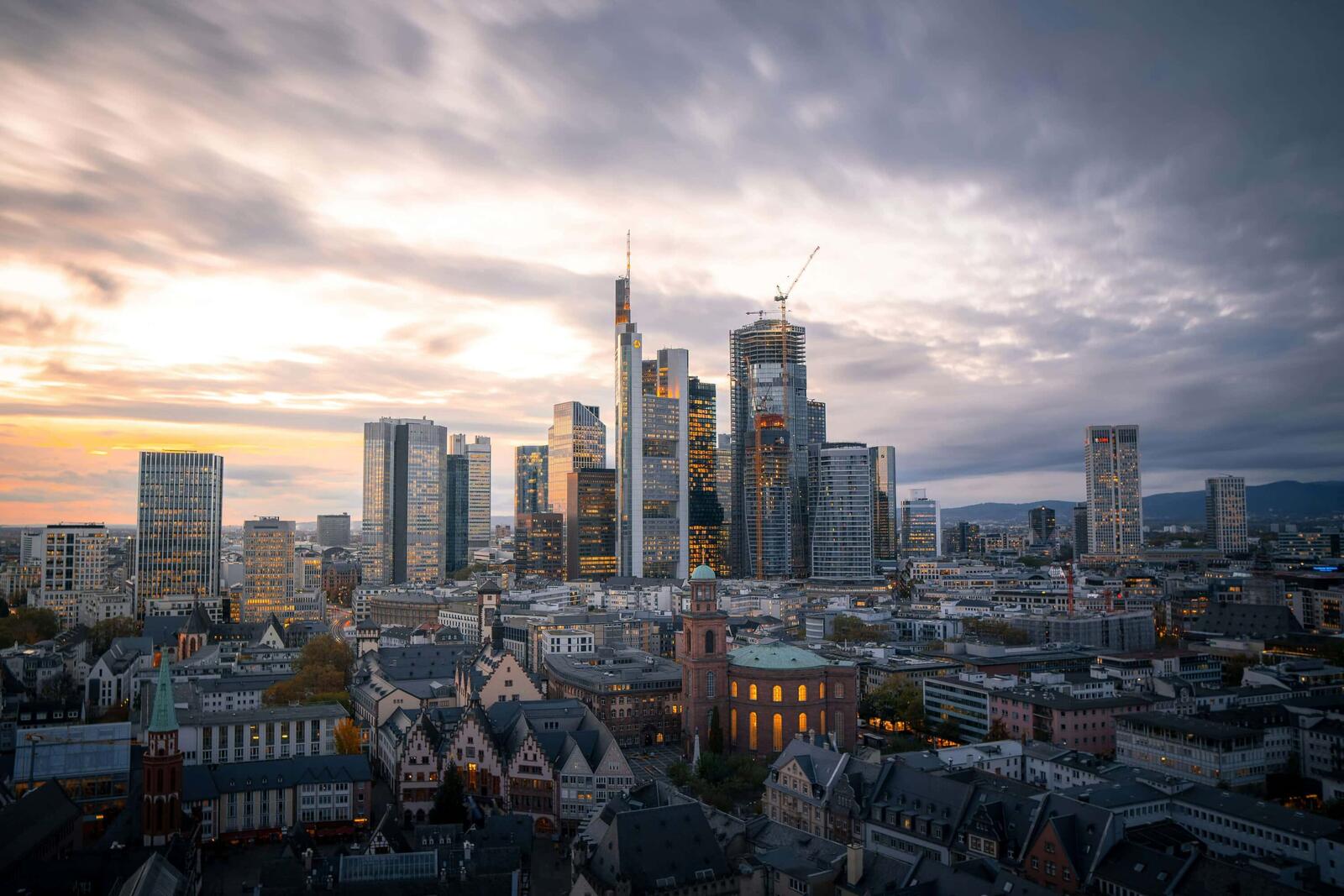
Despite facing some of the most significant economic headwinds in its post-war history, from an energy crisis triggered by the end of cheap Russian gas to sluggish growth, demographic pressures and intensifying competition in its core automotive and manufacturing sectors. The country that gave the world the modern automobile, the diesel engine and a manufacturing philosophy that the rest of the world has spent decades trying to replicate is not stepping aside quietly.
With the world’s third-largest economy, a uniquely powerful network of globally competitive Mittelstand companies, world-class engineering universities and a research and development infrastructure that continues to attract significant investment from international corporations, Germany’s position as Europe’s industrial innovation hub is built on foundations that go far deeper than any single economic cycle.
What Makes Germany Europe’s Industrial Innovation Hub?
Because of its cutting-edge research infrastructure, early adoption of Industry 4.0 and robust network of specialised small-to-medium businesses, Germany is Europe’s centre for industrial innovation. High productivity and worldwide technological leadership are fuelled by these factors working together.
How Germany’s Engineering Culture Drives Industrial Innovation
Industrial innovation is fuelled by Germany’s engineering culture, which combines applied research, practical education and a strong emphasis on accuracy. Important cornerstones like the dual vocational training system, top-notch technical universities, and strong public-private research collaborations are essential to this success.
The Role of German Industry in the Global Energy Transition
Despite high domestic energy costs, German industry spearheads the worldwide energy transition through heavy sector decarbonisation, green technology innovation and renewable manufacturing. Scaling hydrogen infrastructure, maximising energy efficiency and exporting climate-neutral technology are important considerations.
More from Startups
- £180m Gets UK AI Startups Started, Who Pays to Keep Them Here?
- How Is Austria Attracting Entrepreneurs?
- How a Fuel Card Became The Go-To Cost-Control Tool For UK Startups
- 5 Startups Crowdfunding w/c 19.10.2026
- Quite Contrary: The Fastest Way To Scale A Business Is To Slow Down, Says John Messer
- Founder Of The Week: Matt McLuckie
- Top Climate Tech Startups In The UAE To Watch In 2027
- Startup of the Week: SnoreLab
Why Germany Remains Europe’s Industrial Innovation Hub
Germany’s position as Europe’s leading industrial innovator is not the result of any single advantage; it is the product of a deeply embedded ecosystem of engineering excellence, institutional support, globally competitive companies and a cultural commitment to quality and precision that has been built over more than a century.
Despite the economic headwinds of recent years, the foundations of German industrial innovation remain remarkably strong. Here is a breakdown of the key reasons why.
A Uniquely Powerful Mittelstand
Germany’s Mittelstand is perhaps the single most distinctive and underappreciated driver of the country’s industrial innovation. These companies, many of them family-owned and operating in highly specialised niches, account for around 99% of all German businesses, employ approximately 60% of the workforce and generate over half of Germany’s total economic output.
Crucially, many Mittelstand companies are global market leaders in their specific field, often holding dominant positions in industrial niches that most people have never heard of but that are essential to global manufacturing supply chains.
World-Class Engineering Universities and Research Institutions
Germany’s higher education and research infrastructure is one of the strongest in the world for engineering and applied sciences, providing a constant pipeline of highly skilled technical talent into the industrial sector.
Universities such as TU Munich, RWTH Aachen, KIT Karlsruhe and TU Berlin consistently rank among the world’s leading institutions for engineering, while the Fraunhofer Society operates 76 institutes across Germany, conducting industry-relevant research that is specifically designed to be transferred into commercial applications.
A Deep and Enduring Engineering Culture
Germany’s reputation for engineering precision and manufacturing excellence is not simply a national stereotype. It is a culturally embedded value system that permeates education, business and society in ways that have a direct and measurable impact on industrial output. The German concept of quality is taken seriously at every level of the manufacturing process, from the apprentice on the factory floor to the board of a DAX-listed industrial giant.
Germany’s dual vocational training system, in which young people combine classroom learning with structured workplace training in technical disciplines, produces some of the best-prepared manufacturing and engineering workers.
Strong Government and Institutional Support
The German government has consistently treated industrial innovation as a strategic national priority, backing research, development and technology adoption with significant public funding. Germany spends approximately 3.1% of GDP on research and development and the government’s High-Tech Strategy 2025 sets out a comprehensive framework for maintaining and extending German technological leadership across areas including artificial intelligence, quantum computing, biotechnology and sustainable manufacturing.
Industrial policy in Germany is also shaped by a strong tradition of cooperation between government, industry and trade unions.
How Germany’s Startup Ecosystem Is Supporting Industrial Innovation
Germany’s startup ecosystem has matured significantly over the past decade and is increasingly playing a meaningful role in the country’s broader industrial innovation story, particularly in areas like industrial software, robotics, clean energy and deep tech.
Berlin has established itself as one of Europe’s leading startup cities, but the most strategically important startup activity for German industry is happening in the country’s established industrial heartlands, where deep tech and industrial tech startups are emerging in close proximity to the Mittelstand companies, research institutions and large industrial corporations they are building for.
The Biggest Challenges Facing German Industrial Innovation Today
Germany’s industrial innovation ecosystem is resilient, but it is not immune to the pressures of a rapidly changing global economic and technological landscape. The biggest challenges it faces include:
- The automotive electrification transition: Germany’s automotive sector, one of the country’s most important industrial pillars, is navigating one of the most disruptive transitions in its history, with the shift to electric vehicles threatening established supply chains and the jobs of hundreds of thousands of workers
- Demographic decline and skills shortages: Germany’s ageing population is creating significant labour shortages across the engineering and manufacturing workforce, with demand for skilled technical workers consistently outpacing supply
- Bureaucracy and slow regulatory processes: German businesses consistently cite lengthy planning and approval processes, complex bureaucratic requirements and slow digitalisation of public administration as significant barriers to innovation and investment
- Underinvestment in digital infrastructure: Despite its industrial strengths, Germany has been slower than many comparable economies to build out the digital infrastructure that modern industrial innovation increasingly depends on
- Geopolitical supply chain vulnerability: Germany’s industrial model has historically depended on open global trade and reliable international supply chains, both of which are under growing pressure from geopolitical fragmentation, trade tensions and the trend toward economic nationalism in key markets
Germany’s status as Europe’s industrial innovation hub is not simply a legacy position maintained by historical momentum. It is an active, continuously renewed competitive advantage built on world-class research institutions, a uniquely resilient Mittelstand, a deeply embedded engineering culture and a government that has consistently treated industrial innovation as a strategic national priority. The challenges it faces are real and should not be understated.
But Germany has navigated profound industrial transformations before and the depth and diversity of its innovation ecosystem give it more tools to do so again than almost any other European economy.


