


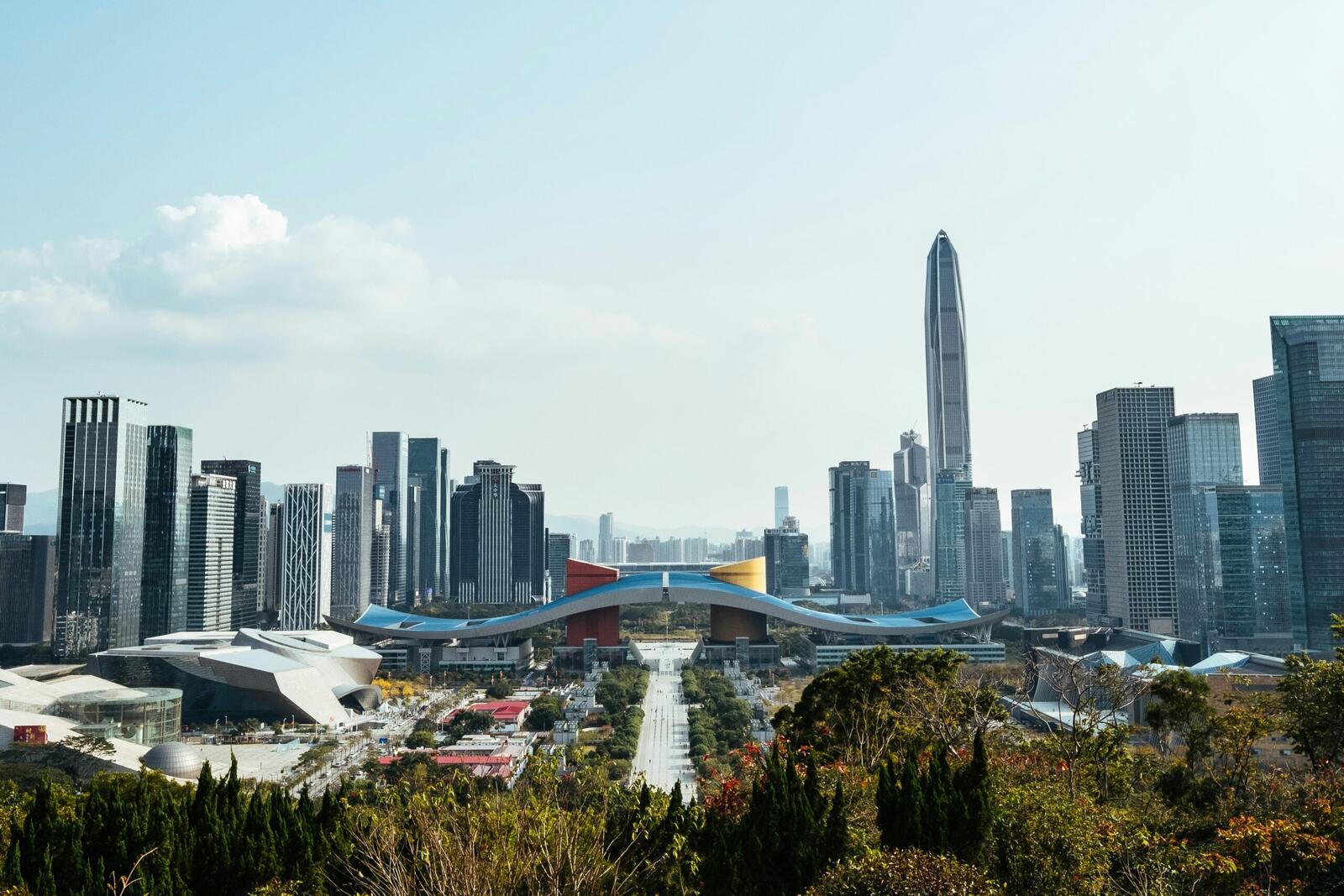
“Rome wasn’t built in a day, but Shenzhen was built as an almost ‘instant city’”. This is a sentence from ThinkChina, and sure, it sounds dramatic – until you actually have a look at the timelines.
Before the 80s, just under 100,000 people lived there and today, the city has about 20 million residents. GDP over 45 years went from 270 million RMB to 3.6 trillion RMB. To think that was once just a fishing town bordering Hong Kong has now turned into one of the busiest urban economies on the planet.
The speed of change has not gone down at all, in recent years. Delivering the annual government work report, Mayor Qin Weizhong said Shenzhen’s GDP increased from 2.83 trillion yuan in 2020 to 3.87 trillion yuan in 2025, recording an average annual growth rate of 5.5%, the highest across China’s first tier cities, according to China.org. He also said the added value of strategic emerging industries reached 1.67 trillion yuan last year, accounting for 43% of the city’s GDP, which means technology driven sectors now account for nearly half of total output.
Shenzhen is home to companies such as Huawei, Tencent and DJI, and the density of technology firms is unusual even by global standards. ThinkChina reports that the city hosts 25,000 high and new tech companies, equal to 12 per square kilometre. In 2024, Shenzhen filed 16,300 international patents and has led Chinese cities on that measure for 21 consecutive years. Huawei alone accounted for 6,600 of those filings, or 40%.
What Is Happening Inside The City’s Tech Machine?
Mayor Qin said, “Shenzhen has systematically planned for and fostered the development of its strategic emerging industrial clusters and future industries, with advanced manufacturing as the mainstay. Economic resilience has become increasingly prominent, and the city’s overall capacity and core competitiveness have significantly increased.”
This speaks to how much attention the local government gives to manufacturing depth and research, instead of only focusing on property or finance.
Research spending continues to grow with investment in R&D going from 151.08 billion yuan in 2020 to 245.31 billion yuan in 2024. That is an average annual growth rate of about 12.9%, according to China.org.
More from Tech
- From Web3 Hype To Commercial Advantage: How The Next Phase Of Emerging Technology Will Be Won
- Who Controls The Thermal Skies? The Security And Privacy Questions Behind SatVu’s New Satellite
- The Drone Technology Helping Farmers Cover More Ground In Less Time
- F1’s Pitlane Has Its Own Race, And Technology Is Driving It
- Top Deep-Tech Startups In Finland To Watch In 2027
- Are VoIP Calls Secure? Let’s Talk About Who Could Be Listening
- The Tech That Shapes F1 Car Performance From Circuit to Circuit
- From Alton Towers To Thorpe Park: The Technology Bringing Theme Parks To Life
Enterprise R&D made up more than 93% of the total, and R&D intensity reached 6.67% of GDP, which is the highest for any Chinese city. The city expects this share to pass 7% by 2030, which positions research spending in line with leading global hubs.
Talent continues to move into the city in large volumes, too. In fact, ThinkChina reports that Shenzhen gained 429,000 permanent residents through in-migration between 2020 and 2024, also more than any other major Chinese city. Two thirds of the population does not hold a local hukou, following long-running reforms that gave newcomers access to welfare benefits similar to long-term residents. This has shaped the entrepreneurial culture often associated with the city.
Professor Li Zexiang, who founded XbotPark in the Shenzhen region, explained how young engineers move from classroom to company. Students “build real prototypes, source parts through Shenzhen’s vast supply chain, and launch startups before graduation,” he said. In his experience, “nine out of ten stay and start their own companies”, creating what ThinkChina calls startup genealogies in which founders mentor the next wave.
What Does This Mean For Places Like Silicon Valley And Tokyo?
CEIC data shows industry accounts for the largest share of Shenzhen’s GDP, and services have grown over the past decade. Technical services, including information technology and scientific research, make up about 15% of the economy, up from around 8% ten years earlier and 4.5% in 2005. The increase shows how quickly the city has moved toward higher value activities.
Even with that growth, Silicon Valley in California and Tokyo have technology sectors that are roughly twice as large relative to their economies, according to CEIC. National R&D spending in the United States and Japan also exceeds China’s share of GDP, though the gap has narrowed over time. What makes Shenzhen special is the concentration of manufacturing supply chains and research activity within a compact urban area, which allows hardware companies to move from concept to production at a pace that is difficult to replicate elsewhere.
The Hong Kong, Shenzhen and Guangzhou cluster ranked No. 1 in 2025 across the world’s top 10 most innovative city regional clusters, based on an average across three indices measuring their percentage of global innovation output, ThinkChina reports. Shenzhen’s GDP is projected to exceed 5 trillion yuan within the next five years, according to China.org, placing it in the same league as Beijing and Shanghai.
Global tech hubs that once assumed their lead would last forever should take Shenzhen as an example of how scale, research spending and a steady inflow of talent can completely change the map of innovation within a single generation, and that competition is no longer ends with California and/or Tokyo.


