


Colin Angle has sold more robots into more homes than anyone alive. His next one is designed to make you feel something.
Angle co-founded iRobot in 1990, served as its CEO for more than three decades, and oversaw the sale of over 50 million Roombas. He left the company in January 2024 following the collapse of Amazon’s acquisition bid. Five months later, according to reporting from The Verge, WBUR and the Boston Globe, he launched Familiar Machines and Magic, a new startup based in Woburn, Massachusetts, co-founded with former iRobot CTO Chris Jones and colleague Ira Renfrew.
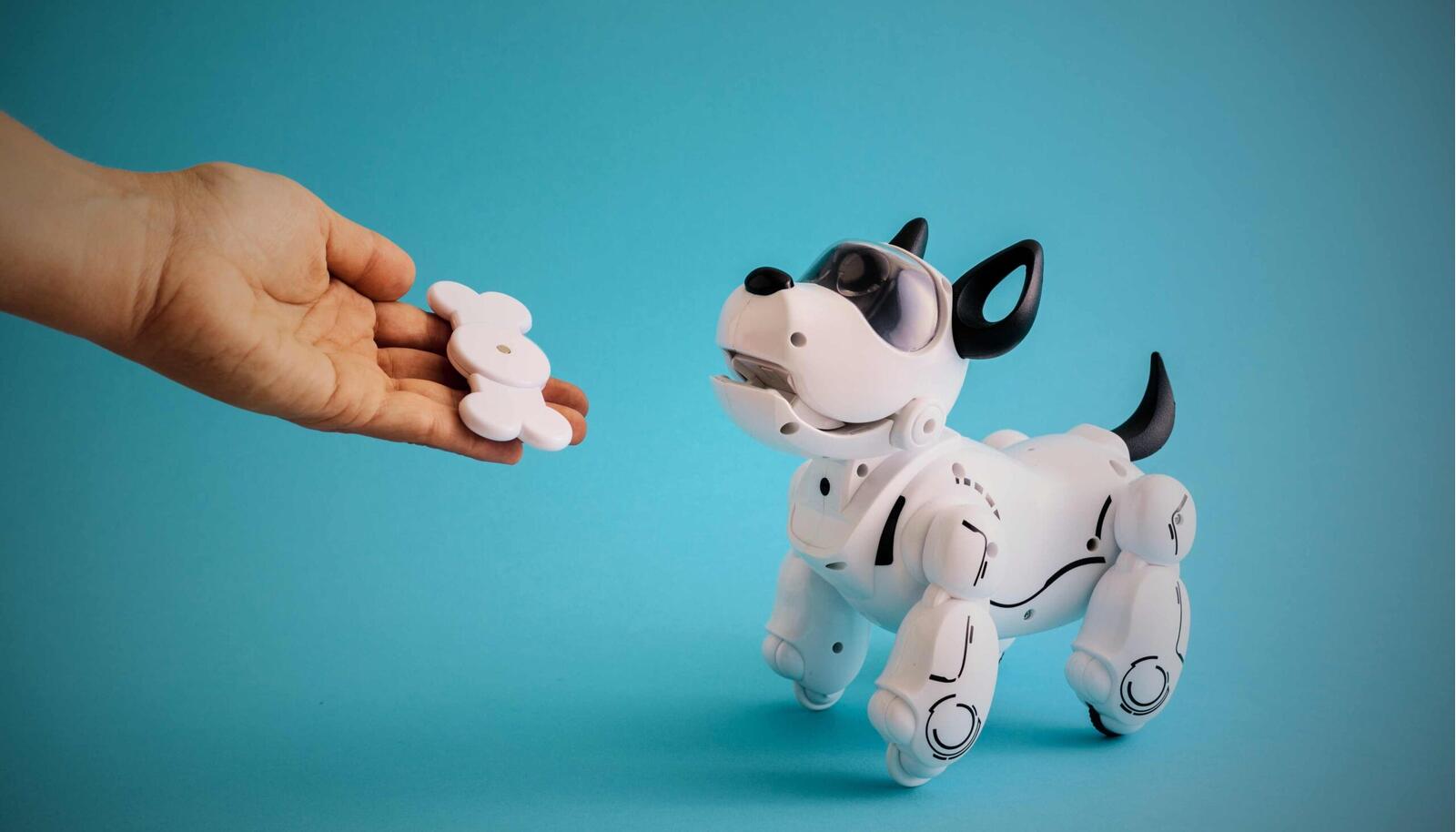
In May 2026, the company revealed its first prototype – it’s a four-legged, dog-sized robot with expressive eyes, touch-sensitive fur and animal-like movements. It speaks to no one, vacuums nothing and is called Familiar and its entire purpose, according to Angle, is to form a genuine emotional bond with the person it lives with.
Inside The Robot That Reads The Room
Familiar uses on-device generative AI and a multimodal reasoning model to detect its owner’s emotional state through tone of voice, touch and behavioural cues, then responds through posture, gesture and sound.
The design deliberately avoids direct pet mimicry: it looks like a bear cub rather than a dog or cat, which Angle says sidesteps the preconceptions people bring to robotic animals while still triggering the same attachment instincts.
Where Angle sees these things fitting into the world: companionship, eldercare, entertainment and mental health support. The technical DNA draws on iRobot’s hardware expertise, Boston Dynamics-style motion engineering, Disney animatronics and recent advances in multimodal AI. The combination is new in consumer robotics: a physical device designed from the ground up to be emotionally read, emotionally responsive and emotionally memorable rather than functionally useful.
More from Tech
- Top Deep-Tech Startups In Finland To Watch In 2027
- Are VoIP Calls Secure? Let’s Talk About Who Could Be Listening
- The Tech That Shapes F1 Car Performance From Circuit to Circuit
- From Alton Towers To Thorpe Park: The Technology Bringing Theme Parks To Life
- Women In Tech: Top 10 Women In EdTech In 2026
- Why Is It So Hard To Put Tech Down? The Design Choices Behind Our Attention
- Can A Trading App Truly Be Risk-Free When Real Financial Habits Are On The Line?
- The Tech F1 Teams Use To Prepare For Unfamiliar Tracks
Why Feelings Are The Product
Angle has been unusually candid about where he thinks this is going.
He views emotional intelligence in robots, what he describes as the combination of EQ, personality, memory and motion, as where consumer robotics is headed and the shift from utility to connection as the transition that defines where the industry goes next. The Roomba solved a functional problem, while Familiar is trying to solve something harder to articulate: the problem of loneliness, or at least of the particular kind of companionship that a human household often lacks.
Where it gets interesting is in the specific markets targeted. Eldercare and mental health support are both markets defined by the same underlying problem: the void between the human connection people need and the human capacity available to provide it.
The Bit The Industry Should Read Carefully
Consumer robotics has spent most of its commercial history optimising for task completion: vacuuming, mowing, delivering. The emotional intelligence angle is a fundamentally different kind of product, and one that has lagged behind both the AI capability needed to do it well and the cultural readiness to take it seriously, and both of those conditions are changing.
For anyone building in AI companions, robotics or consumer hardware, the Familiar announcement is one to pay attention to. The man who made robot vacuums mainstream has decided that the next chapter is emotional, and that the commercial opportunity in companionship, eldercare and mental health support is large enough to build a company around. Familiar is still a prototype, with no pricing or release timeline confirmed, but the direction it points is clear.
The Roomba taught people that a robot could do a useful job without anyone caring what it looked like. Familiar is a bet that the next generation of consumer robots will be ones people actually care about.


