


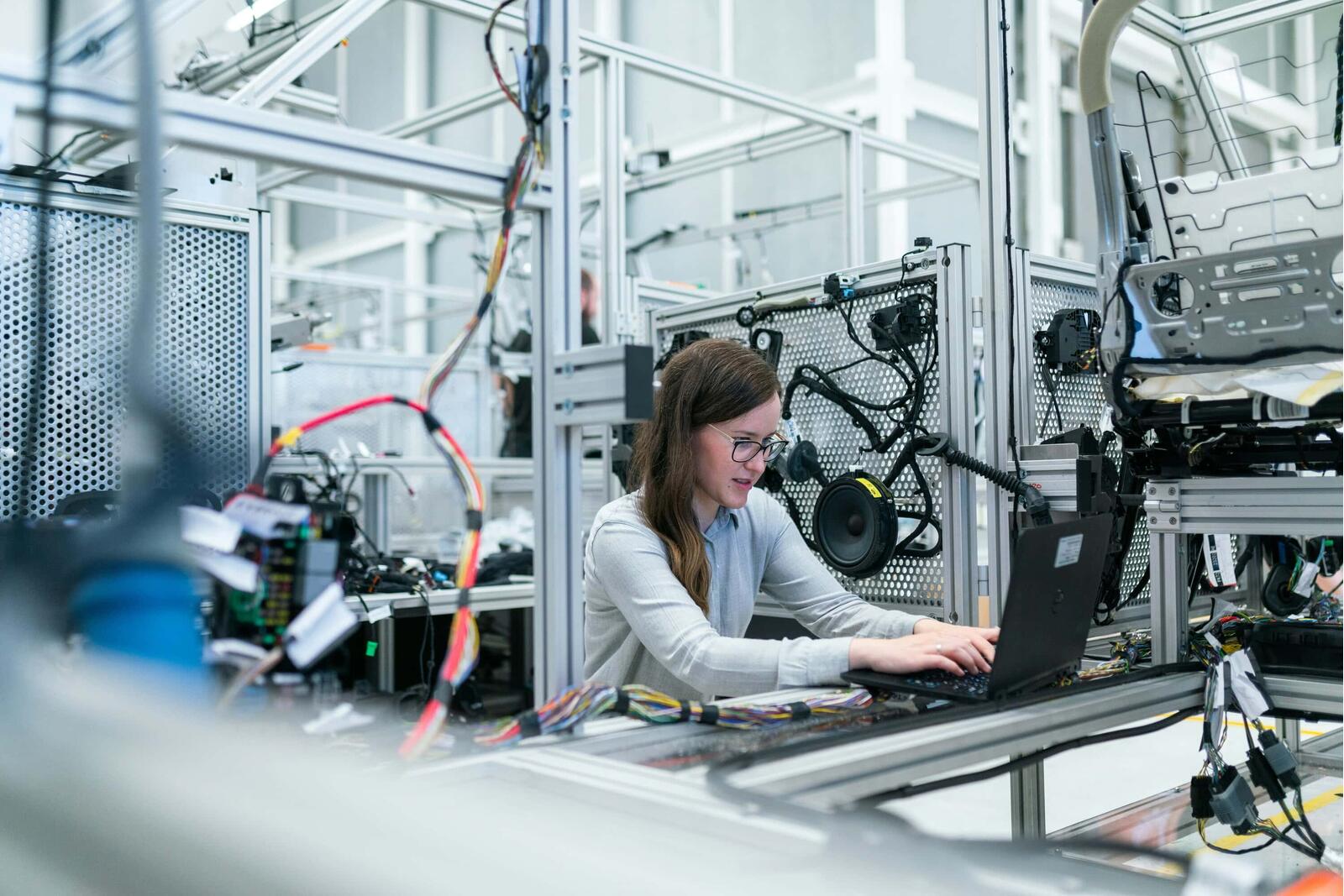
Most of what we hear about in the tech world these days is how artificial intelligence is being used to automate processes, and in manufacturing, it’s been about making machines faster, smarter and more connected.
Factories have embraced robotics, automation, AI-powered analytics and more complicated tech in an attempt to improve efficiency and reduce costs. But, despite all this progress, there are plenty of manufacturers that are still being slowed down by something surprisingly simple. That is, manual data entry.
If you’re thinking, “manual data entry? In 2026?” I can assure you, you’re not alone.
It sounds almost too mundane and old-school to be a major business challenge, especially now, in the “golden” age of AI. But more and more often, experts argue that the biggest obstacle to productivity isn’t what happens on the production line itself, but rather what happens between systems, spreadsheets and people. How are things being tracked, recorded and communicated is almost as important as the primary processes.
The Last Mile Problem
The challenge is often described as the “last mile” of digital transformation. Businesses may have invested heavily in automation, but information still needs to move between enterprise software, production equipment and employees. When those systems don’t communicate effectively, people end up acting as the bridge.
Essentially, companies have all this fancy, advanced technology one each end of a process, but no way to properly bridge the two.
According to a recent white paper released by Markem-Imaje in May 2026, around 75% of manufacturers still face a gap between their information technology (IT) systems and operational technology (OT) systems on the factory floor. This disconnect often forces operators to manually enter data multiple times across different systems, creating inefficiencies and increasing the risk of errors.
In an era of highly automated manufacturing, that statistic feels surprisingly high. It seems almost unfathomable that while complex computer systems and artificial intelligence are working hard in the background, we have humans manually entering data to bridge these gaps.
The reality is that many modern factories are far more technologically advanced than the processes supporting them. The problem is, production equipment may be automated, but the information feeding those machines often isn’t, and that’s a problem.
More from Tech
- Who Controls The Thermal Skies? The Security And Privacy Questions Behind SatVu’s New Satellite
- The Drone Technology Helping Farmers Cover More Ground In Less Time
- F1’s Pitlane Has Its Own Race, And Technology Is Driving It
- Top Deep-Tech Startups In Finland To Watch In 2027
- Are VoIP Calls Secure? Let’s Talk About Who Could Be Listening
- The Tech That Shapes F1 Car Performance From Circuit to Circuit
- From Alton Towers To Thorpe Park: The Technology Bringing Theme Parks To Life
- Women In Tech: Top 10 Women In EdTech In 2026
They May Be Small Errors, But They Create Big Problems
A single manual error can have consequences that go far beyond the initial typo. Incorrect product information, labelling mistakes or inventory discrepancies can travel through multiple systems before being discovered. The more connected a supply chain becomes, the more expensive these mistakes can be.
Stephen Tagg, Global Application Sales Manager Software at Markem-Imaje reinforces this point:
“When manufacturers discuss digital transformation, the focus often falls on robotics, AI, predictive maintenance and advanced analytics. These are important areas, but they all depend on one thing: accurate, connected, real-time data.
“This is where many factories still struggle.
Production orders may sit in an Enterprise Resource Planning (ERP) system. Manufacturing data may be managed through a Manufacturing Execution System (MES). Inventory and warehousing may be controlled through a Warehouse Management System (WMS). But the final stages of production – where products are coded, labelled, verified and prepared for distribution – often still involve manual steps, isolated systems or disconnected equipment.
“Operators may still be selecting messages manually, entering batch numbers, changing date codes or transferring information between systems. These tasks may seem small, but across multiple shifts, product changeovers, lines and sites, they create risk.”
This report by Markem-Imaje estimates that manual data entry is responsible for around 20% of production mistakes, including packaging and printing errors. While a typo might seem insignificant in the moment, in manufacturing, it can lead to costly rework, wasted materials, compliance issues and delays further down the supply chain.
For manufacturers that operating on increasingly tight margins, even small inefficiencies can quickly become expensive. They simply can’t afford little mistakes, because at the end of the day, they don’t have small consequences.
The Growing Pressure of Traceability
This challenge is becoming even more important as manufacturers prepare for new traceability requirements.
The upcoming GS1 Sunrise 2027 is a global initiative to replace traditional barcodes with data-rich 2D barcodes that can store information such as expiry dates, traceability data and product details, storing significantly more product information than traditional barcodes. That means manufacturers will need to manage larger volumes of data and ensure information remains accurate across the production process.
According to the white paper, the challenge isn’t just about implementing new barcode technology. It’s creating the connected infrastructure that’s required to manage and distribute the data behind those codes.
In other words, the future of traceability depends just as much on data management as it does on packaging technology.
Manufacturing’s Hidden Digital Transformation Challenge
The issue extends well beyond manufacturing. Writing in Forbes, Amy Gu described manual data entry as one of the most persistent bottlenecks in digital transformation despite years of investment in cloud software, AI and automation. Many organisations have modernised their core systems whilst overlooking the data-capture processes at the edges of the business, where delays and errors often originate. And manufacturers are experiencing a similar problem.
Factories generate enormous amounts of information through sensors, software platforms and connected machinery. The challenge isn’t just about collecting data anymore, it’s ensuring that data moves accurately and seamlessly between systems without human intervention.
As factories become more connected, the value of information increasingly depends on how easily it can flow. Because what’s the point in having the data if nothing can be done with it?
Could Invisible Data Become the Next Competitive Advantage?
For years, Industry 4.0 has been associated with robotics, IoT devices and artificial intelligence. But perhaps the next phase of manufacturing innovation will be less visible.
Rather than focusing only on faster machinery or smarter robots, manufacturers are increasingly looking for ways to make data collection and transfer happen automatically in the background.
The goal isn’t just to save employees’ time; it’s to eliminate friction throughout the entire production process.
That could mean automated data capture, real-time synchronisation between IT and OT systems, or software platforms that remove the need for repetitive manual inputs altogether.
The Future Isn’t Juster Faster Machines
The manufacturing sector has spent years investing in physical automation, and the next challenge, it seems, may be informational automation.
After all, a factory can only move as quickly as the information flowing through it. And while machinery continues to become faster, smarter and more efficient, many businesses are still relying on people to manually move data from one place to another.
The biggest bottleneck in manufacturing isn’t just the machines on the factory floor, it’s the information moving between them.


