


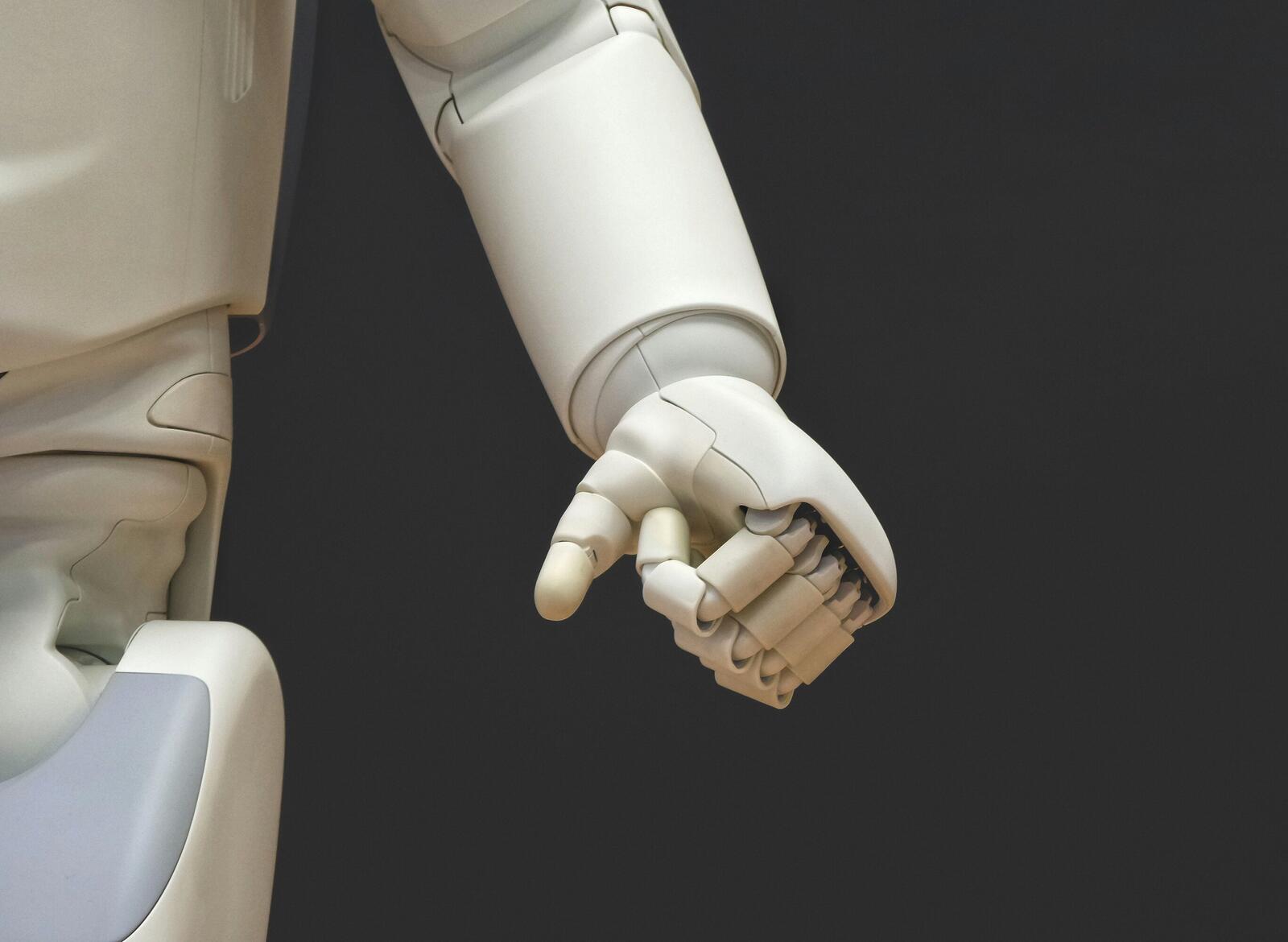
If you’re anything like me, one of the first things that comes to mind when I hear “humanoid” is C-3PO, closely followed by “Star Wars” droids and “I, Robot”. We’re talking about advanced robots that resemble humans in both their physical construction and their mannerisms, and up until not too long ago, they were very much a thing of the future.
Trapped in fictional worlds and engineered by means of technology that didn’t yet exist (at least, as far as most non-experts were concerned), humanoids weren’t part of our reality.
But recently, that’s completely changed. Now, we’re beginning to see a huge surge in the development of advanced humanoid robots, and they’re being designed to be far more accessible than we may have previously thought would be possible at this point in time.
What Is a Humanoid Robot?
First things first, we need to differentiate between a humanoid robot and just any old robot, and there are two things to consider that help define humanoids and distinguish them from other robots.
Straight off the bat, the term “robot” is broader and more generalised while “humanoid” is a specific type. This means that while all humanoids are robots, not all robots are humanoids. You can think it as an umbrella term and a more specific identifier, kind of like how all sneakers are shoes, but not all shoes are sneakers.
So, what are the defining features of a humanoid robot? Well, as one may assume, it’s all about the robot’s likeness to a human being. However, the important differentiator is that it’s more about practical likeness with regards to form and functionality in physical form as opposed to resemblance. That is, the point of a humanoid looking, in some ways, like a human (rather than an R2-D2-like robot) is that it’s able to function in a human environment.
For instance, a bi-pedal robot with two arms, two legs, human-like height and so one is going to be far better prepared to exist in the environment we’ve built for people. In theory, they’d be able to do things like walk up stars, open doors and so on, whereas another type of robot may not necessarily have the necessary physical capabilities to exist in our environment. Essentially, it’s really a practical feature.
What Makes Up a Humanoid Robot
According to most accepted understandings, a humanoid robot must be bipedal with two legs, two arms, a torso, hands and a head, most likely with some kinds of cameras and/or sensors.
Now, other than these attributes, it doesn’t necessarily actually have to look like a human beyond this (it doesn’t need to have a face, for instance), but it certainly can. So, to use our previous explanation, humanoid robots can resemble humans beyond their physical construction, but not all humanoids need to look like people.
What Are Humanoids Used For?
It really depends on what the specific robot is designed to do. Perhaps in the future, they’ll all have similar, extensive capabilities, meaning that most people would end up investing in similar types (just from different brands and manufacturers). But for now, their design is still quite specific to what they’re supposed to do.
Here are some of the main functions and utilities that humanoids are currently being used for.
Domestic and Household Use
One of the main things we’re starting to see humanoids being designed and used for is home and domestic settings. That would be for tasks like cleaning, cooking, maintenance and even providing companionship in some instances.
Having humanoids, or just any advanced robot, operating in private households is a complicated endeavour for many reasons: first, homes and households are both unpredictable and they’re not homogenous. That is, different households operate differently, from having varying physical environments (the actual houses are totally different) to the fact that owners have various preferences when it comes to how they like having things done.
Of course, another really significant factor is that having humanoids in domestic and home environments can be risky because they tend to be occupied by not only normal people who aren’t robotics experts, but also children, potentially pets and other possibly vulnerable individuals.
Research and Development
Humanoids are increasingly being used in research and development, and this has been going on for quite some time (potentially longer than domestic use, at least on a larger scale).
Humanoids can and do operate within research labs, working (so to speak) alongside researchers, scientists and engineers to perform tasks that may be other monotonous for highly trained humans or that require a lot of skill and precision (something that may be better achieved by a humanoid, at least on average).
Manufacturing
When it comes to manufacturing, robots of many different sorts have long been used in factories and other production facilities to increase output, productivity, improve overall quality and more.
Humanoids have the potential to improve these things even further, because they’re able to operate in environments originally designed for humans, so they’re able to slot in rather than having entire processes redesigned for robots of different sizes, forms and capabilities.
Social and Entertainment Use
Increasingly, we’re starting to hear about humanoids that are being designed and used for purposes closer to entertainment than actual utility, although this hasn’t yet developed into full-blown shows and such just yet. We’ve seen humanoids entertaining people by doing things like walking, dancing, talking and more (nevermind the Chinese robot Olympics). It seems plausible to anticipate that this will most likely continue to develop as the years go on, but who knows where this will end up.
Healthcare Assistance
Humanoids can be used in healthcare and medical situations to assist human medical professionals with treatments.
Again, their humanlike form makes them ideal for many tasks that other types of robots would most likely struggle with.
Military and Defence
Perhaps the most contentious use of humanoid robots would be for military, defence and use in combat. We haven’t quite seen this in action just yet, but several outlets including Reuters have reported evidence of intended military use by the likes of the United States and China. Not exactly surprising, but this raises interesting questions nonetheless.
According to Reuters, research that has been done by US and Chinese-affiliated groups have cited motivations for having “humanoid armies” including the fact that they could potentially save human lives, replacing human soldiers with humanoids.
However, the question that then arises is, what happens if and when we change the cost of war?


