


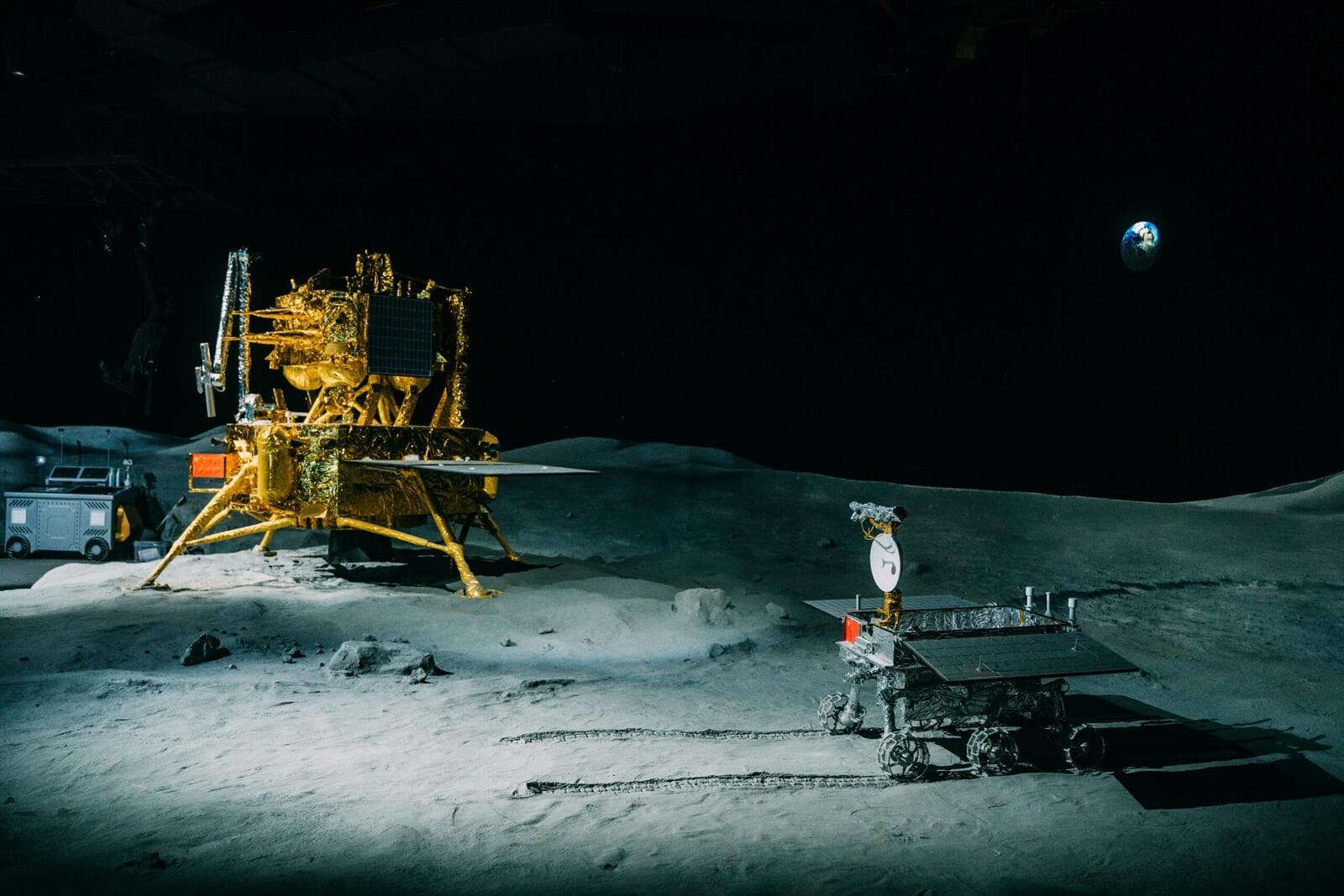
If you’re anything like me, the term “space mining” probably makes you think of a blue-collar occupation straight out of a sci-fi movie. We’re talking aliens and astronauts wearing hard hats, pick axes in hand, hammering away at extra-terrestrial matter in zero gravity.
And, believe it or not, you actually wouldn’t be far from the truth. Space mining is basically what it sounds like: digging for treasure but not on Earth. We’re talking asteroids, the Moon and maybe even Mars one day.
Of course, the loot isn’t just plain old gold and platinum (although those actually are in space, but that’s a story for another day) – it’s also water, rare metals and other resources that could help humans live and work in space (according to NASA).
Instead of launching everything from Earth at jaw-dropping costs, the idea is that spacecrafts, mostly robots at first, would hop over to these space rocks, pick out the good stuff and either use it in orbit or ship it straight back home. Think of it like turning the solar system into a giant warehouse for humanity’s next big adventure.
It’s More Than Just a Sci-Fi Dream
Sure, asteroid gold rushes sound cool, but the real magic of space mining isn’t hauling treasure back to Earth like Long John Silver of “Tresure Island”. Rather, it’s building a space economy that can run itself.
Water can be turned into rocket fuel, metals can be used to build spacecrafts and ice can support astronauts on long missions. The less we have to lug from Earth, the easier (and cheaper) deep-space exploration becomes. And if we can cut costs, we can do more, explore more and learn more.
In short, space mining is about making space sustainable – in theory.
Why Are We Talking About Space Mining Now/
For a long time, space mining was mostly nerdy white papers and sci-fi novels – much like watches that could make phone calls and self-driving cars were once a figment of our overactive and overzealous imaginations.
But suddenly, it’s a whole lot more real.
Startups Are Jumping In With Two Feet
Space isn’t just NASA’s playground anymore. Private companies are building probes, mapping asteroids and even figuring out how to fuel satellites in orbit. It’s basically the startup version of “let’s iterate in space”.
Rockets Are Getting Cheap(er)
Let’s not kid ourselves, rockets aren’t cheap and they never will be. But, they certainly are cheaper than they used to be, and that’s a significant development.
Reusable rockets, tiny satellites, better engines – getting into orbit no longer costs a small fortune. According to NASA, that makes asteroid scouting, lunar prospecting and in-orbit refuelling more plausible than ever.
The Space Economy Is Booming
From satellites to lunar bases, demand for space-based resources is growing fast. Fuel depots, construction materials and life-support resources all need to exist somewhere other than Earth.
And space mining is one way to make that happen.
Startups Could Have a Slice of the Pie
Space mining isn’t just about rockets and robots – it’s where AI, robotics, materials science and venture capital collide. Companies could specialise in asteroid prospecting, orbital refuelling, lunar construction or even in-space manufacturing. Imagine an entire Silicon Valley… but in orbit. That’s quite something, isn’t it?
There’s also a strategic side to consider. Rare metals and water in space could change supply chains, reduce reliance on Earth and even shift geopolitical power.
Space mining may be in its early stages, but the excitement is real. If it works, it could make deep-space missions cheaper, help humans live beyond Earth, and create entirely new markets.
For startups and tech innovators, it’s a playground of infinite possibilities – quite literally. Mining asteroids might sound like science fiction, but the groundwork is already being laid for a future where humanity isn’t just visiting space. It’s thriving there.