


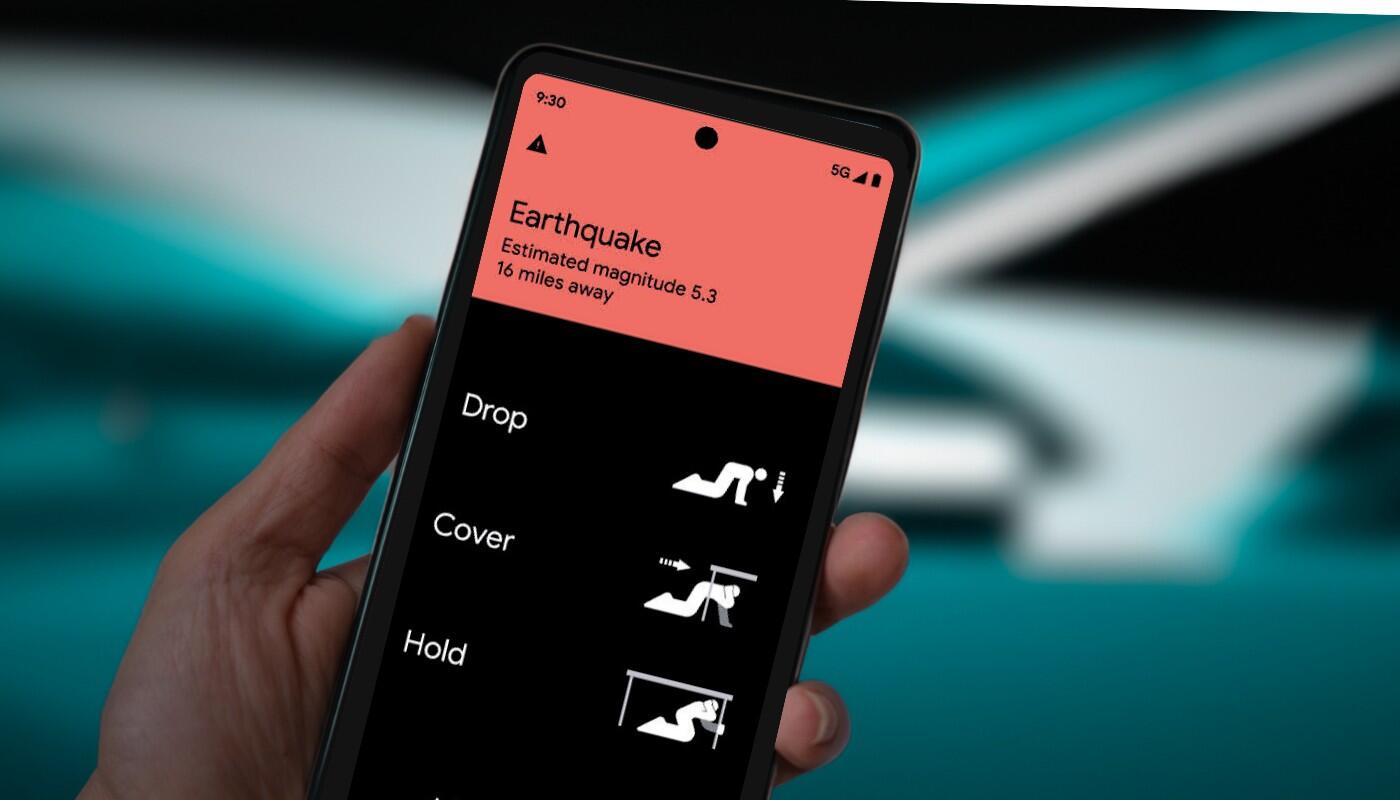
Two recent earthquakes in Venezuela demonstrated a new reality: for millions of people, their Android phones were already tracking the tremors before the first wave of shaking even arrived. Google’s Android Earthquake Alerts System sent warnings to an estimated 11.4 million users, giving recipients anywhere from a few seconds to nearly two minutes to take cover. It came at no cost and required no extra equipment – the technology responsible for the warning was already in their pockets.
Most Android users have no idea their phone is also a seismometer. The events in Venezuela offer one of the most vivid real-world proofs of concept for ambient smartphone sensing at scale, highlighting both its current capabilities and its future potential.
How Android Phones Detect Earthquakes
Every Android phone contains an accelerometer – the small sensor that detects motion and orientation. Usually, these sensors serve routine functions: rotating the screen, tracking steps, or detecting a fall. But the Android Earthquake Alerts System repurposes that same technology for a much higher-stakes task. When many phones in the same area register near-simultaneous abnormal accelerometer readings, Google’s servers aggregate those signals, estimate an epicentre and magnitude, and decide whether to issue an alert.
The reason warnings can arrive before the shaking comes down to physics. Seismic waves travel through the ground at a few kilometres per second. Electronic alerts travel at the speed of the internet. Once the system detects the earliest, fastest seismic waves and estimates where damaging shaking is headed, it can push a notification to phones in the affected area faster than the ground motion arrives. This interval – seconds in some cases, nearly two minutes for people further from the epicentre – is what gives the system its value.
A softer “Be Aware” notification goes out for lighter expected shaking. A louder “Take Action” alert – which can override Do Not Disturb, sound an alarm and display safety guidance – goes out for stronger expected shaking. In Venezuela’s case, the system was working from a combination of official seismic network data and the crowdsourced signal from phones in the region.
More from Tech
- Same Car, Different Driver: The Tech Behind F1’s Custom Set-Ups
- From Web3 Hype To Commercial Advantage: How The Next Phase Of Emerging Technology Will Be Won
- Who Controls The Thermal Skies? The Security And Privacy Questions Behind SatVu’s New Satellite
- The Drone Technology Helping Farmers Cover More Ground In Less Time
- F1’s Pitlane Has Its Own Race, And Technology Is Driving It
- Top Deep-Tech Startups In Finland To Watch In 2027
- Are VoIP Calls Secure? Let’s Talk About Who Could Be Listening
- The Tech That Shapes F1 Car Performance From Circuit to Circuit
Why This Is More Impressive Than It Sounds
The elegance lies in the infrastructure: instead of installing specialized equipment, Google tapped into the millions of devices already distributed across the country. Every additional Android phone with the feature enabled improves the detection resolution and reliability of the network. The system gets better as device penetration increases, with no new hardware required and no subscription fee for users.
That makes it particularly valuable in regions where dedicated ground-sensor networks are sparse or underfunded. In areas with good seismic monitoring infrastructure – Japan, the US West Coast, parts of Europe – official systems already provide early warnings. In many other earthquake-prone regions, the smartphone network is filling a gap that governments haven’t been able to close with traditional infrastructure.
Even a few seconds of warning can be life-saving. It provides just enough time to drop and take cover, for automated systems like trains or industrial machinery to trigger safety protocols, and for individuals to distance themselves from windows or hazardous objects. Two minutes is an enormous amount of time in earthquake terms. The fact that this is being delivered for free, at scale, through hardware that already exists, isn’t a minor thing.
The Bigger Picture: What Else Could This Infrastructure Do?
The earthquake detection system is built on a simple premise: a vast network of devices sending coordinated signals to a central hub, which then filters out the noise to identify genuine threats. That concept is not limited to seismic activity.
Barometric pressure sensors, already present in many smartphones, could potentially detect sudden pressure changes associated with storms or flash flooding. Air quality could be mapped through a combination of dedicated low-cost sensors and crowdsourced location data. Public health signals – anonymised mobility patterns, symptom reporting – could provide early outbreak detection with appropriate privacy safeguards in place. Each of these would reuse the same ambient sensing architecture that made the earthquake alerts work.
None of these ideas are ready for immediate implementation. Air quality monitoring requires specialized hardware not currently found in standard smartphones, while public health initiatives introduce a much deeper layer of privacy and consent challenges than seismic detection. The earthquake system works partly because accelerometer data is relatively low-sensitivity – it tells Google your phone is shaking, not much else. Moving into health or environmental monitoring raises the stakes considerably for what data is collected, by whom and for how long.
But the Venezuela earthquakes make a strong case for taking ambient sensing seriously as a public safety tool. The technology is already here, the reach is already global, and the cost to the user is zero. The more complex hurdles – governance, privacy and ensuring equitable coverage across diverse device landscapes – are real but solvable. What June 24 showed is that when those problems are solved, the results are 11 million people with a two-minute head start.


