


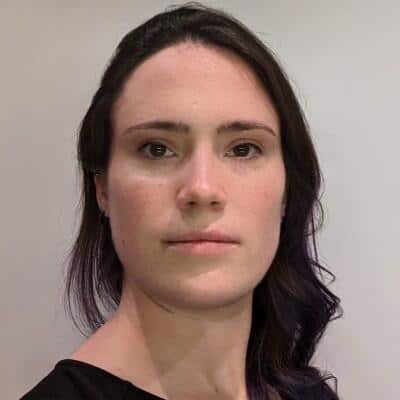
Name: Zelda Mariet
Company: Bioptimus
Position: Co-Founder and Vice President of Research, Bioptimus
Website: https://www.bioptimus.com/

About Zelda Mariet
Zelda Mariet is helping define how artificial intelligence should be built, evaluated, and trusted in biology. As Co-Founder and Vice President of Research at Bioptimus, she leads the development of foundation models that enable AI systems to learn unified representations across biological scales, moving the field beyond siloed data and narrow predictions toward integrated, system-level understanding.
Her work is driven by a stark reality: despite decades of innovation and hundreds of billions of dollars invested each year, biomedical research and drug development remain slow, costly, and unreliable. Nearly 10 million people die from cancer annually, around 95% of rare diseases still lack approved treatments, and fewer than 10% of clinical trials succeed. Zelda’s research focuses on the root causes of this inefficiency, not just its symptoms.
She argues that applying AI to biology is not simply a matter of adapting large language models or connecting chat interfaces to biomedical data. Biology has its own “language,” encoded in protein sequences, DNA, tissue images, and clinical measurements, and requires bespoke modeling strategies built on the same core ideas as modern AI, but fundamentally re-engineered for biological complexity. Just as it took decades to build models that truly understand human language, Zelda believes biology demands its own foundation models, evaluation standards, and validation processes.
A defining principle of Zelda’s work is that building powerful models is not enough; they must also be evaluated based on how they are used in practice. The burden of proof in biology is high, and rightly so—human health is at stake. Her research emphasizes transparency, uncertainty estimation, and rigorous validation, ensuring that models guide scientific decision-making rather than replace it. This philosophy bridges the gap between machine learning theory and real-world biomedical research.
Zelda’s most visible achievement is her contribution to H-Optimus, a suite of pathology foundation models that has been downloaded over one million times and is used globally across cancer research, drug discovery, and emerging clinical pipelines. H-Optimus is benchmarked as state-of-the-art for its ability to transfer information from routine histopathology images to other biological scales, including single-cell gene expression. By making these models freely available to academic researchers, some as open source, Zelda helped establish a shared biological foundation that improves reproducibility and accelerates progress across the field.
Building on this success, Zelda played a central role in developing M-Optimus, a next-generation foundation model that integrates tissue, molecular, and clinical data within a single framework, laying the groundwork for a World Model of Biology. Drawing on prior experience building large-scale AI systems, including at Google DeepMind, and a long-standing commitment to mentorship and inclusion in tech, Zelda’s work places her at the forefront of responsible, foundational AI research for biology, focused on models that are not only powerful, but also trustworthy, reusable, and impactful.

Check out what TechRound can do for your business: SEO, PR, HR Software, Payroll Software, IT, VoIP.