


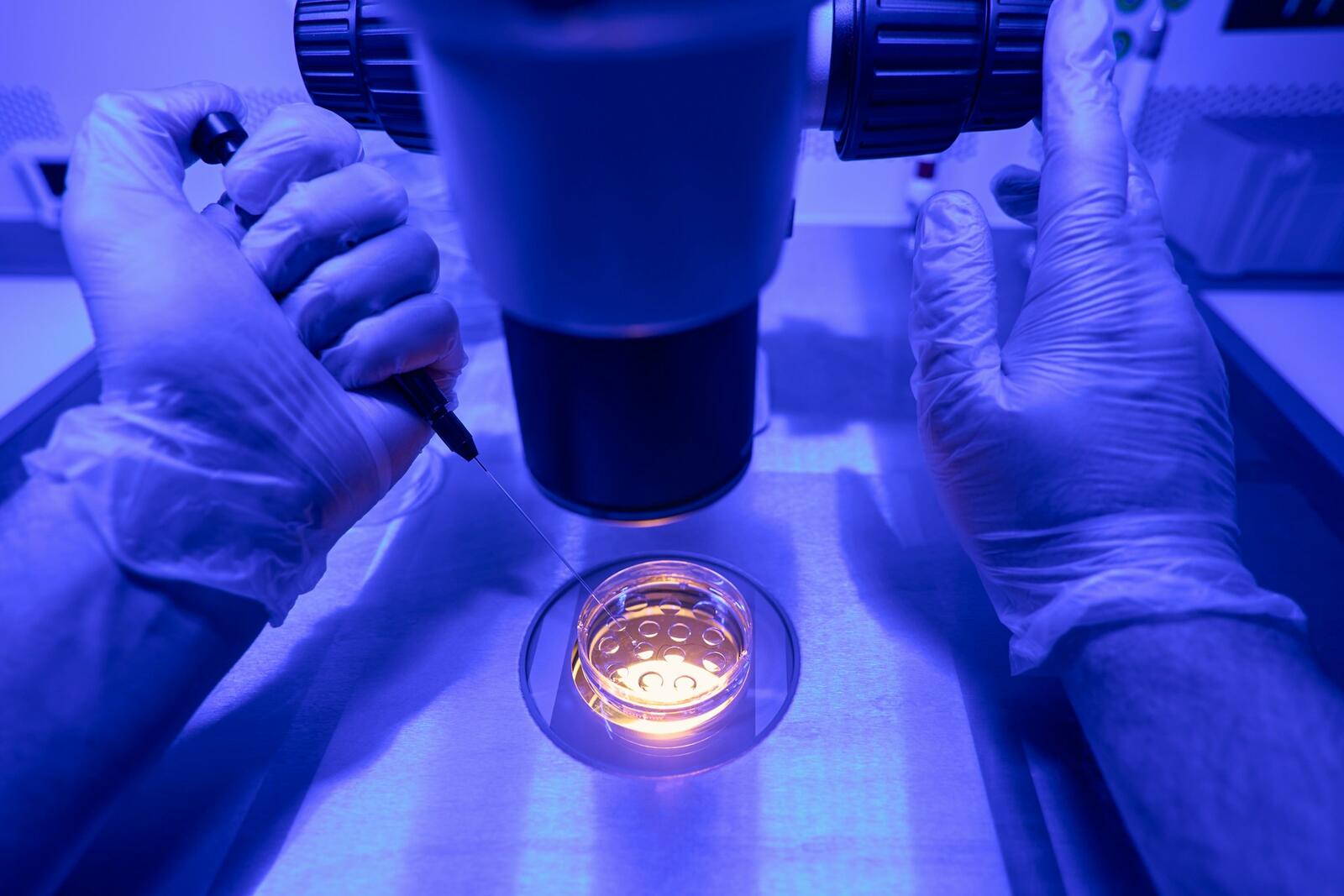
- IVFmicro is a University of Leeds spinout founded by Virginia Pensabene, Ph.D, and Helen Picton, Bsc, Ph.D.
- The company has developed a patented microfluidic device designed to revolutionise IVF by improving the quality and quantity of embryos in a cycle.
- Its technology aims to solve the problem of low IVF success rates by creating a safer, more stable environment for embryos to develop outside the womb.
Website: https://ivfmicro.com

What is IVFmicro?
IVFmicro is a spinout from the University of Leeds that is working to improve the success rates of IVF by focusing on one of the most important, but difficult to predict parts of the process: embryo culture.
In normal IVF treatment, once eggs are fertilised, embryos need to be carefully grown, transported and monitored in the lab before doctors decide which embryo has the best chance of leading to a pregnancy. This stage is highly repetitive, extremely delicate and depends on the skill and judgement of experienced doctors. Even small changes in handling can affect embryo quality, making it hard to get right.
IVFmicro is addressing this problem with a new microfluidic device designed to make embryo handling safer. Microfluidics uses very small amounts of fluid to mimic the environment an embryo would experience in the body.
The technology can be used within any IVF treatment cycle and aims to increase both the quality and the number of embryos produced. This means more viable embryos are available for transfer and for freezing, and each embryo has a higher chance of successfully implanting and developing into a pregnancy.
The company was founded in 2024 by Virginia Pensabene, Ph.D and Helen Picton, Bsc, Ph.D, both professors at the University of Leeds. IVFmicro recently raised £3.5 million in pre-seed funding as it moves towards bringing its technology into fertility clinics.
“At IVFmicro, we are harnessing years of research into reproductive biology to create a practical, accessible solution that can improve outcomes for patients undergoing fertility treatment. Our goal is to make IVF more effective, more predictable, and ultimately more hopeful for those striving to start a family.”
– Professor Helen Picton, Scientific Director & Co-founder

Want to be featured as TechRound’s Startup of the Week? Find out more about this weekly feature, and how to get involved, here.
What Makes IVFmicro Unique?
IVFmicro’s patented microfluidic device works very differently from the petri dishes used in IVF labs. Instead of relying on these containers, it uses carefully controlled fluid dynamics to recreate conditions closer to those found in the fallopian tubes, where embryos naturally develop in the body.
One major advantage of this is that it removes the need for mineral oil, which is used in IVF to stop culture fluid from evaporating. While widely used, this oil can be toxic to embryos, is expensive for clinics, and can be difficult to handle in practice. IVFmicro’s system avoids these issues altogether, creating a cleaner and safer environment for embryo development.
The device also includes a shockproof central culture chamber, designed to protect embryos from vibrations and sudden environmental changes during lab work. By improving conditions at this sensitive stage, the system supports healthier embryo growth. As a result, IVFmicro’s technology has been shown to improve embryo production by at least 15%.
Is There A Market For The Fertility Sector?
The market for fertility treatments is big and growing, driven by a global infertility crisis that affects 1 in 6 couples. Despite the high demand, the sector suffers from ongoing inefficiencies and high costs.
Currently, IVF success rates are very low, hovering between 20% and 40% for women under 40, and dropping sharply with age. A huge 50% to 70% of embryos fail to develop in the lab. This forces patients to undergo multiple, expensive treatment cycles, with each round costing thousands of pounds.
IVFmicro was created to tackle this problem head on. By improving embryo survival and development in the lab, the company aims to increase the number of viable embryos available in each cycle. This not only raises the chances of success, but also reduces the need for repeat treatments.
What Products Does IVFmicro Have?
IVFmicro’s core product is its Microfluidic Embryo Culture Device, a physical Class IIa medical device designed for use in fertility clinics.
The device is a plastic unit with an entrance port, microfluidic channels, and a central, shockproof culture chamber.
The device mimics the in vivo environment (womb/fallopian tubes) to culture embryos from fertilisation to the blastocyst stage without the use of toxic oil.
More information about IVFmicro and its technology can be found at ivfmicro.com.


