


Authored by Les-leigh A
When a senior Apple executive walks out of one of the most valuable companies on the planet to join a health wearables startup, you can’t help but wonder what they know that we don’t.
Brian Lynch, who led Apple’s home hardware division, including the HomePod and a string of yet to be released smart home devices, has left to become SVP of Engineering at Oura. On paper, it looks like a step sideways. In practice, it says something much more interesting about where the best hardware minds think the real action is right now.
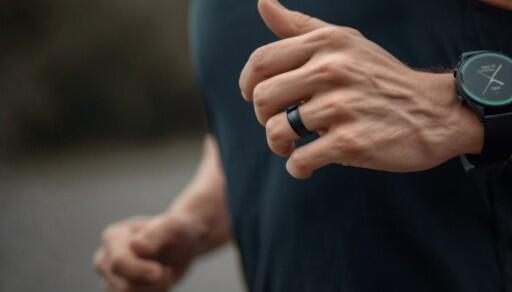
More and more, the answer seems to be right on your finger.
Why Oura Is Worth Leaving Apple For
Oura isn’t a small underdog anymore. The Finnish smart ring company is projecting close to $2 billion in sales for 2026, according to CNBC, and holds over 70% of the global smart ring market. Its valuation sits at around a staggering $11 billion. It’s built its position not just on hardware – although the ring itself is genuinely impressive – but on what it does with the data it collects. We’re talking about fifteen billion hours of user health data, used to train AI models that are starting to resemble something closer to a personal health advisor than a fitness tracker.
Lynch’s background is precisely what Oura needs next. Building consumer hardware at Apple’s level means obsessing over sensor precision, manufacturing tolerances and product integration in ways that most companies never come close to achieving. That expertise matters greatly as Oura pushes into more progressive health monitoring, the kind that needs to be accurate enough to actually mean something clinically, not just directionally.
The hire also signals something about scale. Oura isn’t just trying to sell more rings. It’s trying to build the infrastructure behind a new category of preventative health, and that requires engineering leadership that has operated at serious volume before.
What The Wearables Market Is Actually Telling Us
Lynch’s move is one data point, but it fits a broader pattern that’s been building for a while. The data ownership battles playing out in the fitness wearables space are partly a reflection of just how valuable this data has become. Companies aren’t fighting over user bases for the sake of it – they’re fighting over health datasets that could underpin the next generation of personalised medicine and so much more.
The smart ring specifically is winning for a simple reason: people are actually wearing it. The Apple Watch is a fantastic piece of engineering, but it’s also a screen on your wrist competing with your phone for attention.
More from Tech
- Is Defence Tech Becoming Europe’s Most Important Industry?
- Is Agritech Moving Faster Than UK Farmers Can Adapt?
- How Are Digital Threats Changing The Way People Use Everyday Tech?
- What Could Football Technology Look Like By The Next World Cup?
- Top Deep Tech Startups In The Netherlands
- Are We Too Reliant On WhatsApp?
- Travellers Are Starting To See A Drop In Mishandled Luggage – And It’s All Thanks To Tech
- The Supreme Court Just Blocked Geofence Warrants – But What Does It Mean For Your App
A ring, however, is more innocuous. It’s comfortable to wear and it doesn’t interrupt you. And for continuous, passive health monitoring – the kind that tracks how your body responds to stress, sleep, exercise and illness over time – that unobtrusiveness matters in a world constantly fighting for our attention.
This is also why the category is expanding beyond sleep and steps.
For instance, Oura has already moved into women’s health and cycle tracking; glucose monitoring via wearables is a serious research focus across several companies; and mental health and stress indicators derived from biometric data are gaining ground.
The ring form factor, it turns out, is well suited to all of this.
The Opportunity For UK Health Tech Startups
Here’s the part of this story that tends to get overlooked. Oura’s rise and Lynch’s hire aren’t just interesting for Oura – they’re a signal for every startup building in the health monitoring and biomechanics space.
The big platforms are moving fast, but they’re moving broadly. There’s genuine whitespace in the areas that require clinical depth, specialist knowledge or community trust to do well. Women’s health is an obvious one, and while Oura has made inroads, there’s still enormous room for focused players. UK health tech startups like Babylon Health have shown that building clinically focused digital health products is a very different proposition to building a general platform – and that the depth required is precisely what creates defensibility.
Metabolic monitoring is another. Continuous glucose tracking for non-diabetic users – athletes, people managing energy and nutrition, those with hormonal conditions – is a market that’s wide open and genuinely unsolved at the consumer level. UK biomechanics and sports science startups that understand the physiology here are better positioned than they might think.
The lesson from Lynch’s move isn’t just that Oura is on the rise. It’s that the intersection of AI and consumer health tech is attracting the kind of talent that was, until recently, only interested in working at the biggest companies in the world.
That’s a meaningful shift we’re observing and for the startups building in this space, it’s a signal that the category they’ve been building in just got a lot more serious.


