


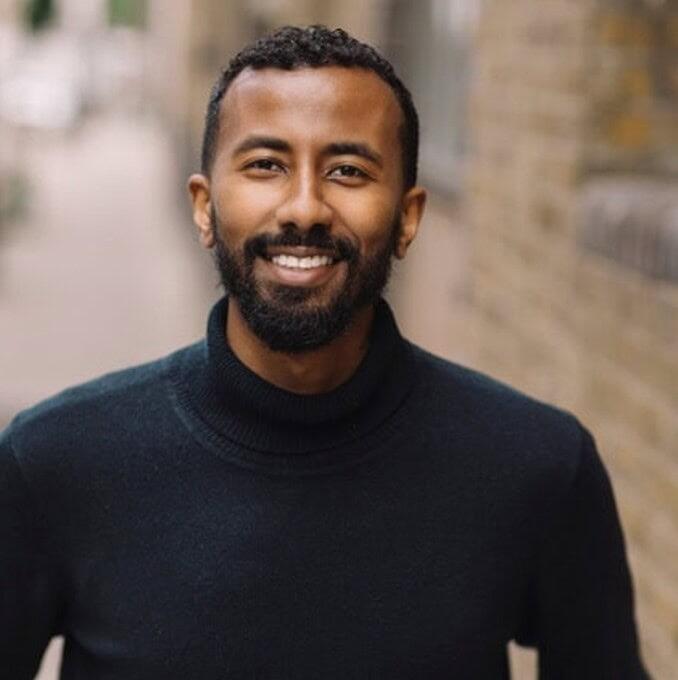
- Mohamed Gaafar is the CEO and co-founder of Gryd, an energy technology company helping housebuilders deploy fully funded solar and battery systems on new homes through a UK-first leased solar model.
- Before launching Gryd, Mohamed spent seven years working in engineering and infrastructure, leading major energy and development projects across the UK, Saudi Arabia and other international markets.
- He founded Gryd during the energy crisis after recognising that while the technology to reduce household energy bills already existed, high upfront costs were preventing many homeowners from accessing it.
- Mohamed is passionate about improving the sustainability and affordability of housing, with a long-term goal of making clean energy systems a standard feature of every new home rather than an optional extra.
Tell Me About Yourself and Gryd
I’m a civil engineer turned energy entrepreneur. Before co-founding Gryd, I spent seven years leading large-scale engineering and energy projects worldwide, including mega-cities in Saudi Arabia and towns and campuses across the UK. I’m deeply curious about the livability of our spaces, and my engineering career let me explore the climate and energy innovation needed to change our built future.
It also trained me to look at the urban realm abstractly and on a large scale, and think about how infrastructure affects people. I definitely apply that thinking to the work we do now at Gryd.
Gryd is an energy tech company that works with housebuilders to deploy fully-funded smart solar and battery systems onto new homes. Our mission is to democratise the benefits of solar and storage through a UK-first leased solar model.
What Inspired You To Start Gryd, and What Problem Were You Trying To Solve?
I was working in energy and infrastructure during Russia’s invasion of Ukraine and the first energy crisis. Being in the heart of the industry, I could see the technology existed to bring down homeowners’ energy costs, but the barriers to accessing it were huge. That frustration turned into an obsession. I couldn’t believe that no one was solving this at scale, and that was what drove my two co-founders and me to start Gryd.
We spoke to numerous homeowners and kept hearing that the two biggest barriers to solar adoption were the high upfront cost and traditional ownership models that often don’t align with how long people stay in a property and the payback period of their investment.
Gryd is now addressing this and setting the standard for clean home energy – working directly with housebuilders to deploy low-cost, leased solar that makes new homes cheaper to build, buy and run.
What Has Been Your Biggest Challenge So Far, and How Did You Overcome It?
With Gryd, we don’t have an end customer until we have developer partners on board – so there’s a huge need to build trust and prove demand for our model in real time, all while we’re still mid-deployment.
We tackled this on two fronts. On the legal side, a lot of industry trust was lost by previous models like the Feed-in Tariff, so we’ve been deliberate about creating genuine transparency around Gryd’s lease and buyout terms. It’s important for us that homeowners have real flexibility and choice, which matters not just to the end buyer, but to the developer making the deployment decision too.
We’ve also been very intentional about shaping our model to be as compelling and beneficial for the customer as possible. Our research showed us that consumers value price certainty and simplicity above all, so we set up our subscription as a fixed price not pegged to inflation – which is what the market actually wants, rather than a unit-rate model and annual hikes.
More from Startups
- Columbia University: Successful Alumni That Founded Startups
- What Is Germany Doing To Attract More Startups?
- Are Hiring Challenges Preventing Startups From Reaching Their Full Potential?
- Meet The Startups Crowdfunding w/c 12.10.2026
- The Cold Start Problem: Why Getting A Startup Off The Ground Is So Difficult
- Founder Of The Week: Ryta Zasiekina
- Top Industrial Tech Startups To Watch In 2027
- Startup of the Week: Kord
Can You Describe a Pivotal Moment That Significantly Shaped the Direction of Gryd?
Initially, we explored applying Gryd’s leased model to both retrofitted homes and new-build developments. But building a product to sell directly to individual consumers comes with a lot of challenges – each customer is costly to convert, and every home and owner is different.
We realised the real path to scale – and to tackling the energy transition – was partnering with developers and local authorities to deploy our systems at volume. As a team, our backgrounds in housebuilding and infrastructure gave us an unfair advantage in taking that route.
That shift also changes the shape of the problem we’re solving. There are already some great businesses working on retrofitting the UK’s existing housing stock. Gryd’s focus is on the new-build pipeline, which means fewer homes will need retrofitting down the line.
How Do You Define Success?
For your business: Every time I drive past a new development and see only two solar panels on a roof, I’m reminded of the scale of the work still ahead of us. We set out to change how homes are built from an energy performance perspective, and deliver better outcomes for both builders and buyers – we know both are up against huge challenges. For me, success is when amply-sized, clean home energy systems are no longer the exception but the norm. Business-as-usual isn’t good enough for the future of housing in this country.
As a founder: For me personally, it comes down to a sense of stewardship. Building a business demands a huge amount of trust from many different people, and the impact you’re creating should outlive you. Success is everyone being better off for what you’ve built – your team, your partners, the homeowners – well off into the future.
What Advice Would You Give To Someone Thinking About Launching Their Own Startup?
There’s a lot of romanticising around the entrepreneurial journey, and I think that does it a disservice. The reality is that it takes real commitment and conviction. You need to believe you’re the right person to solve the problem, that you have the right skills and experience – and you need to be genuinely excited by it.
Your first idea probably won’t be what you end up building – your second might not be either. It can take a long time to land on the thing you truly believe in and are willing to do whatever it takes to build.
What’s Next for Gryd? Any Exciting Developments We Should Watch Out For?
Interest in Gryd’s model is growing as the housebuilding industry prepares for the Future Homes Standard, which will come into force in March 2027 and will essentially require solar on all new homes. With a few thousand homes already in the pipeline and ongoing discussions with national housebuilders, we’ve got some really interesting projects and major partnerships in the works that we’ll be able to talk about soon.
We’re also exploring the retrofit market, where we’re seeing strong demand from large portfolio holders facing a real challenge to decarbonise their housing stock at scale in the coming years.
Want to be featured as TechRound’s Founder of the Week? Find out more about this weekly feature and how to get involved here.
Founder’s 5 with Mohamed Gaafa
We wanted to know a bit more about the man behind Gryd, so we’ve put together the exclusive Founders’ 5 with Mohamed Gaafa.
Favourite business tool
Your Network.
One lesson you learned the hard way?
Everything in a business ultimately comes down to conviction building. Focus on creating a product and service people genuinely believe in, and the rest will follow.
One future trend you’re watching?
Data centres are arguably the most innovative, fastest-moving part of the energy space right now, but that growth is competing for the same grid capacity we need to power and build homes for people. I’m very interested in how that will play out.
One quote you live by
Build with the right structure to execute with speed and stamina.
One book/podcast you recommend
“Redefining Energy”. Simon Phelan from Hometree’s episode is excellent on how they’ve been able to securitise their home decarbonisation lending product.
Want to be featured as TechRound’s Founder of the Week? Know someone who deserves to be recognised as a founder making waves in the startup landscape? Find out more about this weekly feature and how to get involved here.


