


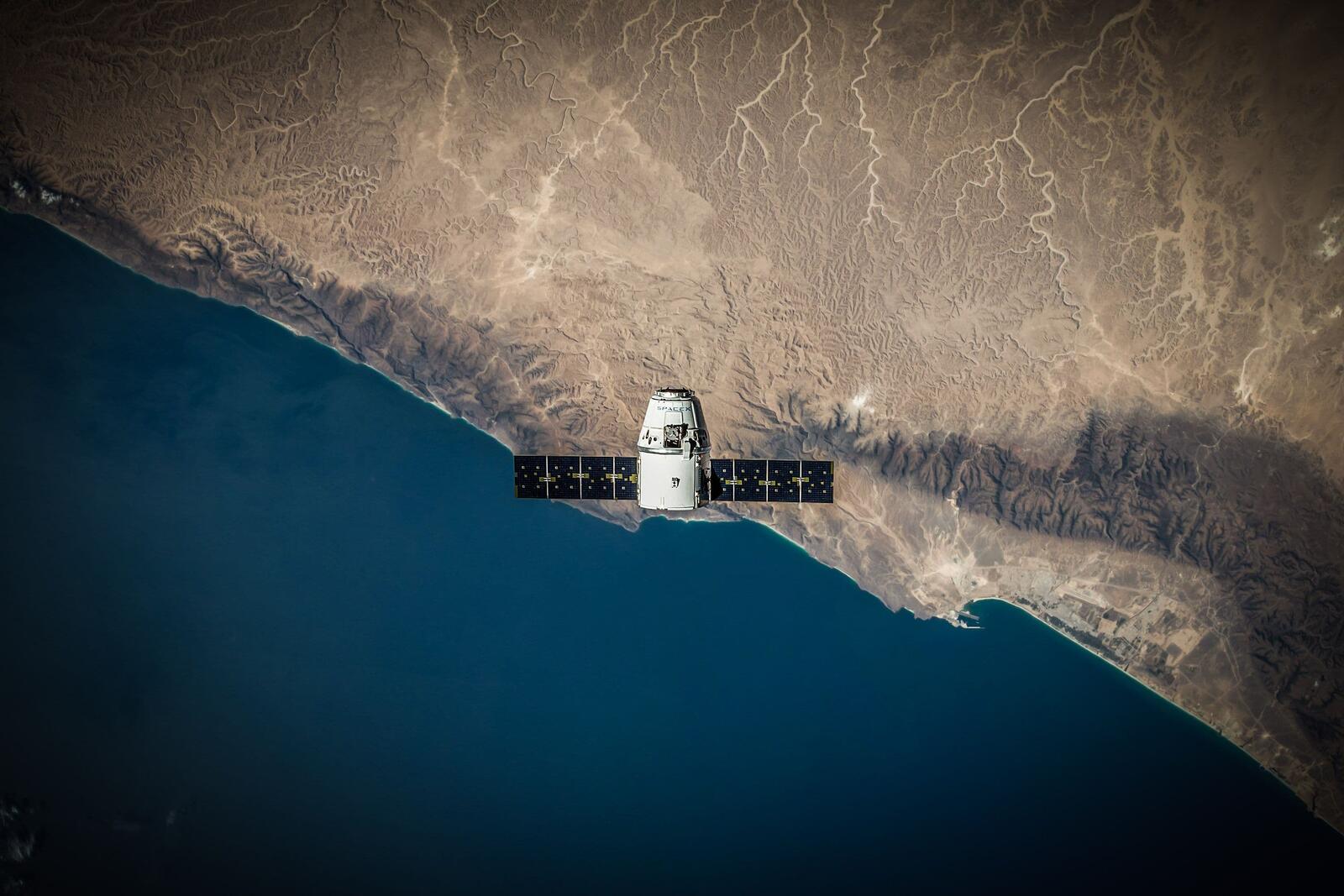
With a long history of aerospace innovation, Sweden’s new generation of startups is helping to expand the country’s role in the industry. Traditionally, established companies have focused on aircraft production, defence and space hardware, but new Swedish startups are now exploring electric aviation, satellite communications, Earth observation, propulsion, autonomous systems and space infrastructure.
This is backed by an ever-growing ecosystem of organisations such as ESA BIC Sweden, which has supported more than 60 space-tech startups since opening its doors in 2015. Sweden has also set up Space Sweden to speed up commercialisation and collaboration across the country’s space sector, with the aim of making Sweden one of Europe’s leading space economies.
Why Do Aerospace Startups Matter?
Aerospace startups are important because they can bring new technologies and business models to an industry that has traditionally been known for long development cycles and large established manufacturers. Smaller companies can specialise in niche problems such as electric propulsion, satellite communications, autonomous flight and analytics for Earth observation.
Their innovations also have uses far beyond aerospace. Satellite technology supports telecommunications, navigation, weather monitoring, agriculture, infrastructure management and environmental monitoring and aerospace engineering can help drive progress in areas like batteries, advanced materials, robotics and artificial intelligence.
Startups also help increase the competitiveness of the aerospace industry. As launch prices fall and satellite technology becomes more widely available, there are opportunities for smaller companies to build products and services without having to build an entire spacecraft or aircraft. ESA says the ESA Business Incubation Centers help entrepreneurs develop ideas in space that then become commercial businesses. They also provide technical and business-development support.
Why These Companies Are Worth Watching
These are companies to keep an eye on, these are some of the biggest trends shaping the future of aerospace. For example, electric and hybrid-electric aviation could change the way regional aircraft are powered and new satellite propulsion technologies could lead to more capable and manoeuvrable spacecraft. At the same time, companies such as Spacept and I-CONIC Vision demonstrate how satellite data is increasingly becoming valuable to solve terrestrial problems.
There is also a growing Swedish infrastructure for space entrepreneurship that helps support the ecosystem. ESA BIC Sweden has four centers around the country and offers startups funding, technical support, business advice and access to an international network. Space Sweden is also striving to link startups, investors, industry, academia and public-sector stakeholders with the aim of transforming promising technologies into scalable businesses.
The Swedish aerospace companies have a strong basis for international growth thru the combination of established aerospace know-how, research institutions, support for start-ups and access to European markets.
More from Startups
- The Cold Start Problem: Why Getting A Startup Off The Ground Is So Difficult
- Founder Of The Week: Ryta Zasiekina
- Top Industrial Tech Startups To Watch In 2027
- Startup of the Week: Kord
- How Do Startup Valuations Work When A Company Isn’t Profitable?
- These Aerospace Startups Are Out Of This World, But Made In Japan
- 5 Startups Crowdfunding w/c 05.10.2026
- Founder Of The Week: Danny Jenkins
Aerospace Startups In Sweden
As new technologies mature, the startup ecosystem in aerospace in Sweden is likely to become more diverse. Electric aircraft, satellite constellations, autonomous spacecraft, artificial intelligence and advanced propulsion and Earth-observation applications are creating new commercial opportunities.
“This is an opportunity for Sweden to build on its existing aerospace expertise and to establish a stronger position in the rapidly developing global space economy.” The startups being created today could one day be the key suppliers, technology partners and aerospace companies of tomorrow.
Satcube

Satcube is a Swedish company that develops portable satellite communication terminals. Its technology delivers high-speed connectivity where traditional communications infrastructure does not exist or is unreliable.
It has uses across a range of sectors, including emergency response, humanitarian work, media, government and defence. Satcube is broadening the use cases for satellite communication by making satellite connectivity more accessible and portable.
The company’s work is a demonstration of how aerospace technology is now extending far beyond the spacecraft and aircraft themselves. Satellite connectivity can be a crucial communication infrastructure on Earth, especially in remote locations or where terrestrial networks are damaged.
Arctic Space Technologies

Arctic Space Technologies is working on satellite ground infra and satellite data. The company is based in northern Sweden, an environment particularly well-suited for communicating with satellites in polar and other high-latitude orbits.
The paper emphasises the importance of the infrastructure on Earth that supports space missions. Satellites are in orbit but ground stations are needed to receive data, communicate with spacecraft and pass information to users.
Arctic Space Technologies is thus contributing to the growing ground segment of the space economy. Its location in northern Sweden also benefits from the country’s established space infrastructure and expertise in the region.
StarDrive Aerospace

StarDrive Aerospace is a Swedish space technology company developing propulsion systems for small satellites. The company is developing safer, greener propellants and a modular approach to reduce the cost and complexity of conventional satellite propulsion.
Its technology targets satellite manufacturers, system integrators, research organisations and commercial space operators seeking flexible in-space mobility solutions. One of the current incubatees at ESA BIC Sweden is StarDrive Aerospace.
And as the number of craft in orbit increases, the propulsion of satellites is becoming more important. Satellites require propulsion for all aspects of their operation, from orbital manoeuvres to positioning and finally controlled disposal. A number of startups are focusing on smaller, more flexible propulsion systems that could be an important part of the next generation of spacecraft.
Spacept

Spacept monitors infrastructure using satellite images powered by machine learning and artificial intelligence. Its technology can be used to analyse Earth-observation data to help identify potential problems impacting infrastructure such as power networks.
This provides an alternative to relying on physical inspections by helicopter, drone or ground teams. Satellite images can cover large geographic areas and artificial intelligence can help to process the resulting huge amount of data.
The company shows one of the most important advances in the modern space industry, the growing importance of downstream space applications. Spacept is not only about building satellites, it is about solving problems down here on Earth with satellite-generated information. Spacept is also an ESA BIC Sweden alumni company and they explain how they use computer vision and machine learning to analyse Earth-observation data for infrastructure operations.
Vimotek
Vimotek is developing vision and motion technologies for space applications, including rendezvous and proximity operations.
With the increasing number of satellites in orbit, spacecraft must be able to operate safely in the presence of many other objects. Technologies that allow spacecraft to sense their environment, determine relative motion and execute precise manoeuvres may become increasingly important.
Vimotek’s work is related to the development of autonomous and semi-autonomous spacecraft. Such technologies could eventually allow activities such as satellite servicing, inspection, formation flying and other in-orbit operations,
I-CONIC Vision

I-CONIC Vision is working on technology that uses satellite and aerial images to create detailed 3D and 4D models.
This technology shows how aerospace data can be transformed into valuable information for non-space uses. 3D models can be used to support mapping, monitoring, planning and infrastructure analysis.
One more important trend in the aerospace industry is the continuing convergence of space technology, artificial intelligence and geospatial data. As satellites take ever more sophisticated pictures, startups are challenged to turn that raw data into useful commercial products.
Remos Space

Remos Space is focused on satellite communications and software defined solutions for spacecraft connectivity.
Dedicated hardware and complicated infrastructure can be involved in traditional satellite communication systems. Software-driven approaches offer the potential for more flexibility as spacecraft requirements change.
This is particularly the case in the fast-growing small-satellite market. Communication technologies should be flexible, scalable and inexpensive for smaller operators. Remos Space is part of the bigger trend of space technology becoming more software-driven.


