


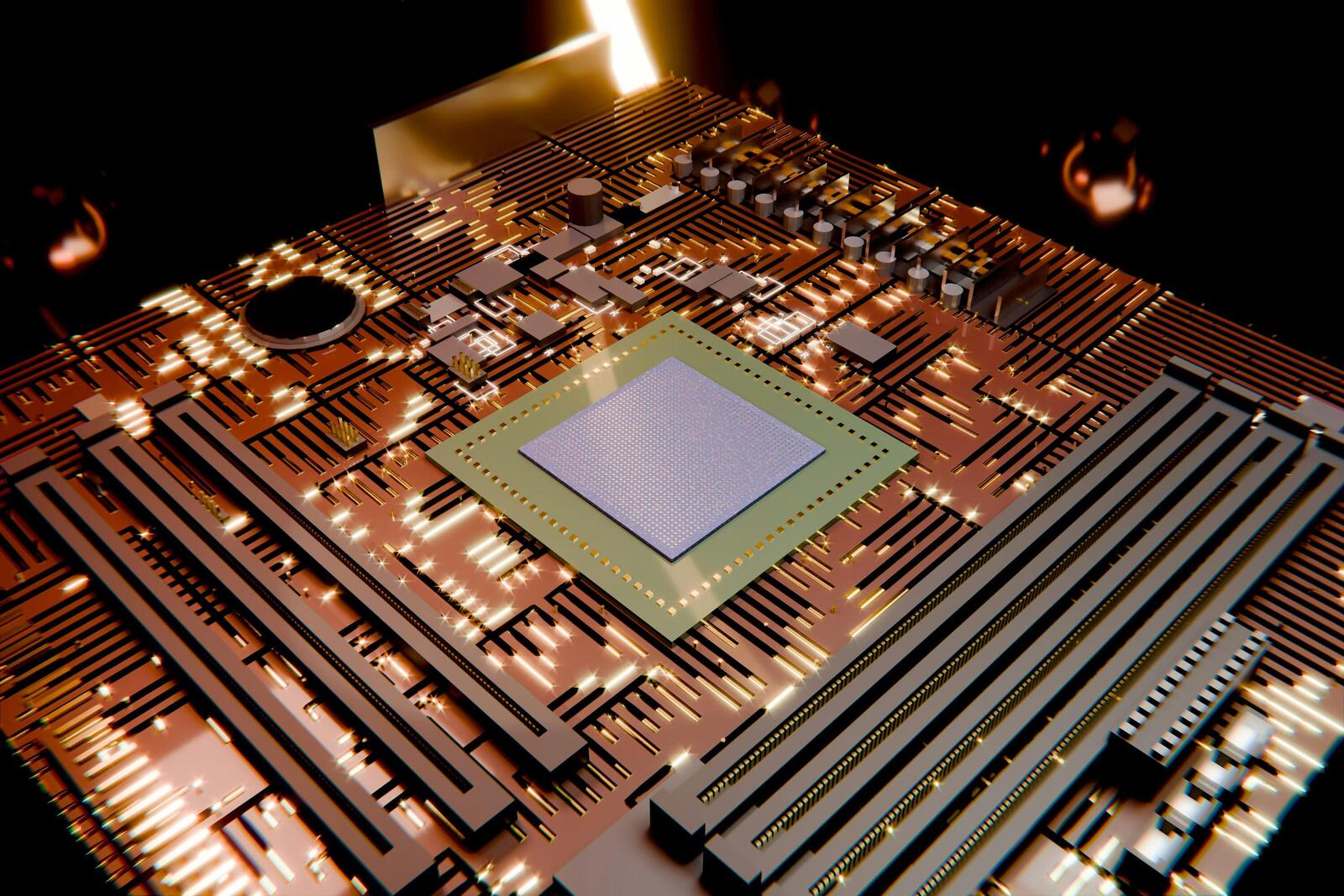
The world is in the middle of an AI boom, and at the heart of that boom is semiconductor chips. It feels like all we really hear about when people discuss the costs of manufacturing in AI. From training large language models to powering data centres and AI-enabled devices, demand for advanced chips has never been higher. And we’re definitely feeling that in all the reporting we see on the current state of the AI industry.
Interestingly enough, however, the way in which in the industry works with regard to manufacturing chips and the companies that use them is not necessarily as straightforward as one may think. In fact, many of the companies that design the world’s most powerful processors (and are renowned for doing so) don’t actually manufacture them at all.
They’re outsourcing the process, in many respects, and in this specific context, that’s called fabless manufacturing.
What Is Fabless Manufacturing?
Fabless manufacturing is a business model in which a company designs and sells semiconductor chips but outsources the physical manufacturing process to a specialist third party. That third party is a manufacturer commonly known as a foundry (or at least within the industry).
And why do we call it “fabless”? Well, the term actually comes from the word “fabrication”, and from there, “fabrication-less”. Thus, the company doesn’t own or operate its own fabrication facilities, or “fabs” – somebody else does. Basically, in the simplest of terms, fabless companies focus on designing chips, while foundries focus on making them. It’s a division of labour on an industry level that allows one company to put all its attention on design so that the other can be totally focused on manufacturing.
If we look at the industry giants like NVIDIA, AMD and Qualcomm, they’re all fabless. That’s because they create their own chip designs in-house, but after that, they rely on big manufacturers like Samsung Foundry and TSMC to handle the actual manufacturing and production of the chips.
This differs from the traditional Integrated Device Manufacturer (IDM) model, in which a company designs, manufactures and sells its chips itself. They do everything in-house. Unsurprisingly, Intel and Samsung are among the best-known examples of this approach.
More from Artificial Intelligence
- Are You Paying More For Your Big Mac Because AI Decided You Should?
- AI Agents Belong in Enterprise Software Not The Statute Book
- A Court Just Gave Human Voices Legal Protection From AI – But How Far Does That Go?
- What Does A Modern SME Really Need From AI?
- SOFTSWISS Launches 2027 iGaming Trends Report: An Industry At The Crossroads Of AI, Growth And Regulation
- Why Teaching AI Anatomy Is The Hardest Leap In Digital Animation
- Do Domain Names Still Matter In An Age Of AI-First Internet?
- The AI Confession Trap: Why Your Chat History Has No Legal Privilege In Court
Why Is Fabless Manufacturing So Important For AI?
Fabless manufacturing has become particularly important during the rise of AI because it allows companies to focus their resources on innovation rather than factory ownership. And while it is possible to do both, being able to separate these two major tasks and responsibilities makes it possible to do one part of the job really well.
On top of that though, building and operating a cutting-edge semiconductor fabrication plant that can actually be legitimately competitive within the industry is one of the most expensive undertakings in tech, with modern facilities often costing tens of billions of dollars.
By outsourcing manufacturing, AI chip companies can concentrate on developing new architectures, improving performance and bringing products to market more quickly. And they can do this with all of their funds and resources. This has helped fuel the rapid growth of AI hardware, making it possible for companies like NVIDIA to focus on designing increasingly powerful GPUs without having to manage the manufacturing process themselves.
The model has also lowered the barrier to entry for startups developing specialised AI chips, allowing them to compete on design and innovation without first having to invest billions in manufacturing infrastructure – something that would be nearly impossible for most.
The Advantages Of Fabless Manufacturing
The benefits of using the fabless manufacturing model are immense – from major cost savings and faster scaling opportunities to increased focus on design and innovation.
- Lower Costs: Perhaps the biggest advantage is cost. Building a semiconductor fab requires enormous capital investment, making it unrealistic for many businesses. Fabless companies avoid these costs entirely by using external foundries.
- Greater Focus On Innovation: Without the responsibility of running factories, companies can devote more resources to research, development and chip design. This often leads to faster innovation cycles and more specialised products.
- Faster Scaling: Fabless companies can increase production through manufacturing partners rather than building additional facilities themselves. This provides greater flexibility when demand rises.
- Access To Advanced Manufacturing: Rather than building their own production capabilities, fabless companies can utilise the latest manufacturing technologies available from leading foundries.
The Challenges And Risks Associated with Fabless Manufacturing
Whilst the model offers significant advantages, it’s definitely not without drawbacks (much like anything else).
- Dependence On Foundries: Fabless companies rely heavily on manufacturing partners. If a foundry experiences production issues, delays or capacity shortages, customers can be affected and there’s not much they can do about it.
- Supply Chain Vulnerability: The semiconductor supply chain is highly concentrated, with a relatively small number of foundries producing many of the world’s most advanced chips. This can create significant bottlenecks and expose companies to geopolitical risks and disruptions which can be detrimental to business.
- Less Control Over Production: Unlike IDMs, fabless companies don’t have direct control over things like manufacturing schedules, capacity allocation or production priorities, and this can make it harder to respond quickly during periods of exceptionally high demand or if things go wrong.
- Competition For Capacity: When demand for chips surges, multiple companies may be competing for manufacturing space at the same foundries, because they can only produce so much at once. Smaller firms tend to find themselves at a disadvantage compared to larger customers.
The Future Of The Fabless Model
Fabless manufacturing has transformed the semiconductor industry by allowing companies to specialise in what they do best. As AI continues to drive demand for increasingly sophisticated chips, the model is likely to remain a cornerstone of the technology sector – after all, in many ways, it’s part of the reason why the industry has been so successful and has done such a good job at encouraging competition.
However, its success also highlights the growing importance of semiconductor foundries within the industry. While companies like NVIDIA may design the chips powering the AI revolution, the foundries that are manufacturing them in the background are becoming just as critical to the future of technology, and that’s probably something worth noting.


