


“Closing the funding gap matters. But creating more women who know they can build with or without VC would be even more powerful.” – Nikita Khandheria, Founder and CEO at ERIA
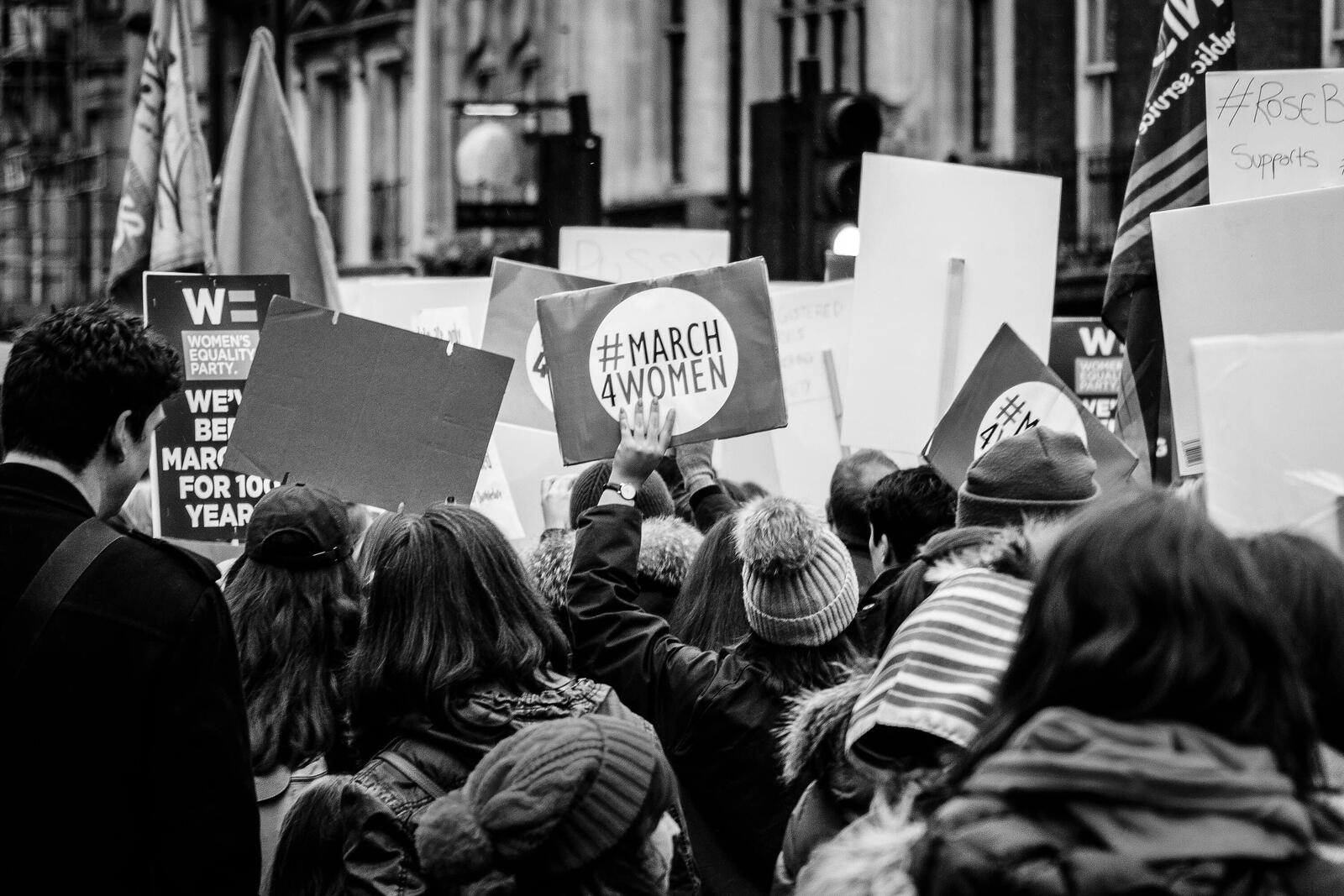
Every year on 26 August, the United States marks Women’s Equality Day, commemorating the certification of the 19th Amendment in 1920, which granted American women the constitutional right to vote. The day was later designated by Congress to honour both that achievement and the continued pursuit of gender equality. One that is still very much pursued…
More than a century after that landmark moment, equality remains a work in progress in many areas of society, including (if not especially) in entrepreneurship.
The Funding Gap Based On the Numbers
Despite years of discussion around diversity in venture capital, female founders continue to receive only a small share of startup funding. Sure, the numbers may be improving, but “the pace of change remains glacial”, as the W omen’s Founder’s Forum puts it.
According to Founders Forum’s “Women in VC & Startup Funding: Statistics & Trends (2025 Report)”, female-only founding teams received just 2.3% of global venture capital funding in 2024, equivalent to $6.7 billion out of the $289 billion invested worldwide. This is relative to all-male founding teams who received 83.6% of global VC funding.
The challenge becomes even more pronounced as companies scale. The report found that female-only founding teams secured 3.2% of seed-stage capital, but just 1.8% of Series C and later-stage funding, suggesting that many women face increasing barriers as their businesses grow.
And while more women are launching businesses than ever before, many founders still report facing hurdles ranging from limited investor networks and unconscious bias to a lack of representation among decision-makers controlling capital.
Is Funding The Only Answer?
Of course, access to venture capital is only one piece of a much larger, much more complicated puzzle. Many female founders argue that closing the gap requires broader structural change, from increasing the visibility of successful women-led businesses and creating stronger mentorship networks to rethinking how investors assess potential and what types of businesses are considered “fundable”.
Others question whether the startup ecosystem has become too focused on fundraising itself, arguing that profitability, sustainability and customer demand should be valued just as highly as securing investment.
More from Startups
- Columbia University: Successful Alumni That Founded Startups
- What Is Germany Doing To Attract More Startups?
- Are Hiring Challenges Preventing Startups From Reaching Their Full Potential?
- Meet The Startups Crowdfunding w/c 12.10.2026
- The Cold Start Problem: Why Getting A Startup Off The Ground Is So Difficult
- Founder Of The Week: Ryta Zasiekina
- Top Industrial Tech Startups To Watch In 2027
- Startup of the Week: Kord
We Asked Female Founders What Needs To Change
To mark Women’s Equality Day 2026 yesterday, TechRound asked female founders and business leaders what changes they would most like to see in order to create a more level playing field for women building companies.
Their responses reveal a range of perspectives, but also a common theme. That is, closing the funding gap isn’t just about who gets investment, and it’s not just about lackluster handing out of funding. It’s about who feels empowered to start a business in the first place, who gets taken seriously once they do and how success is measured across the startup ecosystem.
- Zahava Robinson: Co-Founder, Director and CTO of Kick Cashback
- Liz Clifton: Founder of Family Dog Connection Limited and the take34u™ Mission
- Irena Kramer: COO and Co-Founder, Pulse Law LLP
- Sandy Eulitt: CEO and Founder at Life Backup Plan by Galacxia, Inc.
- Nikita Khandheria: Founder and CEO at ERIA
- Emmy Byers: Founder and Managing Director at Poppy Planning
- Kimberley Langen: CEO and Founder of Spirit of Math
- Anna Rosa Parker: Founder of EVOKE
- Maggie Keith: Fourth-Generation Farmer and Steward of Foxhollow Farm
- Linda Galindo: Founder of The Straight Truth®
- Dr. Sharon Spano: Founder of Spano & Company, Inc.
Zahava Robinson, Co-Founder, Director and CTO of Kick Cashback

“The change I most want to see is a funding process that rewards evidence more consistently than pattern recognition. Women founders are often told to prove more before they are trusted with capital, so the answer is not simply encouraging more women to pitch. Funds should publish clearer investment criteria, measure where women drop out of their pipeline, diversify the people making investment decisions and create more pathways for smaller early cheques tied to measurable milestones. That would give founders a fairer opportunity to turn traction into credibility.
“We also need to make entrepreneurship feel like a viable path earlier, through stronger founder networks, visible role models and practical access to capital. Closing the gap requires changing who gets funded, but also who believes they can credibly start in the first place.”
Liz Clifton, Founder of Family Dog Connection Limited and the take34u™ Mission

“For me, it all begins with supporting all girls and women with opportunities to build their self-confidence, connected communication and empower them to listen to, take their choices, and share their voices. At every stage of education unconditional respect, true fairness, and equality gets to be shown and explored to encourage every individual to consider what they truly want to be, do, and create within their work. Once women know that anything is possible they have the opportunity to tread their own path with inspired confidence.
“Successful female founders along with their allies, clients, startup and growth funders, investors, angel investors, and supporters, definitely get to share their own experiences more widely to shine a beacon and inspire others to follow their own dreams, passion, vision, mission, and movements.”
Irena Kramer, COO and Co-Founder, Pulse Law LLP
“Women founders want more education and more visible success stories. Investors underfund women-led startups largely because the narrative around them is one of charity and feel-good stories, rather than the cold hard cash that comes from investing in women. I’d like to see startup ecosystem partners publish outcome data broken out by founder gender the way they already track sector and stage, so allocators can see the return profile instead of guessing at it. Pair that with press coverage that leads with revenue, growth and exits from women-led companies.
“When the story shifts from women needing funding to women’s impact and return on investment, women thrive. Success is more persuasive than sympathy, and right now most of it just isn’t visible.”
Sandy Eulitt, CEO and Founder at Life Backup Plan by Galacxia, Inc.
“One change I would like to see is an end to the startup funding chicken-and-egg problem. Investors frequently demand ‘traction,’ primarily meaning revenue. But founders cannot generate meaningful revenue until they have built a viable product, and building that product requires capital. This can hit women especially hard because we are less likely to have access to the personal wealth and investor networks that allow founders to finance that gap themselves.
“Investors should evaluate early-stage companies using evidence appropriate to their stage: the importance of the problem, customer discovery, technical progress, pilot interest, intellectual property and the founder’s ability to execute, not simply current sales. More funding should also be released in milestone-based tranches, giving promising founders enough runway to prove each assumption. If we want more women building ambitious, scalable companies, we must fund them early enough to build what investors later expect them to sell.”
Nikita Khandheria, Founder and CEO at ERIA

“I think we need to broaden the conversation beyond simply getting more VC dollars into the hands of female founders. Access to capital absolutely matters, but we’ve created a startup culture where raising money is treated as evidence that you’ve succeeded.
“I’d like to see more women taught how to build companies that don’t require permission from investors to survive. That means getting to revenue earlier, understanding cash flow, retaining ownership where possible and treating customers — not a funding round — as the first source of validation.
“I’ve built businesses across consumer products and hospitality, and some of the most important decisions have been about changing the model rather than finding someone willing to finance the existing one.
“Closing the funding gap matters. But creating more women who know they can build with or without VC would be even more powerful.”
Emmy Byers, Founder and Managing Director at Poppy Planning

“The funding gap won’t close until we stop treating bootstrapped, profitable women-led businesses as less “real” than a venture-backed one burning someone else’s money.
“I built Poppy Planning without a single dollar of outside capital, and for a long time that felt like something I had to apologise for in rooms full of founders chasing raises. It shouldn’t be. Service businesses like mine, the ones plenty of women start, don’t fit the VC pattern-matching machine, so we get overlooked twice: once for not being “tech,” and once for not asking for money. What I’d change first is who gets counted as a founder worth backing. Widen the definition beyond high-growth software, fund women earlier when the idea is still small, and put more women on the check-writing side. People back what looks familiar to them, and right now the deciders mostly don’t look like us.”
Kimberley Langen, CEO and Founder of Spirit of Math
“After more than 30 years of building Spirit of Math, I would like investors to place greater value on companies that grow through proven demand, strong operations and measurable customer outcomes. Spirit of Math developed its curriculum in-house and expanded to more than 30 campuses, but that type of steady, long-term company building does not always fit the profile investors are trained to notice. Women are often building businesses in education, health and other sectors where growth requires trust, evidence and time.
“Funding decisions should account for those strengths instead of placing so much weight on rapid expansion or whether a founder already belongs to the right investor network. Closing the gap means giving more women access to capital that matches how their companies grow, while judging their businesses by the demand they have created and their ability to execute.”
Anna Rosa Parker, Founder of EVOKE
“Closing the funding gap has to start before a woman ever walks into a room to ask for capital. We need more women seeing entrepreneurship as something they can claim early, not something they need years of experience or permission to grow into. The stories we absorb about who looks like a founder, who gets to take risks, and who is considered credible shape who starts companies in the first place. Then those same assumptions can follow women into rooms where funding decisions are made.
“I want to see more women represented on both sides of that table, but also more investment in mentorship, networks, and early opportunities that help women build, experiment, fail, and try again. Funding matters, but so does creating a culture where more women believe starting is theirs to do.”
Maggie Keith, Fourth-Generation Farmer and Steward of Foxhollow Farm

“I’d like to see funding conversations move beyond whether a woman can prove she has a good idea and spend more time on whether investors are willing to back the long game. Some businesses take years to build the infrastructure, trust, and systems that make them valuable. Agriculture is a perfect example.
“Women shouldn’t have to fit their businesses into a growth model designed around speed just to be seen as fundable. We also need more women in the rooms where investment decisions are made. When the same types of people decide what a ‘promising founder’ or ‘scalable business’ looks like, we shouldn’t be surprised when the same types of founders keep getting funded. Give women access to capital, but also give them room to build differently.”
Linda Galindo, Founder of The Straight Truth®

“Closing the funding gap starts before a woman ever walks into a pitch meeting. We need more women seeing entrepreneurship as something they can realistically pursue, with access to mentors, networks, capital, and examples of women who have already done it. But investors have a responsibility, too. They need to examine how they evaluate founders and whether the same standards are being applied consistently.
“Accountability means looking honestly at the results your decisions are producing. If women continue receiving a small share of startup funding, we can’t keep pointing to the pipeline and calling the conversation finished. We need to look at who gets encouraged to build, who gets invited into the room, what questions they are asked once they’re there, and who ultimately gets backed. More women starting companies and more women getting funded have to be solved together.”
Dr. Sharon Spano, Founder of Spano & Company, Inc.

“Women are often encouraged to become more confident, take bigger risks, and ask for more funding. Those things matter, but they place too much responsibility on women to solve a systemic problem. I want to see investors examine the assumptions behind how they evaluate founders in the first place. Who looks like a credible CEO? Whose ambition feels exciting rather than risky? Which leadership qualities are rewarded?
“We also need more women participating in the systems that allocate capital, not simply more women learning how to pitch to the people already controlling it. If we want more female-founded companies, women need access to capital, networks, mentorship, and decision-making rooms much earlier in the entrepreneurial journey. Closing the gap isn’t about teaching women to operate more successfully inside the existing system. The system itself has to evolve.”


