


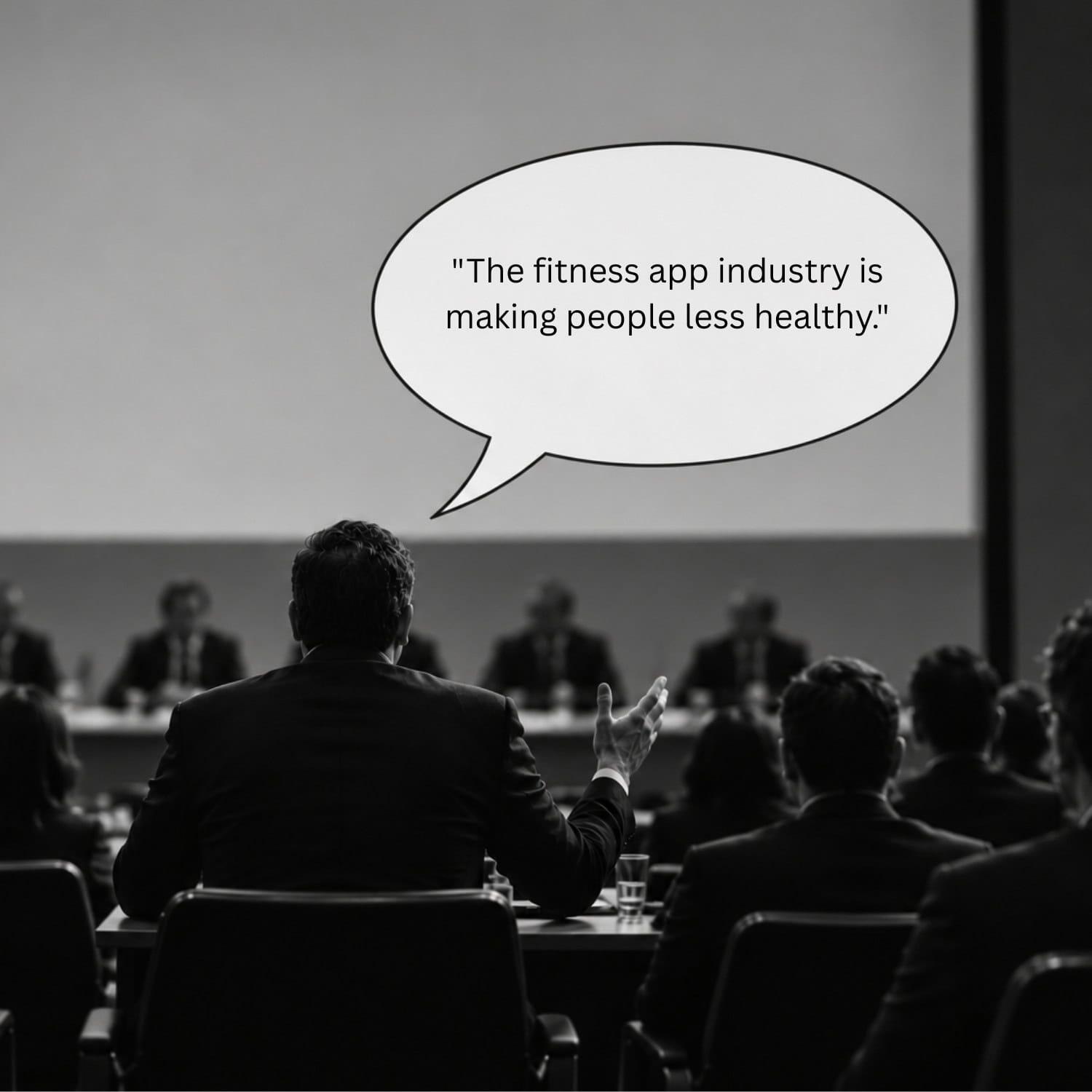
“The fitness app industry is making people less healthy.”
The internet loves certainty, and these days, in many respects, so does the world. Everything has to be good or bad, right or wrong, revolutionary or doomed to fail. Nuance and the middle ground rarely get a seat at the table.
But real life isn’t that simple. Most ideas, technologies and trends sit somewhere in the messy middle, where the answer depends on context, perspective and experience. But the problem is that those conversations are often the hardest to have, and often, those voices aren’t the loudest.
What’s important is that we have the conversations that allow all sides to be raised.
That’s where Quite Contrary comes in. In this TechRound exclusive series, we take a deliberately provocative statement and ask experts to weigh in. Some will agree, some will disagree and others will land somewhere in between. The goal isn’t to find a winner; it’s to explore the arguments, challenge assumptions and make room for a little more nuance.
This edition’s hot take comes from Juste McKeown, and she has a controversial opinion about modern fitness tech.
More from Tech
- Top Maritime, Ocean And Aquaculture Tech Startups In Norway To Watch In 2027
- One Crash, Millions At Stake: The Technology Behind F1’s Costliest Mistakes
- How Can Antivirus Software Guard Against Identity Theft?
- 8 Everyday Tech Inventions Originally Designed For Disabled People
- What Is Multisensory Learning, And How Is Edtech Using It?
- Flying Cars Are Now A Reality, But Is There Really A Market For Them?
- Women In Tech: Top 10 Women In Quantum Computing In 2026
- Self-Reliance By Design: The Best Health Tech Makes You Need It Less
This Week’s Contrarian
This week, our “unpopular opinion” comes from Juste McKeown, Founder of Trainow. McKeown believes that the modern fitness application industry is making people less, not more, healthy.
Juste McKeown, Founder of Trainow

Juste McKeown is the founder of Trainow, a sports coaching marketplace that launched in the UK in 2026. Trainow connects people with verified coaches across any sport who travel directly to the client, at home or outdoors, with no gym membership required.
Trainow was named Most Innovative SaaS Marketplace 2026 by Acquisition International.
Juste’s Hot Take
“The fitness app industry is making people less healthy.”
“My unpopular opinion: the fitness app industry has spent a decade making wellness more inaccessible, not less.
“We built an entire ecosystem of digital fitness – AI workout plans, on-demand classes, wearable integrations – and gym membership rates haven’t moved and coaching is still a luxury most people can’t access. We optimised for engagement metrics and monthly subscriptions, not actual behaviour change.
“The inconvenient truth is that the single biggest predictor of whether someone sticks to training long-term isn’t their app, their plan, or their motivation. It’s whether they have a real human who shows up and holds them accountable.
“Technology’s job in fitness shouldn’t be to replace the coach. It should be to make the coach accessible to everyone – not just people who can afford a gym with an in-house PT.
“That’s the problem Trainow is built to solve.”
Here’s What the TechRound Community Had To Say
- Angela Fuller: Group Fitness Instructor
- Dr. Harsha Moole: MD, Internal Medicine Physician-Scientist at Find My Direct Doctor
- Arjun Jaggi: Applied AI Researcher
- Zara Baker: Business Executive, Former Scientist and Health and Wellness Coach
- Jane Ollis: Medical Biochemist, Environmental Scientist and Founder of SONA™
- Dr. Deepak Aulak: Dentist and Founder of Toothfairy
- Heath Squier: Chief Growth Officer, Joyrise Health
- Justin Kompf: PhD, Co-Founder at First Guess Fitness
- Benny Shaviv: Founder and Chairman at Fitness22
Angela Fuller, Group Fitness Instructor

“I see this every single day on the studio floor: apps can stream a workout, but they cannot high-five you after a brutal final set. The digital fitness boom made exercise convenient, but it forgot that human beings are wired for connection. My students do not stay consistent because an algorithm sent a push notification; they show up because a real person in a room full of friendly faces is waiting for them. Tech is great for tracking data, but it will never replace the energy, accountability, and genuine support that comes from working out alongside other human beings.”
Are wearable devices and fitness tech making us healthier or simply making us more worried about our health?
“They are making us more worried. While wearables give useful baseline data, they have turned movement into a stress-inducing checklist. I see people beat themselves up because a screen says they did not hit an arbitrary ring or step count. We are outsourcing how we feel to a battery-powered device instead of listening to our own bodies. Tech should support us, not stress us out.”
Dr. Harsha Moole, MD, Internal Medicine Physician-Scientist at Find My Direct Doctor


“The fitness app industry did not set out to make people less healthy. It just built the wrong product. Apps are great at measurement and terrible at accountability, and accountability is the part that changes behavior. I prescribe weight-loss treatment to over a thousand patients a year, and the single biggest predictor of who sticks with a plan is not which app they use. It is whether a real person checks in on them. The app is the tool. The human is the treatment. Anything that optimises engagement instead of outcomes will keep failing the people it claims to help.
Are wearable devices and fitness tech making us healthier or simply making us more worried about our health?
“I see both in clinic. Most people start a wearable as motivation and quietly end up with a worry machine. Step counts, sleep scores, and heart-rate alerts measure noise, not health, and I have seen real harm from it: people losing sleep over sleep data and chasing perfect scores instead of listening to their bodies.
“A wearable is useful when a clinician uses it to guide a decision. Left alone, it mostly generates anxiety. The device should serve the doctor and the patient, not the subscription.”
Rosie Scott, Osteopath and Specialist in Headache Disorders, founder of Erin Health
“As an osteopath, I see the downside every week. People arrive with a plan that told them to push through, a wearable that told them they underslept, and a body ignored in between. What worries me is not the data, it’s that people have stopped trusting what they feel. Ask how the knee feels and they check their phone.
“We are losing interoception, the ordinary skill of reading your own pain, fatigue, hunger and sleep, and it is what keeps people safe. Apps are good at reading snapshot data and prescribing from it, and poor at reading the person who is also juggling the mental load, the sick child and the calf tweak that no app is going to pick up.
“The best technology gets people to a human sooner and more cheaply, and hands back their own judgement rather than replacing it with a notification.
Are wearable devices and fitness tech making us healthier or simply making us more worried about our health?
“More worried, for a lot of the people I treat. I have watched someone cancel a walk they felt perfectly well for because the app said they were tired. Data is only useful if it leads to a better decision, and most wearables stop at the data. The healthy version is technology that teaches you to read your own body, not tech that breeds and compounds self doubt.
Arjun Jaggi, Applied AI Researcher

“Somewhere in between. The critique of engagement metrics over real behaviour change is fair, and my own research on wearables and AR-based health monitoring backs that up, the technology works best as a support layer, not a replacement for human judgment. But calling the whole industry a failure overlooks real, measurable gains in specific contexts: chronic condition monitoring, post-surgical recovery, athletic performance.
“The actual problem isn’t the technology itself; it’s applying constant, undifferentiated tracking to people who don’t need it. Used narrowly and purposefully, this tech genuinely helps. Used as a blanket substitute for coaching and instinct, it mostly just adds anxiety.”
Are wearable devices and fitness tech making us healthier or simply making us more worried about our health?
“Both, depending entirely on how they’re used. In my own research on AR wearables and predictive analytics, the value shows up clearly in targeted, clinical, or performance-specific contexts, catching a genuine irregularity, supporting recovery, refining an athlete’s training load.
“For the average person using a wearable purely for general daily tracking, though, the effect is often the opposite of intended: constant quantification replaces simple bodily awareness with a stream of numbers to monitor, and monitoring easily gets mistaken for improving. Our grandparents ate when hungry and rested when tired, no stat ever told them to. The tech isn’t the problem. Undifferentiated, constant use of it is.”
Zara Baker, Business Executive, Former Scientist and Health and Wellness Coach

“The fitness industry made health extraordinarily measurable, and confused measurement with change. We can now quantify our steps, sleep, heart rate, calories, recovery, and stress, yet none of those metrics can make us go to bed earlier or exercise tomorrow.
“As a wellness coach and business executive working with busy executives, I’ve learned that people rarely suffer from a lack of information. They struggle to translate what they know into behaviors that survive demanding, imperfect lives. Human coaching matters, but not simply for accountability. Its value is helping people build health agency. Technology should amplify that agency, not replace it with another dashboard.”
Are wearable devices and fitness tech making us healthier or simply making us more worried about our health?
“I think we’re entering an era of health hypervigilance. For decades, the problem was that most people knew too little about what was happening inside their bodies. Now we risk creating the opposite problem: people continuously monitor sleep, recovery, heart rate, glucose, calories, and stress, and interpret normal fluctuations as problems requiring intervention.
“There’s a paradox here: a technology designed to give us greater control over our health can make us feel less in control.
“Wearables can be enormously useful when the data reveals a meaningful pattern or supports a decision. But collecting more biological data isn’t the same as becoming healthier. My biology background taught me the value of measurement. Coaching taught me its limits: more data doesn’t necessarily produce better decisions or healthier behavior.
“The next generation of fitness technology shouldn’t ask, “What else can we measure?” It should ask, “What information does this person actually need to live better?”
Jane Ollis, Medical Biochemist, Environmental Scientist and Founder of SONA™

“The argument has a point about accountability, but it misses the bigger problem: most fitness tech tracks and nags. It tells you your sleep was poor, your recovery is red, your stress is high, and then leaves you to deal with it. That’s information without help, and for a lot of people it adds to the load rather than lifting it. The next generation of wearables should do something for you, not just report on you.
“That’s why we built SONA to read heart rate variability and breathing in real time and actively calm the nervous system, rather than hand you another number to worry about. A human coach matters, but so does a body that isn’t stuck in fight or flight. Technology that regulates you is very different from technology that measures you.”
Are wearable devices and fitness tech making us healthier or simply making us more worried about our health?
“Both, depending on the wearable. Tracking on its own tends to make anxious people more anxious. A device that closes the loop, sensing what your body is doing and responding to it, is where the real health gains sit. The shift from passive monitoring to active regulation is the most important thing happening in this space.”
Dr. Deepak Aulak, Dentist and Founder of Toothfairy

“We’ve had the same thing in dentistry. Smart toothbrushes have been around for over a decade and people still guess when they’re brushing and aren’t able to clean the areas their mouth needs. What the industry built was a load of apps with streaks and reminders, and then judged themselves on how many people opened the app that week. That’s not the same as anyone’s mouth getting healthier.
“What actually changes habits is a dentist looking at what you’re doing, telling you what’s wrong and what to fix first, at the point you’ve got the brush in your hand.
“That’s what I set out to do with Toothfairy. I didn’t want to replace the dentist with software; I wanted to put the dentist in the room every morning. The apps that tried to replace the professional haven’t worked. The ones that make the professional easier to get to are the ones worth building.”
Are wearable devices and fitness tech making us healthier or simply making us more worried about our health?
“More informed, and that’s not the same thing. If an app tells you your gums are bleeding more than last month, fine, but then what? Most of this tech stops at the alert. The useful version gets you from noticing a problem to actually sorting it, quickly and without a lot of fuss.
“That’s what patients want. Fewer surprises when they sit in the chair, not another score to fret about.”
Heath Squier, Chief Growth Officer, Joyrise Health

“I agree with the criticism of engagement as a business goal, but not with blaming an entire category of tools. A fitness product should help someone repeat a useful behavior outside the app. Streaks, notifications and subscription renewals are weak substitutes for that result.
“Human support can make the product more useful, especially when someone needs encouragement or adaptation, but technology can also lower the friction of getting started. My test would be whether the service helps a customer maintain a realistic, practical routine, recover after a missed week and know when to ask a qualified professional for individual guidance.”
Are wearable devices and fitness tech making us healthier or simply making us more worried about our health?
“Wearables can be useful when the feedback leads to a manageable action; they are less useful when the score becomes the goal. I would not conclude that they simply make people less healthy: a 2026 umbrella review found increased physical activity in interventions incorporating wrist-worn trackers, while noting that most trials involved broader behavioral interventions and most underlying reviews were rated low confidence.
“For product teams, the practical question is whether feedback helps someone act with confidence or leaves them chasing numbers they cannot interpret.”
Justin Kompf, PhD, Co-Founder at First Guess Fitness

“The question I’ve been interested in for years: what’s the minimum dose of human contact needed to keep people consistent?
“A 1:1 coach works, but it’s expensive and doesn’t scale. An app scales infinitely, but most people churn within 30 days. The real question developers should be asking isn’t “how do we scale coaching”, it’s “what does this person need to stay consistent?”
“Someone who’s strength-trained for years might just need a plan. Someone who’s never exercised needs technique and accountability. Someone six months in might need a plan and a monthly check-in. And some people, no matter what, will never exercise without a person physically there with them.
“Apps are excellent at logging workouts. They’re terrible at noticing when someone’s motivation is slipping and calling them out on it.
“If developers started using tools like ecological momentary assessments, understanding the specific contexts where a person succeeds or fails, they could deliver just-in-time interventions instead of generic ones. The key isn’t more data. It’s knowing who needs what, and when.”
Are wearable devices and fitness tech making us healthier or simply making us more worried about our health?
“This depends on the person too. Some people might not want to work out if the data is not captured by a wearable. Others might let their data create a self-fulfilling prophecy; the watch says I need to recover so I take the day off.
“Other people might be so disheartened by bad data that they fall into the Ostrich in the sand problem- they start ignoring data that could actually help them. So this also goes back to identifying for whom this data is valuable.
Benny Shaviv, Founder and Chairman at Fitness22


“It’s best to drive a BMW or a Mercedes. That doesn’t mean that people who can’t afford them shouldn’t own cars. They don’t need to walk; they can have an awesome Toyota or Kia. The app industry brings proper planning, motivation, and coaching into your palm. People who were once embarrassed to walk into a gym now have the confidence to stay there.
“Fitness apps work – we don’t only see the data and the way our users engage with the app and how many times they do so; they also share their stories, their successes the challenges, and their frustrations. Not everyone can afford a personal trainer and having an app that provides you with expert guidance, videos and a schedule creates an alternative to a personal coach. Not everyone can afford to pay hundreds of pounds to a personal coach every month. They can afford to pay a fraction for an app that will help you stay consistent and see progress.”
Are wearable devices and fitness tech making us healthier or simply making us more worried about our health?
“Wearables help in measuring and maintaining self-awareness. They won’t replace going to the gym or running outside but they will help with measuring and keeping track.”


