


If you’ve read an edtech press release recently, chances are you’ve spotted multisensory learning alongside the usual buzzwords like immersive and accessible. At its heart, it’s just teaching that gets multiple senses working together, blending visual, auditory, tactile and physical elements instead of sticking to standard reading or passive listening.
The concept is hardly new, but a wave of autumn product releases has given it a second wind. As founders and established tech brands find clever new ways to market the foundational principles, separating the learning method from the product spin is a good place to start.
Tracing The Origins Of Multisensory Learning
Ask anyone in literacy education and they’ll likely mention VAKT, the traditional acronym for visual, auditory, kinaesthetic and tactile learning.
It’s closely tied to the Orton–Gillingham method, built on Samuel Orton’s research and expanded by Anna Gillingham and Bessie Stillman. The idea was simple: couple step-by-step phonics instruction with multisensory tasks that get kids seeing, hearing and physically moving.
Historically, this approach has been used with learners who have dyslexia or other reading difficulties, which is why many people still link multisensory teaching with special educational needs.
Edtech companies have since adopted the term for all kinds of subjects and age groups, moving it well outside its original home in specialist literacy support.
Sight And Sound, Delivered Digitally
When it comes to visual learning, interactive 3D heritage sites do a great job.
Students can navigate high-resolution digital scans of historical landmarks like ancient mosques and cliff dwellings, listening to narration, local testimony and oral histories alongside photos and documents. Because these tools run in standard browsers on everyday devices like tablets, mobiles and PCs, there’s no need for costly, specialist equipment.
On the audio side, classroom broadcast systems built on Auracast, the broadcast feature of Bluetooth LE Audio, send a teacher’s voice and lesson audio from an interactive display straight to students’ compatible hearing aids, earbuds, headphones or speakers.
Manufacturers usually market these setups as accessibility features for Deaf and hard-of-hearing students, neurodivergent children and non-native speakers. Naturally, the system relies on having compatible screens and receiving devices in place.
More from Tech
- 8 Everyday Tech Inventions Originally Designed For Disabled People
- Flying Cars Are Now A Reality, But Is There Really A Market For Them?
- Women In Tech: Top 10 Women In Quantum Computing In 2026
- Self-Reliance By Design: The Best Health Tech Makes You Need It Less
- Volvo Wants To Take Your Hands Off The Wheel By 2030 – What Is Level 2++?
- What Businesses Should Know Before Collecting Public Web Data At Scale
- What Wearable Tech Can’t Tell You About Heart Attacks
- Top Physical AI And Industrial Robotics Startups In Japan To Watch In 2027
Movement And Hands-On Learning
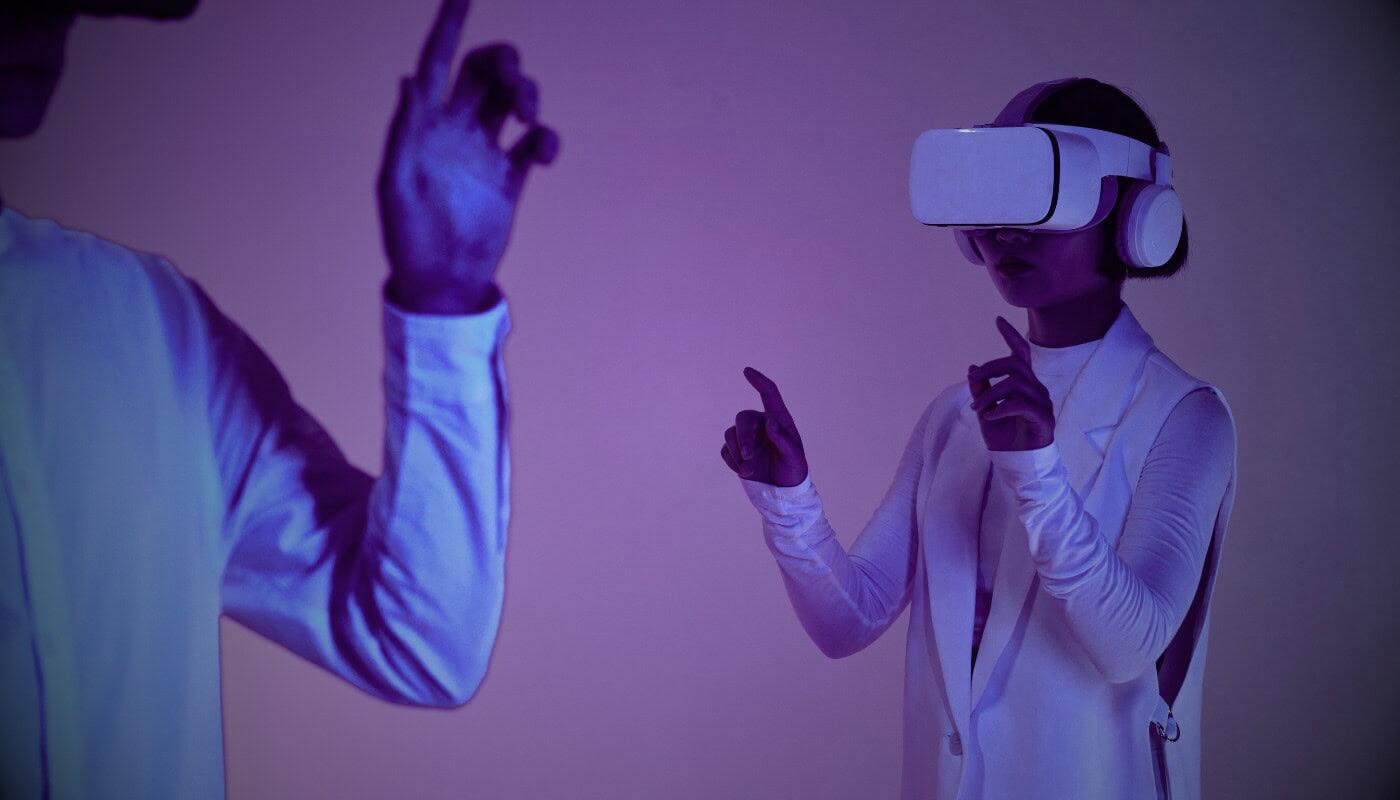
VR headsets are the main route to movement-led learning. Modern education platforms now offer maths escape rooms, immersive language spaces, career simulations and vast banks of 3D models that students can physically walk around and inspect up close.
Complete STEM bundles link motion-tracking headsets with vast libraries of curriculum-matched content, taking in virtual experiments, scientific simulations and design tasks. Built to align with standards like the UK National Curriculum, IB, NGSS and ACARA, these tools are designed for quick use.
Vendors recommend bite-sized sessions of five to 20 minutes, positioning the tech as a tool to spark classroom debate and support hands-on practical work.
Why Touch Is The Trickiest Sense For Edtech To Master
Haptic gloves and vests use vibrations, force feedback and tactile cues to recreate physical touch inside virtual worlds.
They’re already a staple in high-stakes training settings, such as surgical labs, military drills and industrial operations, but they’re still a rare sight in ordinary school classrooms.
Costs vary widely with device type and fidelity, and high-end enterprise and medical systems are typically out of reach for average school budgets. That specialist focus helps explain why touch has been slower to move into regular classrooms.
What The Benefits And The Research Each Show
It’s not hard to see why schools are drawn to multisensory tools. Developers frequently cite sharper audio for Deaf or hard-of-hearing pupils, virtual field trips to distant sites and alternative learning channels for non-traditional learners. On access, the benefits are easy to see.
On the other hand, the data on academic impact tells a more cautious story. According to a 2026 review in Dyslexia, interventions described as multisensory showed no significant difference from those that weren’t, with effect sizes of 0.20 and 0.34, respectively.
The same review points to structured literacy, meaning direct teaching of phonological awareness, decoding and spelling, as the approach with the strongest evidence for learners with dyslexia. Sensory-rich activities function as supporting features integrated into that core instruction instead of acting as standalone solutions.
Put together, the picture is of tools with clear access benefits and an outcomes case that’s still being tested. As independent studies look at the sensory additions on their own, schools and startups will get a clearer view of where they add the most.


