


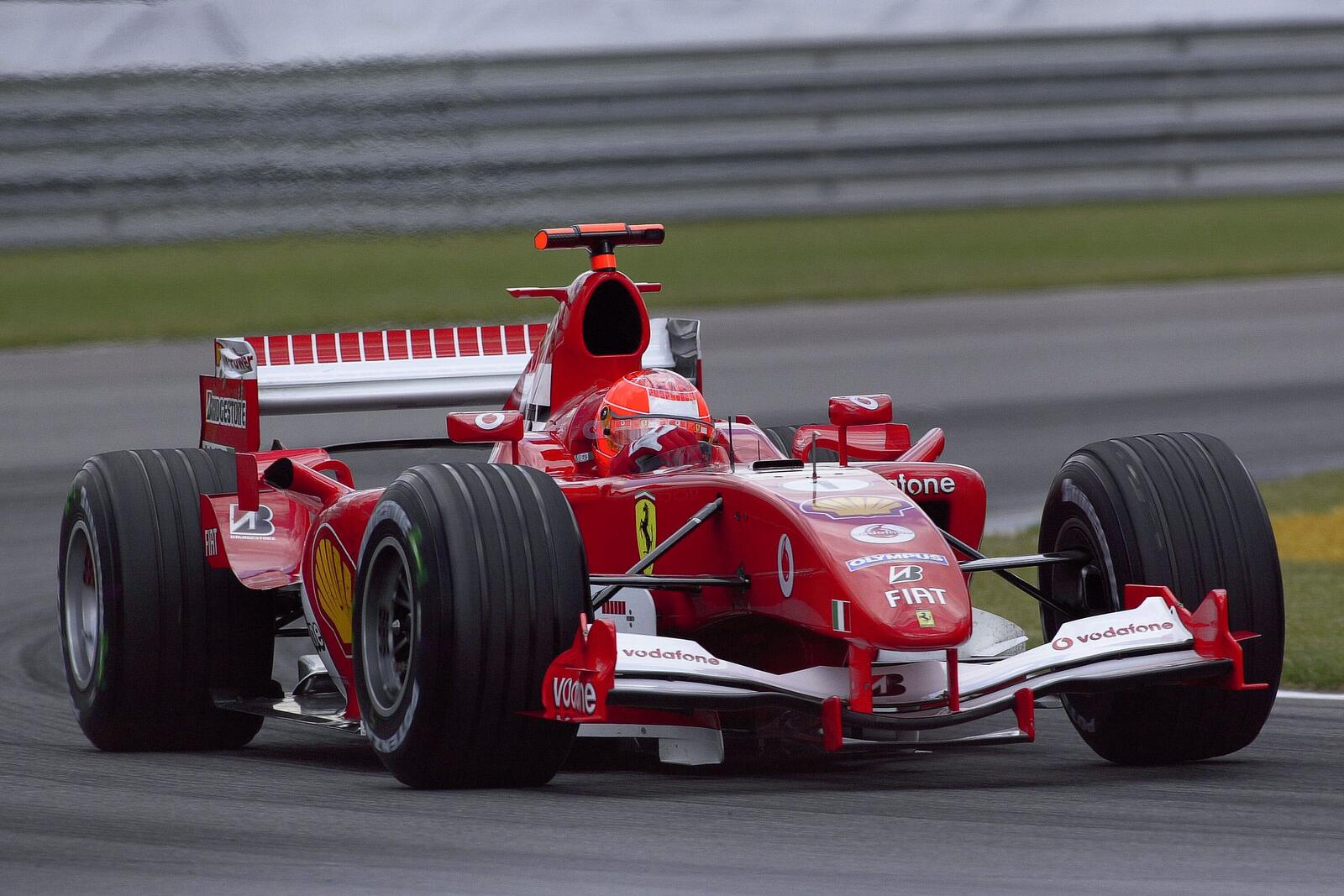
A sport that builds its cars with wind tunnels, hybrid batteries and software that decides how much electricity to spend on each corner is now seriously discussing the return of the V8, an engine layout it last used in 2013. It’s kind of like a smartphone company announcing a comeback for the flip phone, except with a much bigger budget and a lot more shouting in the comments.
The engine under discussion isn’t the one that screamed around circuits until 2013, though. It keeps a turbocharger, a smaller hybrid system and sustainable fuel, making this more of a borrowed layout than a full rewind. Whether that counts as going backwards to move forwards comes down to the engineering – and there’s more of it than the nostalgia suggests.
A V8 With A Turbo Isn’t Quite The Old V8
The V8s F1 used between 2006 and 2013 were naturally aspirated, which means they took in air at normal atmospheric pressure rather than relying on a turbocharger to force extra air into the cylinders. Without a turbocharger, they relied on extremely high revs to produce their power, which helped create that famous high-pitched scream.
The new plan keeps the eight cylinders but brings the turbo back. According to BBC Sport, the FIA has sent the six manufacturers a proposal for turbocharged hybrid V8s, potentially arriving in either 2030 or 2031. The proposed engine would have a capacity of between two and 2.3 litres, rather than the 2.4-litre naturally aspirated V8 used in 2013.
The change also moves away from FIA president Mohammed Ben Sulayem’s earlier preference for naturally aspirated engines. Instead, the turbocharger stays to improve efficiency and keep the technology relevant to manufacturers, even if it means the return won’t quite deliver the soundtrack some fans are hoping for. A turbocharger driven by exhaust gases isn’t exactly known for making an engine louder.
The details are still being worked out too, with manufacturers discussing how the engine architecture and smaller hybrid system should operate. So while the V8 layout might look familiar, the machinery surrounding it is getting a very different treatment.
More from Tech
- Your Next Building Could Store Electricity In Its Concrete
- Could Virtual Shopping Rooms Replace The Traditional Black Friday Rush?
- Top Creative And Immersive Tech Startups In India To Watch In 2027
- Women In Tech: Top 6 Women In E-Commerce In 2026
- Your Next Screen Could Be A Contact Lens – Are Smart Lenses the Future of Wearable Tech?
- How Does A Clipping Agency Scale Reach Without Losing Control?
- The Tech Behind F1 Driver Training And Its Role Among Elite Athletes
- The Technology Behind F1’s Most Iconic Liveries
Turning The Battery Down A Few Notches
The 2026 rules give the combustion engine 53% of the power, with the remaining 47% coming from the electrical system. That balance is already changing, with an agreed move to 58:42 in favour of the engine in 2027 and 60:40 in 2028. The electric side works by recovering energy when a car brakes, storing it in a battery and sending it back to the wheels as extra power, so how much a driver can deploy depends partly on how much energy they’ve harvested earlier in the lap.
Under the proposed V8 rules, electrical assistance would be reduced much further. The current proposal includes a 200kW energy recovery system, compared with the 350kW system used under the 2026 regulations. Of that 200kW, 100kW would be available continuously, with another 100kW reserved for a push-to-pass or overtaking mode.
That leaves engineers with a puzzle: keeping the benefits of recovering braking energy that would otherwise turn into heat without making energy management the main thing everyone talks about. A smaller system could also reduce the weight and complexity of the power unit, which would at least spare commentators a few minutes of explaining why a car slowed down on a straight.
A Cheaper Engine In A Sport That Doesn’t Do Cheap
Power units are some of the most expensive parts of a modern F1 car, so simplifying them is one of the biggest reasons behind the V8 proposal. The FIA’s latest framework reportedly includes a potential 50% reduction in the power unit cost cap, from its current $190 million level per year.
There’s also the question of how manufacturers would manage the transition. Developing a new generation of engines while continuing to build and improve the existing ones isn’t exactly a cheap side project, particularly when the two programmes could overlap.
The proposal reportedly includes a second option that would see an external manufacturer design and supply a standardised baseline power unit, which existing manufacturers could then customise. However, the manufacturers are keen to design and build their own engines, keeping power unit performance as another way of beating their rivals. That would allow each company to develop its own engineering approach rather than starting with essentially the same engine as everyone else. Highly doubt anyone wants to spend millions developing an engine only to arrive at the circuit with essentially the same machinery as their competitors.
Sustainable Fuel Gives The Old Engine A New Job
The fully sustainable fuels introduced under the 2026 regulations are expected to stay, which is what stops a V8 comeback from looking like a retreat from sustainability. The FIA’s requirements cover advanced sustainable components sourced from non-food biomass, renewable feedstocks of non-biological origin and municipal waste. They also require the finished fuel to meet greenhouse gas emissions savings thresholds compared with fossil-derived petrol.
That puts engineers in the odd position of developing an eight-cylinder engine layout associated with F1’s pre-hybrid era around a new generation of fuel technology. The proposed rules would also simplify some of the requirements around sustainable fuels to help reduce production costs.
It doesn’t mean combustion engines suddenly become emission-free, but it does mean the proposed return isn’t simply a case of bringing back an old engine and forgetting everything F1 has worked towards since.
A Lighter Car Is Harder Than Taking Out The Battery
F1 cars started 2026 races with around 90kg of fuel, compared with approximately 160kg in 2013, so a less efficient engine could give back some of the weight saved by removing hybrid components.
BBC Sport’s comparison of the 2013 V8 and current power unit found that the older engine and its fuel would have been around 15kg heavier at the start of a race. However, by the end of a race, and during qualifying, the older combination would have been approximately 55kg lighter.
A turbocharger helps because it improves engine efficiency compared with a naturally aspirated alternative, potentially reducing how much fuel the car needs. It also avoids the need to rely on larger fuel loads, which could otherwise bring refuelling back into the conversation. That would put hoses back in the pit lane and mechanics’ eyebrows back in danger.
The latest proposal reportedly targets an 80kg reduction in overall car weight. Getting there, however, means considering the entire package rather than assuming that removing electrical components automatically makes everything lighter. Engineers still have to account for the engine, turbocharger, battery and fuel system, as well as the knock-on effects each component has on the rest of the car.
Reversing Into 2030 With The Parking Sensors On
So, is F1 going backwards? The cylinder layout says yes, but almost everything attached to it says no. A turbocharged V8 with a smaller hybrid system and sustainable fuel is a different machine from the one retired in 2013, designed to address complaints about cost, weight and complexity that the current engines have collected.
Anyone hoping for the exact 2013 soundtrack should probably keep their old YouTube videos handy. F1 might be bringing back the V8, but it isn’t bringing back the past wholesale.


