


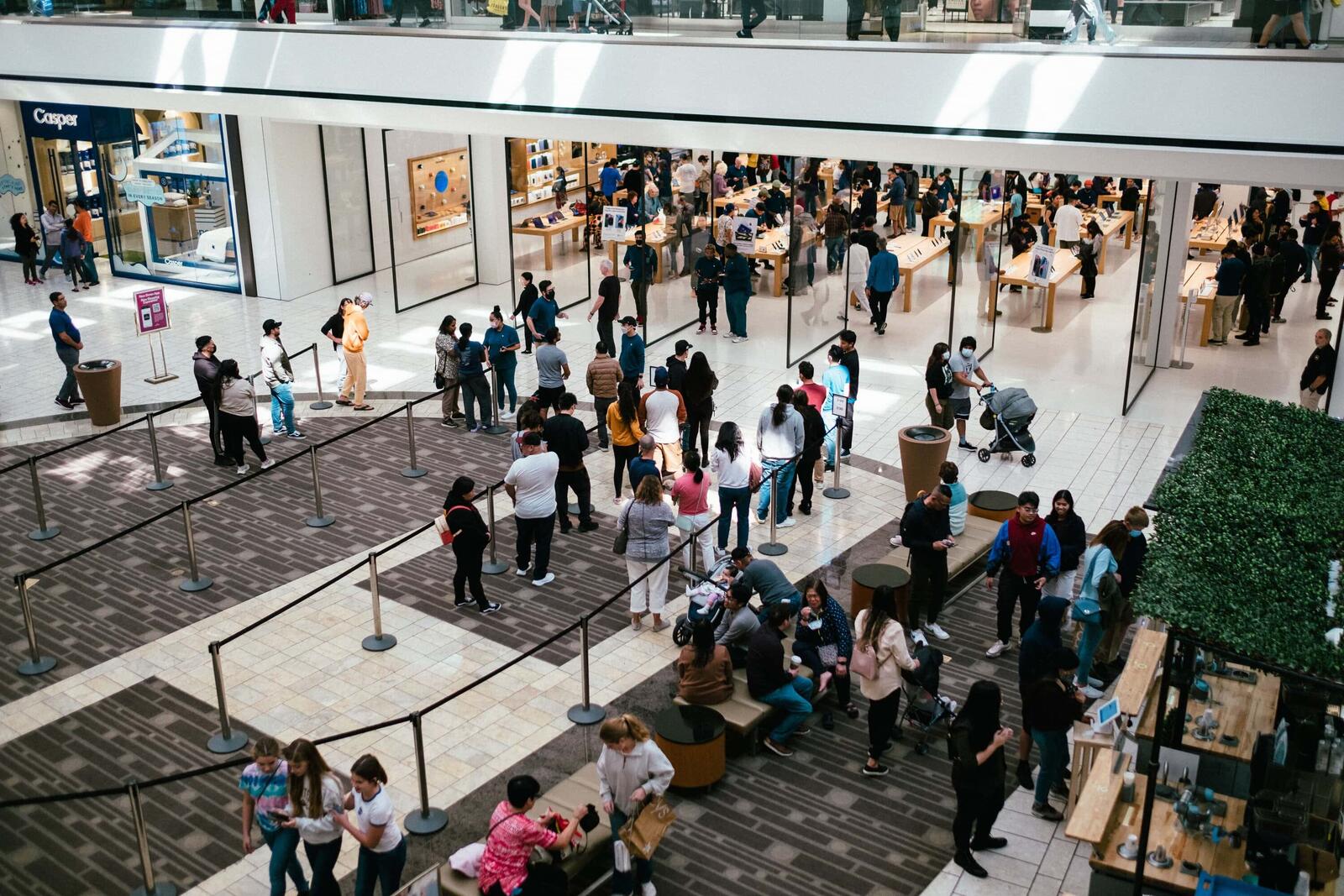
Black Friday follows a script that hasn’t changed much in years: somebody queues outside a shop in the dark for a television they didn’t know they wanted until the discount appeared, a retailer’s website wobbles under everyone refreshing at once, and a shopping centre car park turns into a test of patience.
Meanwhile, shopping has been creeping into places that don’t have car parks at all. Virtual stores let people browse digital shelves as avatars, fitting room technology can put clothes onto a photo of you, and AI assistants are getting better at hunting down deals. With Black Friday falling on 27 November, could these experiences eventually replace the traditional shopping scrum, or will people still be fighting over the last discounted television?
What Counts As A Virtual Shopping Room Anyway?
The term covers a few different experiences. Virtual stores create digital environments where shoppers can explore products as avatars, while virtual fitting rooms let people see how clothes might look on them without visiting a changing room. Social shopping spaces take things further by allowing friends to browse together, share finds and give each other opinions. AI shopping assistants are a separate part of the picture, helping people compare products and find deals without manually searching through hundreds of listings.
Google’s virtual apparel try-on tool is one example already available to UK shoppers. First launched in the US in May 2025, it expanded to the UK in December 2025. It lets people select a clothing listing, upload a full-length photo and see how the garment might look on them. No headset or digital avatar required, although it still can’t tell you whether those jeans will actually fit comfortably after lunch.
More from Tech
- Top Creative And Immersive Tech Startups In India To Watch In 2027
- Women In Tech: Top 6 Women In E-Commerce In 2026
- Your Next Screen Could Be A Contact Lens – Are Smart Lenses the Future of Wearable Tech?
- How Does A Clipping Agency Scale Reach Without Losing Control?
- The Tech Behind F1 Driver Training And Its Role Among Elite Athletes
- The Technology Behind F1’s Most Iconic Liveries
- Could You Actually Taste A Product Before Buying It Online?
- Women In Tech: Top 8 Women In Proptech In 2026
Could Black Friday Lose Some Of Its Elbows?
A large part of Black Friday has already moved online. According to Adobe Analytics, UK shoppers spent a record £3.8 billion online across the four days from Black Friday to Cyber Monday in 2025, up 4.6% on the previous year. Black Friday itself generated £1.16 billion, making it the biggest online shopping day of the year.
The challenge for retailers is making online shopping feel like more than a long list of product photos and discount codes. A virtual shopping room could let friends browse together, compare finds and ask for opinions without having to coordinate a trip to the shops. AI assistants could also take some of the legwork out of finding a bargain.
There are already signs that shoppers are using AI to help with their purchases. Adobe found that traffic to US retail websites from AI assistants increased by 805% year on year on Black Friday 2025. Visitors arriving through those assistants also had a 38% higher conversion rate than visitors from non-AI sources. That doesn’t mean everyone is ready to shop through a virtual avatar, but it does show that AI is becoming part of the online shopping journey.
Who’s Already Building Virtual Shops?
Walmart has already experimented with bringing real-world shopping into a virtual environment. In April 2024, it launched a pilot inside Roblox, allowing US users aged 13 and over to browse virtual versions of selected products and purchase the physical items.
The experiment featured just three products: a festival bag, a stainless steel tumbler and a pair of wireless headphones. Shoppers could try the virtual versions on their avatars before opening an in-game browser window displaying Walmart’s online store. Once they completed the purchase, they received the real product at home and a digital version for their avatar.
It’s an interesting experiment, although the idea of entering a virtual shop only to open a virtual laptop and visit a website does feel like taking the scenic route to an online checkout.
Roblox has since taken its shopping ambitions further. In May 2025, it announced Shopify as its first integration partner for physical product sales, allowing eligible creators and brands to sell physical products through Roblox experiences, with digital avatar items available to bundle with purchases. The platform is effectively giving virtual worlds another purpose beyond gaming, although this is still a long way from replacing a Saturday afternoon at the shopping centre.
Would People Really Swap The Scrum For A Headset?
Not everyone is convinced. When YouGov surveyed 2 000 British adults in January 2022, 31% said they would consider shopping in a virtual 3D space, while 65% said they wouldn’t. A virtual clothing shop appealed to just 18% of respondents.
The problem is that seeing something on a screen and actually shopping for it are two different experiences. A virtual fitting room might give you an idea of how a dress looks, but it can’t tell you whether the material feels cheap or whether the sizing is completely off. And while uploading a photo might seem harmless enough, not everyone will be comfortable handing over pictures of themselves just to try on a jumper.
Then there’s the question of whether people actually want to spend their shopping trips wandering around digital stores. Part of shopping with friends is the running commentary, the questionable recommendations and having someone physically there to tell you that you absolutely don’t need another black handbag. A virtual room can imitate some of that, but it still has to make the experience worth leaving a regular shopping website for.
Black Friday Could End Up Split Between The Sofa And The Shopping Centre
The shopping centre isn’t going to disappear just because retailers have discovered avatars. Physical stores offer something that even the most convincing digital fitting room can’t fully recreate, while ordinary online shopping already gives people the convenience of browsing from home.
Virtual shopping rooms will need to offer more than another way to look at products if they’re going to compete. Social experiences, realistic product demonstrations and genuinely useful personalisation could give shoppers a reason to spend time in them rather than just heading to a retailer’s website.
For now, the future of Black Friday probably involves a mixture of all three. Some shoppers will be queuing outside stores, others will be scrolling through discount codes, and a smaller group might be browsing virtual shelves. At least the last group won’t have to fight for a parking space.


