


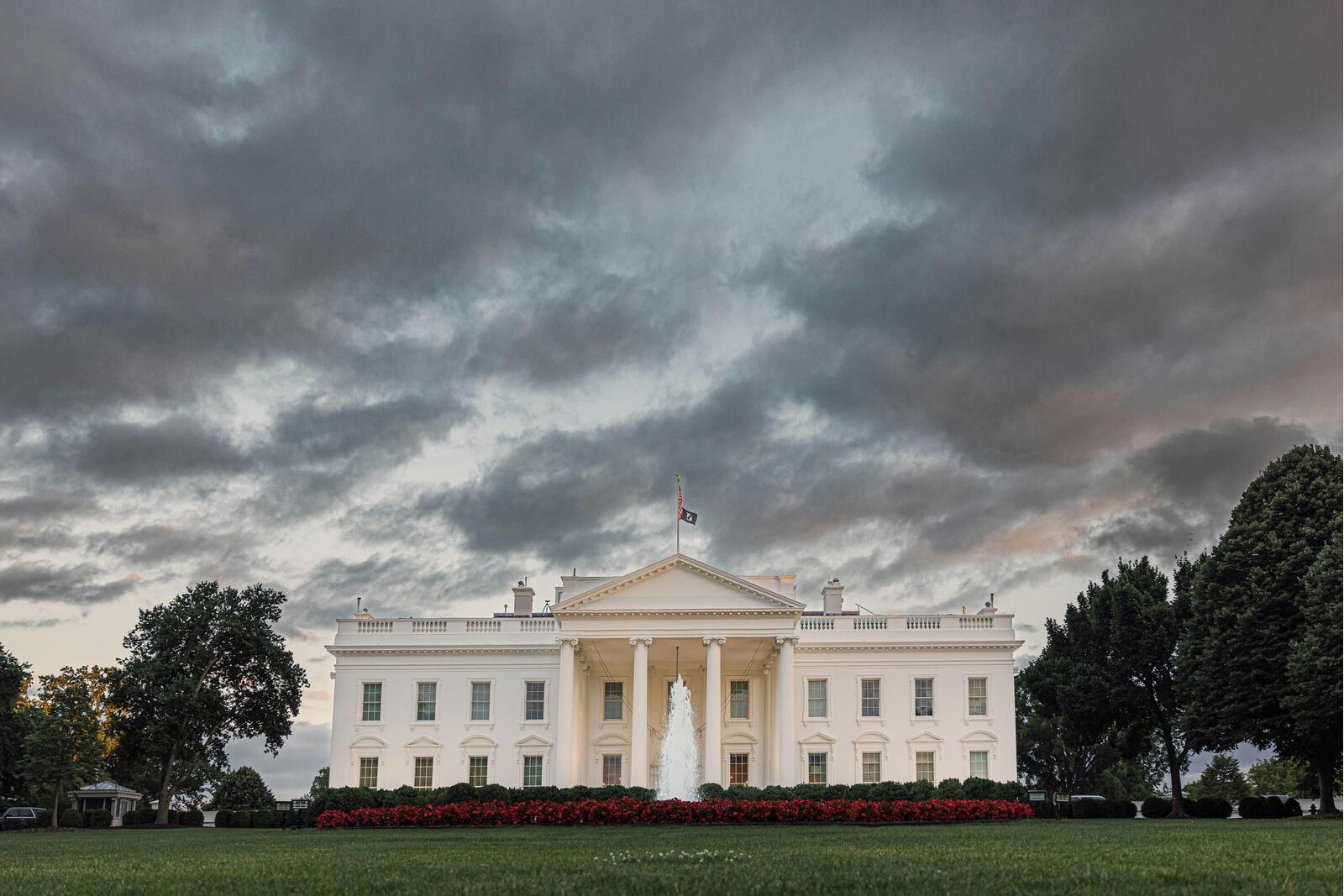
Donald Trump has decided that he wants to change the way we talk about AI. Not just that, but what it’s called. After first floating the idea at the United Nations General Assembly back in September, Trump signed an executive order on the 29th directing US government agencies to start replacing the term “artificial intelligence” with “super intelligence” (SI) in official communications and policy documents. According to statements made by the White House, the decision is a result of a belief that today’s AI systems have moved beyond what was originally envisioned when the term artificial intelligence was coined. Thus, the conclusion is that AI simply doesn’t cut it anymore.
Trump has argued that the word “artificial” makes the technology sound fake, while “super intelligence” better captures its capabilities and potential. The executive order also instructs officials to develop a federal definition of “super intelligence” within 60 days.
Does This Reflect Meaningful Change Or a Mere Branding Exercise?
While the announcement has been a pretty hot topic over the last week, many founders and AI experts have confirmed what I initially thought would be the truth: that is, they believe that the name itself is far less important than the challenges surrounding the technology. Further to that, many of them think that the whole renaming debacle is a mere distraction from some of the very real challenges being faced in the industry.
Liam Lafferty, Founder at Zentive Home Service Software, argues that the debate risks becoming little more than a marketing exercise. According to Lafferty, “Renaming AI as ‘superintelligence’ risks turning a practical governance problem into a branding exercise.”
But for many businesses, the immediate concerns are a lot more practical than a questionable name change. It raises questions around accountability, privacy, security and transparency, all of which remain unresolved as AI becomes increasingly embedded in everyday workflows.
Definitions Aren’t Irrelevant
Some experts are less concerned about the rebrand itself and more interested in what comes next, regardless of the name of the industry. Emily Hartstone, Founder at Hartstone Institute LLC and Runtime Authority Control LLC, notes that “superintelligence” already carries a specific meaning within AI research and policy circles.
“The naming debate is cheap,” says Hartstone; “The hard problems are expensive.” She asserts that the more significant issue we should be talking about is the White House’s plan to create a formal federal definition of the term. If the US ultimately adopts a definition that differs from frameworks such as the EU AI Act, businesses operating internationally could face additional compliance challenges.
The White House executive order specifically directs officials to propose legislative language for a new federal definition, potentially laying the groundwork for future regulation.
More from Artificial Intelligence
- Are AI Agents Secretly Building Surveillance Files On Your Friends And Family?
- AI In Education Is Moving Fast, Are School Policies Keeping Up?
- AI, Espionage And Startups: Why Founders Should Be Paying Attention To The Latest Security Warnings
- Are You Paying More For Your Big Mac Because AI Decided You Should?
- AI Agents Belong in Enterprise Software Not The Statute Book
- A Court Just Gave Human Voices Legal Protection From AI – But How Far Does That Go?
- What Does A Modern SME Really Need From AI?
- SOFTSWISS Launches 2027 iGaming Trends Report: An Industry At The Crossroads Of AI, Growth And Regulation
What About the Real Challenges Facing AI?
Others argue that the debate risks distracting attention from the issues that businesses are already grappling with today. And distraction isn’t exactly a new tactic for the current US administration.
Mykyta Chernenko, Founder of AIWriteBook, points out that current AI systems still require substantial human oversight despite rapid advances in capability: “A new name doesn’t change what the software can do.”
That view was shared by several experts who highlighted concerns around liability, reliability and governance rather than branding. Indeed, Vladimir Beskorovainyi, Enterprise AI Architect, CTO and Founder at Besk Tech, believes the focus should remain on how AI systems are controlled and monitored. According to Beskorovainyi, “The question that decides whether any of this is safe is not how intelligent the system is. It is what the system is allowed to do, under whose authority, and for how long.”
As AI continues to evolve from a tool that generates information into one that can take actions, access systems and make decisions on behalf of users, the importance of those questions is increasing dramatically.
Will A New Name Change Public Perception?
Not everyone sees the proposal negatively. For instance, Dr. A.K. Pradeep, Founder of Sensori.AI, believes changing the language around AI could help address public concerns and improve trust in the technology. He argues that public perception will play a major role in determining how widely AI is accepted in the years ahead.
However, most of the experts TechRound spoke to agreed that changing the name doesn’t automatically change the underlying challenges. Whether it’s called AI, SI or something else entirely, businesses are still wrestling with questions around regulation, accountability, cybersecurity, transparency and trust. And as AI systems become more capable and more deeply integrated into society, those issues are likely to have a much bigger impact than whatever label ends up attached to the technology.
Our Experts:
- Liam Lafferty: Founder at Zentive Home Service Software
- Emily Hartstone: Founder at Hartstone Institute LLC, Runtime Authority Control LLC
- Mykyta Chernenko: Founder of AIWriteBook
- Dr. A.K. Pradeep: Founder of Sensori.AI
- Ronald Osborne: Business Coach
- Vladimir Beskorovainyi: Enterprise AI Architect, CTO and Founder at Besk Tech
- Rick Elmore: Founder at Simply Noted
- Achiya Cohen: Founder of Achiya Automation
- Raquel Castillo: B.S. Psychology Student and Public Relations Professional
- Harvey Castro: MD, MBA: Emergency Physician, Advisor to the CEO at Phantom Space
Liam Lafferty, Founder at Zentive Home Service Software

“Renaming AI as “superintelligence” risks turning a practical governance problem into a branding exercise. As a founder using AI agents in Zentive’s marketing, I care less about what the industry calls the technology than whether it is reliable, auditable and useful in a real workflow.
“The near-term priorities should be clearer accountability for outputs, sensible privacy rules, secure infrastructure and transparent disclosure when AI influences decisions or public-facing content. Small businesses also need guidance they can actually implement; regulation that only large companies can absorb could entrench incumbents.
“If “superintelligence” is meant to describe a future capability, it should not be used as shorthand for today’s systems. The name can create unrealistic expectations and distract from the mundane but important work of testing, human review and responsible adoption.”
Emily Hartstone, Founder at Hartstone Institute LLC, Runtime Authority Control LLC

“A rename does not change what these systems can do, so on the substance I would not spend much energy arguing about the word itself.
“There are two parts of the proposal I do think matter.
“First, ‘superintelligence’ already has a commonly understood meaning in the field: systems that materially exceed human cognitive capability. We do not have an agreed threshold for when a system crosses that line. Using the term as a broad replacement for AI risks putting the label ahead of the technology and making public understanding harder rather than easier.
“Second, legally, very little has changed yet. For now, the order uses the existing federal statutory definition of artificial intelligence for ‘Super Intelligence’ and ‘SI.’
“The more consequential part comes next. The Assistant to the President for Science and Technology has been directed to propose legislative language for a new federal definition within 60 days of the September 29 order, so by late November.
“That is what I would watch.
“If the United States creates a new category, it needs measurable boundaries. Otherwise, agencies, companies and courts are left deciding for themselves what qualifies. Definitions eventually determine which systems fall inside or outside the obligations built around them.
“There is also an interoperability issue. The EU AI Act and OECD principles are built around the term “AI system.” If the United States ultimately adopts a materially different definition rather than simply different branding, organizations operating across jurisdictions will have another translation problem to solve.
“But I think the larger danger is distraction.
“The naming debate is cheap. The hard problems are expensive.
“AI systems are moving from producing information to taking actions inside real systems. The questions I care about are what an automated system is authorized to do, what stops it when that authority cannot be established, and whether we can reconstruct afterward what it actually did and under whose authority.
“Those problems do not become easier or harder because we call the technology AI or SI.
“If the terminology is going to change, the November definition should be precise enough to govern. Then the focus should move quickly back to the systems themselves.”
Mykyta Chernenko, Founder of AIWriteBook

“A new name doesn’t change what the software can do. The models we build on every day still get facts wrong and lose track of details in long texts, so a person has to check the output before it goes anywhere. Calling that superintelligence sets expectations the products can’t meet yet, and when users notice the gap, they stop trusting the whole field.
“The naming debate also pulls attention from questions that need answers now. Who is responsible when an AI system gives someone bad advice? What should readers be told when the text in front of them was written by a model? A new label makes neither question easier.
“If anything needs renaming, it’s the expectation. These are fast, capable assistants that still need supervision, and they should be regulated on what they actually do.”
Dr. A.K. Pradeep, Founder of Sensori.AI

“President Trump has said repeatedly that he doesn’t want the U.S. to “stifle” AI development, and that being the global leader in AI is strategically important in competition with China. This comes as many industry leaders are stating there are growing safety concerns with what is being developed. Because of this, the policy challenge no longer is about whether AI development should accelerate or if it should be regulated, but rather how the U.S. preserves the Desire associated with technological leadership while, at the same time, reducing the threat signals that can destroy public trust.
“Our work at Sensori.AI has repeatedly shown why this matters. People do not first encounter transformational technologies through spreadsheets of productivity statistics. The nonconscious brain asks simpler questions like: Is this good for me? Is it dangerous to me? Is it fair? Does it threaten my livelihood, identity or family?
“That is the psychological battlefield on which AI policy will ultimately be judged. Behind all the policy mongering, there is the core messaging framework that needs to be delivered. It starts by rebranding “Artificial Intelligence”, to “Super Intelligence”.
“President Trump is a politician uniquely poised to calm these waters using a formula he has used well before. The formula is simple –
“Reassurance, Respect, Self Esteem. And it goes something like this;
“Reassurance: “What happened to you before will never happen to you again. Not on my watch”
“Respect: “The world does not respect what you bring to the table – I do. I will make sure you are respected.”
“Self Esteem: “The world does not know how it has made you feel – I do. I get you, and I will address this”
“President Trump has the right idea, and there is good possibility that AI will become something people embrace rather than merely endure. We cannot be in a rush to judge.”
Ronald Osborne, Business Coach
“Calling AI superintelligence will not change what it does inside a small business on Monday morning, so I see the naming debate as a distraction. The owners I coach are not asking what to call it. They want to know whether they can trust it with customer data, who is liable when it gets something wrong, and whether it pays for itself.
“In my own coaching work, AI reads each client’s weekly progress sheets and flags patterns after a couple of months, and I used it to help build a phone script for a client whose sales calls were running long with people who were never going to buy. Useful, but a person still has to check the output. That is the honest state of the technology for most businesses: a fast assistant that needs supervision. A grander name raises expectations without improving safety, regulation or the infrastructure small firms need to adopt it responsibly. The energy would be better spent on clear rules for data and liability that a 10-person company can actually follow.”
Vladimir Beskorovainyi, Enterprise AI Architect, CTO and Founder at Besk Tech

“A name does not change what the software does. What is actually arriving in enterprises is systems that take actions under permissions somebody granted them, and those systems behave the same whichever word is printed above them.
“The name still matters, though, and not for branding reasons. Categories decide which lever a regulator reaches for. Superintelligence is a capability word, so it points policy at capability. Training compute, benchmark scores, evaluations before release. That is a real area, but it is not where the failures I deal with come from.
“In production, almost nothing goes wrong because a model was too capable. Things go wrong because of permissions. A credential issued for one task that never expired. A standing grant whose approving manager changed role a year ago and whose approval is still being inherited. A model behind a closed API that updated without a ticket, so the system in operation is no longer the system that was approved. A modest system with authority nobody remembers granting will do more damage than a far more capable one whose grants are scoped to a task and expire on their own.
“So the debate does risk distraction, but not because it is frivolous. It moves the regulatory target from the deployment, which is observable, auditable and local, onto the model, which is none of those and sits with a handful of vendors.
“What should be next is unglamorous. Require that any consequential automated action be reconstructable afterwards. The inputs the system used, the authority it acted under, the human approval that authority inherited, and the model version as a hash. That single requirement does more practical good than a capability threshold, and an auditor can verify it without access to anyone’s weights.
“The same distortion shows up in infrastructure and investment. When the category is named by capability, money follows frontier training, and the real shortage inside companies is elsewhere. It is people who can verify work they did not produce, and systems that log decisions rather than API calls.
“The question that decides whether any of this is safe is not how intelligent the system is. It is what the system is allowed to do, under whose authority, and for how long.”
Rick Elmore, Founder at Simply Noted

“Renaming an industry is a branding exercise, and branding only works when the name describes something real. Most businesses using AI today use it to draft emails, summarize calls and clean up data. Calling that “superintelligence” sets expectations the technology can’t meet yet, and when expectations outrun reality, trust drops.
“As a founder, I care much less about what AI is called than whether it’s reliable, affordable and safe to plug into customer workflows. The real work is regulation that small companies can actually follow, infrastructure costs that don’t price out smaller players, and clear rules on data. A new name doesn’t move any of that forward. If anything, it risks turning a practical conversation into a political one.”
Raquel Castillo, B.S. Psychology Student and Public Relations Professional
“President Trump is an entrepreneur, and he appears to be approaching this partly as a branding problem. AI does have a public-relations challenge. The technology needs to become more understandable and accessible to people across different socioeconomic and educational backgrounds, rather than feeling like something reserved for Silicon Valley or technology experts.
“I tried the term “superintelligence” out for size myself over the past week, however, and ultimately came back to “artificial intelligence.”
“I think we need to keep the word “artificial” precisely because it reminds us what the technology is. AI is a tool created by human beings. In that sense, I think about it somewhat like a calculator: extraordinarily sophisticated AI can extend our abilities, but we should maintain a clear conceptual distinction between the technology and human intelligence.
“There is also a communications problem with “superintelligence.” The term already carries a more specific meaning in discussions of advanced AI, so applying it broadly to today’s AI systems could unintentionally make the technology sound more autonomous or humanlike than it actually is.
“Rather than renaming AI, I would focus the public-relations effort on helping people become comfortable with the term we already have and, more importantly, understand its applications. Good branding should clarify a product or technology, and that’s what I think the President of the United States is doing with this discussion in the news.
“That is also why I think the naming debate should remain secondary to the substantive questions: How do we develop AI responsibly? How do we make it accessible across socioeconomic groups? What safeguards are appropriate? What infrastructure will it require? And how do workplaces adopt it without diminishing sound human judgment?
“The name matters because language shapes public perception. But ultimately, public trust in AI will be earned through responsible implementation while continuing the conversation about how to best describe the technology.”
Harvey Castro, MD, MBA, Emergency Physician, Advisor to the CEO at Phantom Space

“My read is that the name matters more than people think, just not in the way this debate assumes. In medicine, labels change behavior. Put the word “superintelligence” on a piece of software and a tired clinician at 3 a.m. is more likely to take its answer without checking. That’s the risk I’d worry about.
“So yes, I think it’s a distraction. Hospital leaders don’t ask me what to call these tools. They ask who signs off when the tool is wrong, and whether anyone tested it on their own patients before it went live. A rebrand doesn’t touch either question.
“If there’s a point to renaming, it should come with a definition someone can be held to. Without one, I don’t see what it buys anybody.”


