


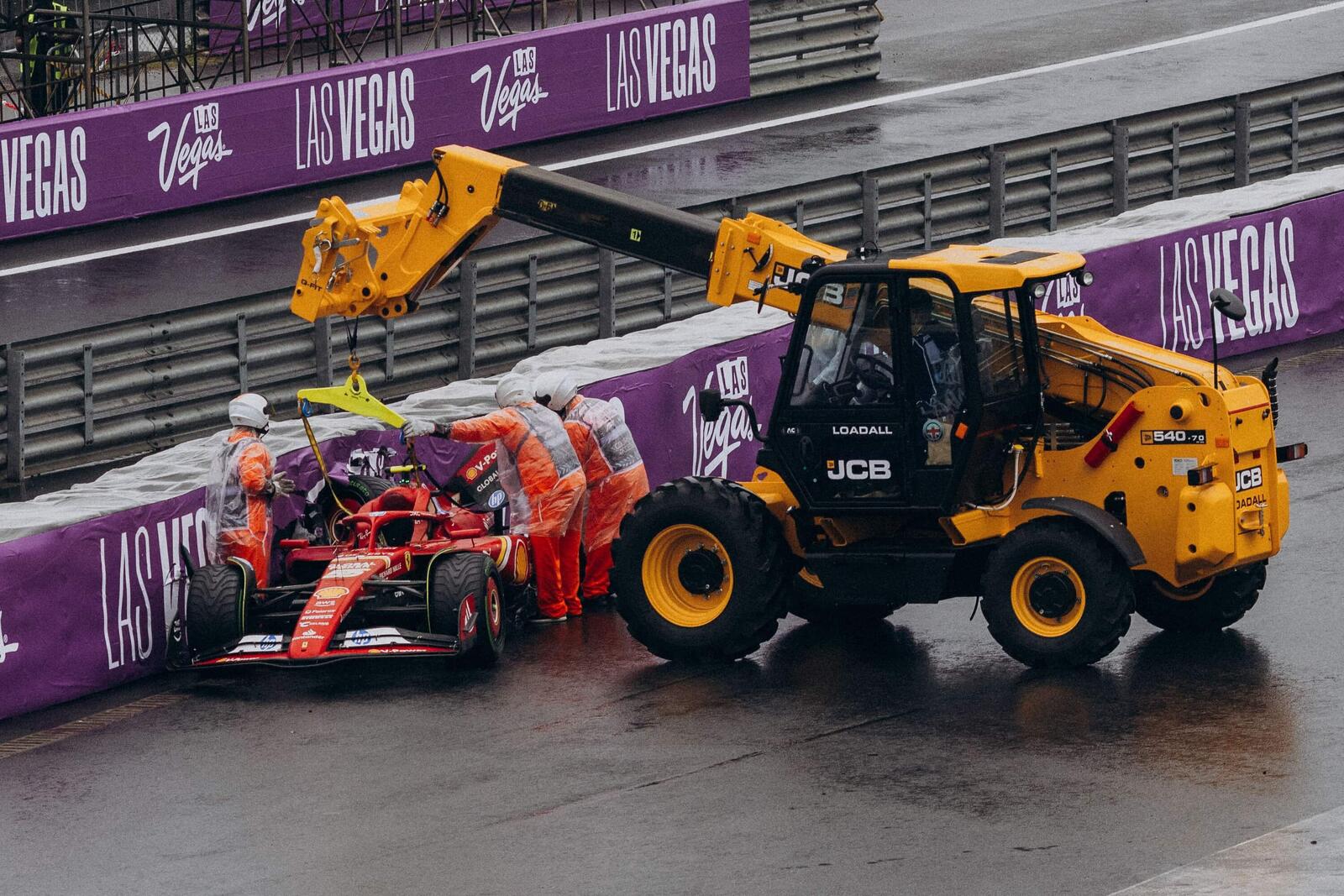
An F1 crash can destroy millions of pounds’ worth of equipment in seconds, but the damage we can see isn’t always the full extent of it. A shattered front wing is easy to identify, but damage to the chassis, gearbox or engine may require detailed inspection before the team knows what can be salvaged and what must be replaced.
That assessment affects more than the cost of repairs. Every replacement takes parts out of the team’s available stock, and manufacturing new components takes time that would otherwise go towards planned upgrades.
At the 2024 Monaco Grand Prix, Red Bull had to consider both the immediate damage and what might have been affected beneath the bodywork. On lap one, Kevin Magnussen’s Haas made contact with Perez’s rear wheel on the climb out of Sainte Devote, sending the Red Bull into the barrier. The wreckage hit Nico Hulkenberg’s Haas as Perez spun across the track. Red Bull senior adviser Helmut Marko estimated the damage at between £1.7 million and £2.5 million in comments to Red Bull-owned publication “Speed Week”, as reported by RaceFans.
What Breaks When An F1 Car Hits A Wall
A broken front wing is one thing; damage around a suspension mounting point is another. The suspension connects the wheels to the chassis, so a heavy impact in that area can affect more than the components that have visibly snapped. Engineers need to establish whether the surrounding structure has also been damaged before deciding what needs replacing.
Carbon fibre is lightweight and strong, which makes it useful for F1 car structures, but a heavy impact can leave damage that isn’t immediately visible. A component doesn’t have to break into pieces to be unusable. If the structure or a mounting point has been compromised, engineers need to establish whether it can still do its job safely before putting it back on the car.
More from Tech
- How Can Antivirus Software Guard Against Identity Theft?
- 8 Everyday Tech Inventions Originally Designed For Disabled People
- What Is Multisensory Learning, And How Is Edtech Using It?
- Flying Cars Are Now A Reality, But Is There Really A Market For Them?
- Women In Tech: Top 10 Women In Quantum Computing In 2026
- Self-Reliance By Design: The Best Health Tech Makes You Need It Less
- Volvo Wants To Take Your Hands Off The Wheel By 2030 – What Is Level 2++?
- What Businesses Should Know Before Collecting Public Web Data At Scale
The Technology That Reconstructs A Crash
F1’s accident investigations use several measurement systems to establish what happened to both the car and its driver. In its explanation of F1’s safety systems, the FIA describes how every car carries an accident data recorder, which records information about the forces acting on it during an impact. A high-speed camera records the driver’s movements, while a small accelerometer fitted inside the driver’s ear measures the forces acting on the head.
The systems work together rather than providing the same information twice. The recorder helps investigators understand the car’s impact, while the camera and ear accelerometer provide evidence of how the driver’s head moved inside the cockpit.
Fernando Alonso’s 2016 crash in Australia demonstrated the value of combining these measurements. He hit the back of Esteban Gutierrez’s Haas at around 305kph before his McLaren rolled through the gravel. The FIA’s analysis found that high-speed footage showed Alonso’s helmet hitting the headrest twice, matching two peaks in the accelerometer data. This gave investigators a better picture of the forces acting on his head than the television replay alone could provide.
Teams also have their own telemetry, which records the car‘s behaviour during a session. Engineers can use this information to examine driver inputs and vehicle responses around an incident. However, telemetry can’t tell them whether a cracked chassis is structurally sound. That requires a physical inspection and engineering assessment.
Why A Replacement Part Is Not Always A Quick Fix
Replacing a damaged component isn’t necessarily as simple as taking another one off the shelf. F1 teams design aerodynamic parts around specific performance targets, and a floor or front wing must fit the car and work with the rest of its aerodynamic package.
Teams need enough spare components to cover accidents while continuing to manufacture planned upgrades. If several crashes destroy parts in quick succession, the factory has to replace existing stock before it can return to its original development schedule.
Williams experienced that problem during the opening rounds of 2024. Crash.net reported that three heavy crashes across the first four races left the team facing a damage bill of more than $2 million. James Vowles said Williams had lost floors, front and rear wings, suspension components and gearboxes, as reported by Grandprix.com. The team principal said the damage would affect development as Williams struggled to replenish its supply of spare parts while preparing updates.
The problem wasn’t only the cost of the parts themselves. Manufacturing replacements takes time, so engineers have to decide which jobs are most urgent. A team can’t rely on an upgrade arriving as planned if the same production resources are needed to rebuild damaged equipment.
The Cost Cap Adds Another Engineering Constraint
F1’s cost cap limits the costs teams can count against a defined spending limit. The FIA’s 2024 Financial Regulations include specific exclusions and adjustments, so the treatment of crash damage depends on the applicable rules and circumstances.
Regardless of how a repair is treated under the cost cap, replacing parts still uses factory time and engineering resources that could otherwise go towards development. A team can repair a car and still lose time it had planned to spend making it faster.
Why The Bill Outlasts The Crash
The crash itself is over before anyone has finished gasping, but understanding what happened takes considerably longer. The FIA’s accident data helps investigators piece together the collision: accident recorders, high-speed cameras and in-ear accelerometers reveal how the impact unfolded and the forces the driver experienced. Telemetry adds the car’s side of the story, followed by the less dramatic work of inspecting each component and deciding what stays and what goes.
The repairs then have to fit around manufacturing schedules and upgrades designed to make the car faster. Damaged aerodynamic parts need replacing, structural repairs may send the car back to the factory, and every hour spent rebuilding is an hour not spent developing. In a sport where the next upgrade is already in the works, a crash can cost a team far more than the carbon fibre left on the circuit.


