


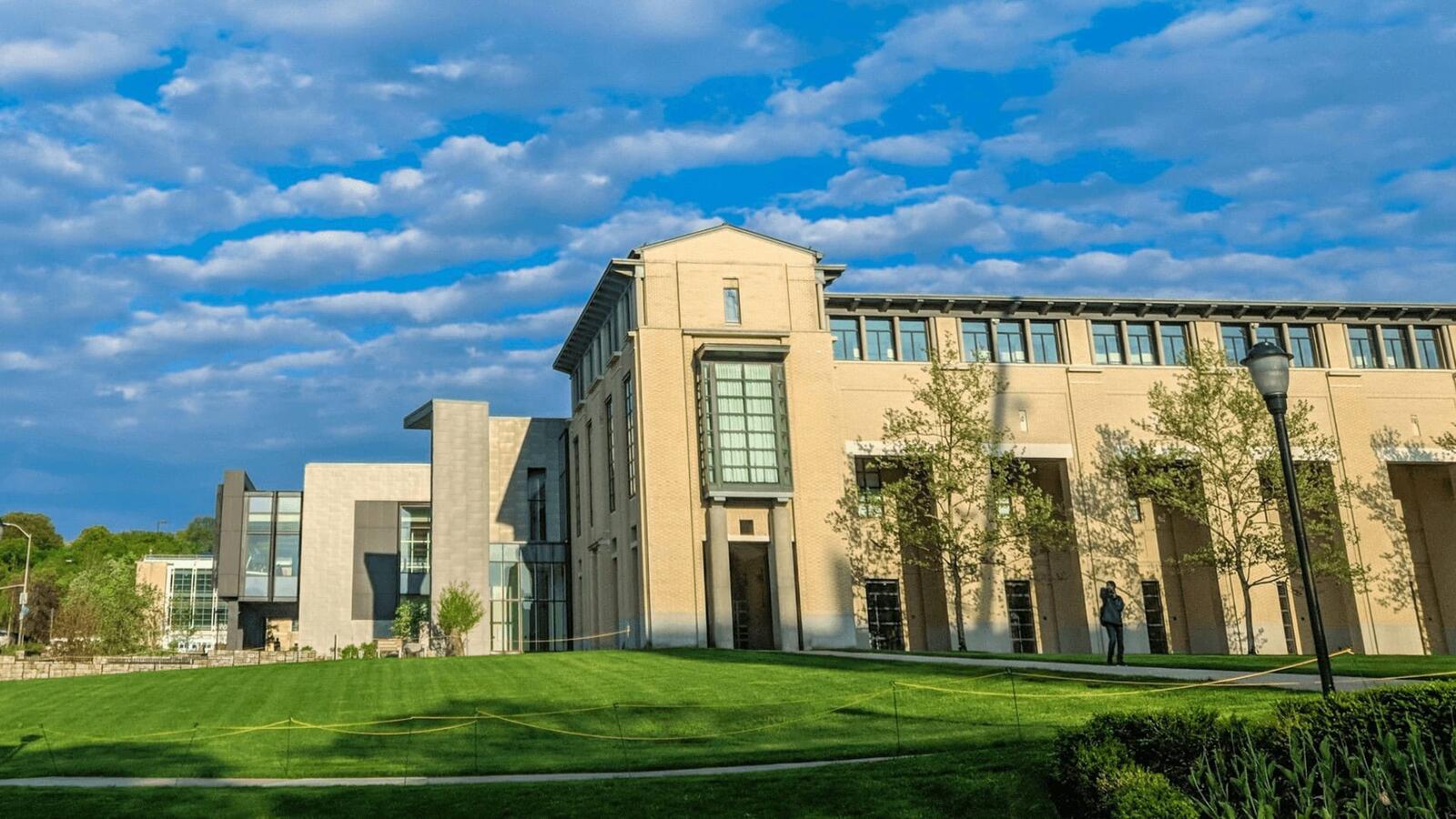
Carnegie Mellon University is undoubtedly one of the most formidable research universities in the world. This is especially true if you define ‘formidable’ as anything involving computer science, robotics, AI or just the word algorithm. It was founded by Andrew Carnegie in 1900 to serve as a technical school for the children of Pittsburgh steelworkers. Today, it has the reputation of producing founders that built some of the biggest companies in modern tech. If you’ve seen a self-driving car demo in the past two decades, there’s quite a good chance a CMU alum was involved somewhere.
Pittsburgh itself tells you a lot about the place. The city has reinvented itself from steel to software with CMU right at the heart of that shift. On campus, you’ll feel a slightly industrial, slightly cerebral vibe that’s kind of perfectly on-brand for a university that takes problem-solving seriously. There’s even a famous Fence, which students paint overnight to make announcements, and it’s about as grand as the traditions get.
What Does The Carnegie Mellon Startup Scene Look Like?
The main engine of it all is the Swartz Centre for Entrepreneurship. It runs the Olympus accelerator for student startups, the McGinnis Venture Competition and a range of programmes designed to turn technical projects into real, working businesses. The Tepper School of Business (which happens to be named after one of the founders on this list) also runs its own entrepreneurship programmes focused more on the operator side.
Where CMU really shines, though, is when it comes to deep tech. The robotics institute, AI programmes and engineering departments produce companies at speed, generally in sectors where you’ve got a higher barrier to entry because the tech is complicated. Think autonomous vehicles, enterprise AI, computational biology – the kind of businesses that need research breakthroughs in order to exist in the first place.
Carnegie Mellon Alumni That Founded Successful Startups
Here are a handful of Carnegie Mellon alumni whose companies ended up shaping the respective industries they’re in, with a slightly natural bias towards the tech side because that’s where they excel. But the range is still broader than you would think, spanning hedge funds, independent publishing, online fashion and language learning.
1. Vinod Khosla, Co-founder of Sun Microsystems

Vinod Khosla completed his Master’s at Carnegie Mellon before heading to Stanford for his MBA. He co-founded Sun Microsystems in 1982, which built the servers and software that ran a vast majority of the early web through the 90s and became the industry standard for a generation.
After Sun, Khosla joined Kleiner Perkins and then founded Khosla Ventures which has backed everyone from Square to Stripe to DoorDash. He remains one of the most prominent voices on clean tech investing, putting some serious capital into solar, biofuels and alternative energy.
Not many people can say they shaped both the early Internet and modern venture capital, but Khosla certainly can.
2. James Gosling, Founder of Java at Sun Microsystems

James Gosling received his PhD in computer science at Carnegie Mellon before inventing Java at Sun Microsystems, one of the most important programming languages ever created. Java runs on billions of devices and powers enterprise systems for just about every major bank and insurance company around the world.
While Gosling may not be a founder in the traditional VC-backed-startup sense, Java itself has been the foundation for so many companies and products globally. It still remains one of the most in-demand skills for any developer job, even now decades later. Gosling has also had stints at Google, Liquid Robotics and Amazon Web Services.
At some point, you’ve almost certainly used his work even without realising it.
3. Luis von Ahn, Co-founder and CEO of Duolingo

Luis von Ahn is a CMU professor and an alum, after completing his PhD at the university. He invented CAPTCHA (we all know this one well, with the squiggly letters you have to type to prove you are indeed a human) and then reCAPTCHA.
Google acquired reCAPTCHA in 2009 and Luis then co-founded Duolingo in 2011, a free language-learning app. At some point, we’ve likely all faced the wrath of the green bird for missing our lessons. The app has over a hundred million monthly users, offering courses in dozens of languages from Spanish to Welsh and even High Valyrian (for the Game of Thrones fans).
The company went public in 2021 and its whole approach of making learning feel like a game with streaks and leaderboards has made a huge impact in the edtech industry.
More from Startups
- 5 Startups Crowdfunding w/c 09.11.2026
- Malta’s Big Push To Attract Global Entrepreneurs
- Enter TechRound’s TechRound100 2026!
- Founders Of The Week: Cassie Easton And Ellie Lindsay-Wood
- Top UrbanTech Startups In Hong Kong To Watch In 2027
- Startup of the Week: Crescendo
- Singapore Vs. London: Which Is Better For Building A Tech Startup?
- Princeton University: Successful Alumni That Founded Startups
4. Charles Geschke, Co-founder of Adobe

Charles Geschke finished his PhD at Carnegie Mellon and then co-founded Adobe in 1982 with John Warnock. Adobe has an entire suite of tools from PDF and Acrobat to Photoshop and Illustrator so if you’ve ever edited a photo, read a document online or sent a signed contract digitally, Adobe software was almost certainly involved.
Geschke serves as president and co-chairman for decades, building the company that has shaped graphic design, publishing, photography and document workflows for more than forty years. It’s now worth over hundreds of billions of dollars.
While he passed away in 2021, Adobe’s dominance in the software space continues to be a testament to his legacy.
5. David Tepper, Founder of Appaloosa Management
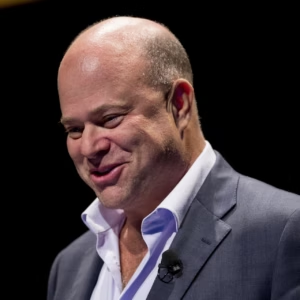
David Tepper completed his MBA at Carnegie Mellon which named their business school after him. Tepper donated $55 million to it in 2004 and another $67 million in 2013. In 1993, he founded Appaloosa Management, one of the biggest hedge funds in the world, specialising in distressed debt.
The company made enormous returns during the infamous 2008 financial crisis by betting that the US government wouldn’t let big banks fail. It’s worth tens of billions of dollars, making a name for itself with some of the best long-term returns in hedge fund history.
Tepper also owns the Carolina Panthers in the NFL and Charlotte FC in MLS.
6. Susan Gregg Koger, Co-founder of ModCloth

Susan Gregg Koger co-founded ModCloth with her husband Eric when they were still undergraduates at Carnegie Mellon out of her dorm room in 2002. It was one of the first digitally native fashion brands, focusing on vintage-inspired, indie and quirky women’s clothing.
The company sat at the forefront of what has now become the standard in online fashion – community-driven buying decisions and inclusive sizing. It raised a significant amount of venture funding before being eventually acquired by Walmart in 2017.
Koger had built it while basically teaching herself e-commerce because at the time, that category was still in the process of being invented itself.
7. Luke Skurman, Founder and CEO of Niche

Luke Skurman founded Niche while still a student at CMU in 2002. It began as a series of student-written guidebooks to US colleges, giving prospective students an honest, on-the-ground view of what a university was like – you know, beyond the glossy brochures.
It was initially called College Prowler and later rebranded as Niche, expanding into schools, neighbours to live and became one of the biggest review sites in the US with tens of millions of users. Skurman is still the CEO today and the company is one of the biggest success stories in the Pittsburg startup scene.
8. Andrew Ng, Founder of DeepLearning.AI and Co-founder of Coursera

Andrew Ng did his PhD in computer science at Carnegie Mellon before going to teach at Stanford, found Google Brain and lead Baidu’s AI group. In 2012, he co-founded Coursera which became one of the biggest online learning platforms in the world, offering courses from top universities to millions of learners.
He also founded DeepLearning.AI, whose machine learning courses have taught a generation of engineers how to work with neural networks and Landing AI, which helps industrial companies apply AI which assists industrial companies with applying AI to real-world manufacturing problems.
9. Bill Pollock, Founder of No Starch Press

Bill Pollock is the founder of No Starch Press, an independent tech publisher known for its books on programming, security and hacker culture. Its become one of the most respected independent technical publishers around thanks to its clean designs and unusually readable explanations of challenging technical material.
The Python Crash Course, Linux Command Line and Hacking: The Art of Exploitation have shaped a whole generation of self-taught developers learning how to code.


