


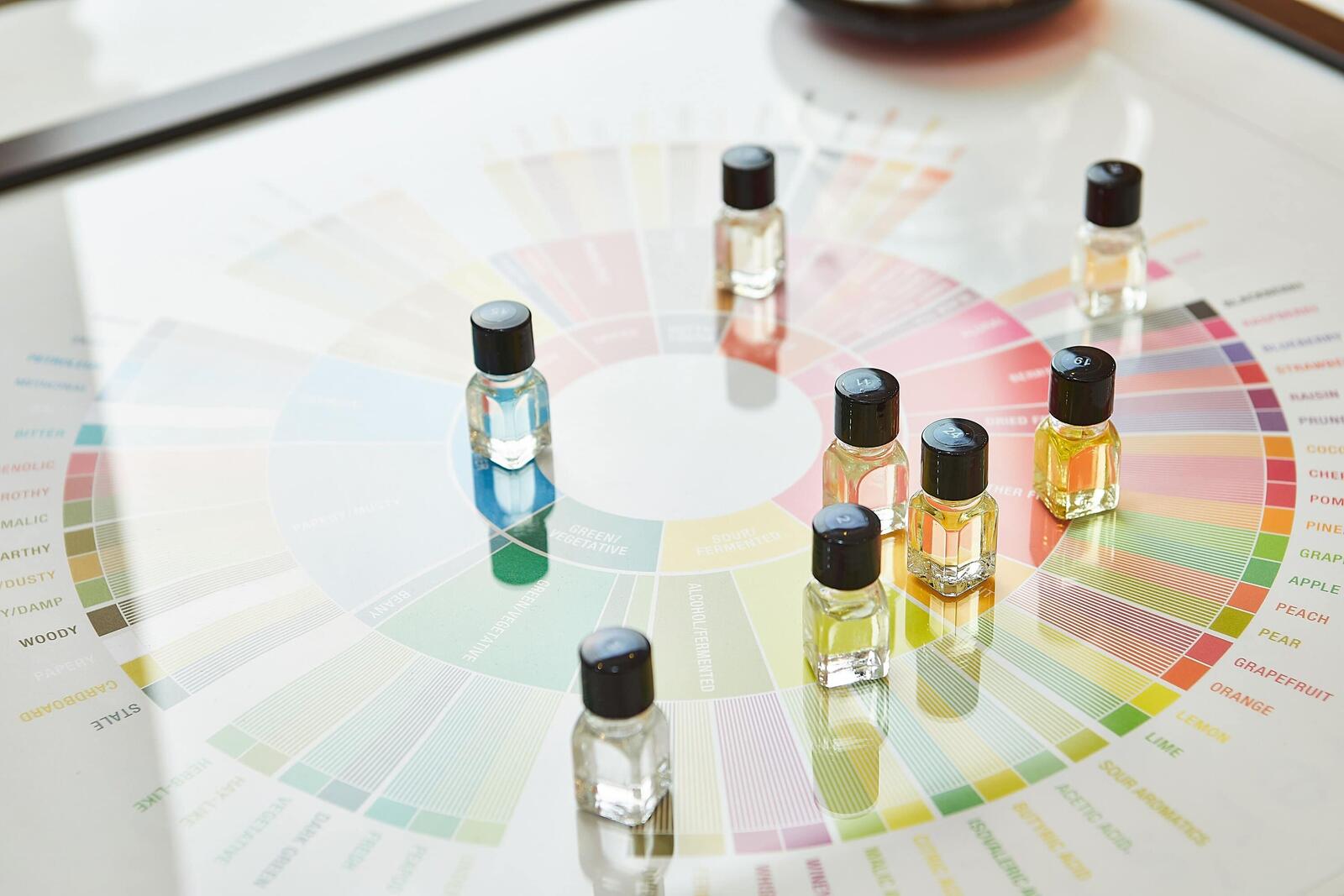
Perfume shopping has a funny way of turning into a full-blown investigation. One spritz on a paper strip, another on your wrist and suddenly you’re comparing top notes, debating whether something smells more like vanilla or caramel and wondering how you’ve ended up testing half the shop. Finding a fragrance you love is the thrilling part (well, for me at least), but it’s also an experience that’s difficult to recreate anywhere other than in person.
Online, all of that disappears. You get a photo of a bottle, a list of notes and reviews from strangers whose noses might be nothing like yours, so you’re basically buying a mystery in a pretty bottle. Researchers are now exploring ways to detect and recreate smells digitally, raising the possibility of sniffing a perfume before it lands on your doorstep.
Why Perfume Is So Awkward To Sell Through A Screen
A jumper can be photographed from six angles and you’ll have a decent idea of what turns up, but a photo of a perfume bottle can’t tell you whether it’s woody, powdery, citrusy or sweet. Fragrance notes help, although two people can smell the same bottle and walk away with completely different opinions.
Then there’s the way a perfume changes once it’s on you. Top notes fade, heart notes emerge and base notes can linger for hours, meaning the fragrance you fall for at the counter isn’t necessarily the one you’ll be wearing by teatime. Even testing perfumes in store has its limits – somewhere around the fifth paper strip, every scent blends into one vaguely expensive cloud.
More from Tech
- AI Teddy Bears, Roblox And The Growing Problem With Child Safety In Tech
- Can Someone Really Steal Your Identity Using Information From Social Media?
- Top Robotics And Industrial Automation Startups In Estonia To Watch In 2027
- The Technology Turning Everyday Homes Into Mini Power Stations
- When Banks Go Offline, What Happens To Your Money?
- AI Models Rarely Agree: What Does This Say About AI Accuracy?
- The Paradox Of Progress: Is Our Pursuit Of Technological Efficiency Making The World More Vulnerable?
- Pokémon Go Was Supposed To Help You Catch Pokémon – Now Its Data Is Helping Robots Navigate The World
Smell You Later: Teaching A Computer To Send A Scent
Smell you later, traditional perfume shopping? Not quite yet, but researchers at Ohio State University and Zhejiang Laboratory in China have developed a system that can send information about smells over the internet and recreate them remotely. Published in Science Advances on 21 October 2026, the system is called Scentronic and uses an electronic nose with gas sensors to detect volatile organic compounds in an odour. Machine learning then analyses the readings and classifies the smell.
What travels online is a label rather than the smell itself. The classification is sent through a cloud server to a receiving device containing preloaded scented liquids, which releases the corresponding scent through an atomiser. It’s a bit like texting a friend the word “coffee” and having them pull a bottle of coffee off their shelf, except the shelf is a gadget worn near your nose.
The researchers tested five scents: coffee, cake, orange, beer and red wine. The electronic nose’s machine-learning models classified them with accuracy ranging from 96% to 100%, depending on the method used. However, when 14 volunteers were asked to identify the recreated smells, they got it right around 73% of the time.
It’s still a research prototype, and each scent needs to be represented by a liquid loaded into the receiving device in advance. It can’t sniff an unfamiliar perfume, work out its recipe and recreate it at home. For fragrance shopping, though, the idea of choosing a bottle online and having a device release its scent before you buy is an exciting possibility.
The Chatbot That Plays Fragrance Counter Assistant
Not every attempt to improve online perfume shopping involves hardware, Jo Malone London also launched its AI Scent Advisor on 2 December 2025. Built with Google Cloud, the tool lets customers describe what they’re looking for in their own words, with Google’s Gemini models matching their preferences against the brand’s fragrance data.
Google Cloud’s case study gives the example of someone looking for a scent that reminds them of a vintage library. In store, Jo Malone’s stylists use a “Tell, Explain, Describe” framework of open questions to help customers explore different scent families. The AI tool is designed to recreate that conversation online.
Google Cloud also reports that conversion rates doubled among customers who used the Scent Advisor, although this is a company-reported result rather than an independently verified figure.
If the chatbot says you’ll love a bottle, you’re still taking its word for it. It does, however, help with the challenge of describing a smell using words that were never really designed for the job.
Could Perfume Shopping Ever Come With A Sniff Test?
Combine the two technologies and you can imagine a different kind of online shopping experience: browse a fragrance collection, get recommendations based on your tastes, then use a connected device to sample the scent before buying. That could mean fewer blind purchases and less need to order a stack of physical samples.
A perfume is a carefully built mixture of ingredients that changes over hours, making it far more complicated to recreate than an orange or a cup of coffee. Someone would also need to manufacture the scent cartridges, keep them refilled and persuade people to buy another gadget just to shop for perfume.
As someone who collects perfume as a hobby, I’ll also admit that a device offering unlimited free sniffing might be the most dangerous thing anyone could do to my collection.
Your Perfume Shelf Is Safe For Now
Technology has a long way to go before it can replace standing at a counter with a strip in each hand. AI advisers are already helping people navigate fragrance ranges, while research into digital smell is exploring something much bolder: bringing scent into online experiences.
For now, a combination of personalised recommendations and scent technology could help narrow down the options before anyone steps into a shop. Until then, we’ll keep testing new releases and adding another bottle to the collection. But if the technology does arrive, it might be time to say it: smell you later, traditional perfume shopping?


