


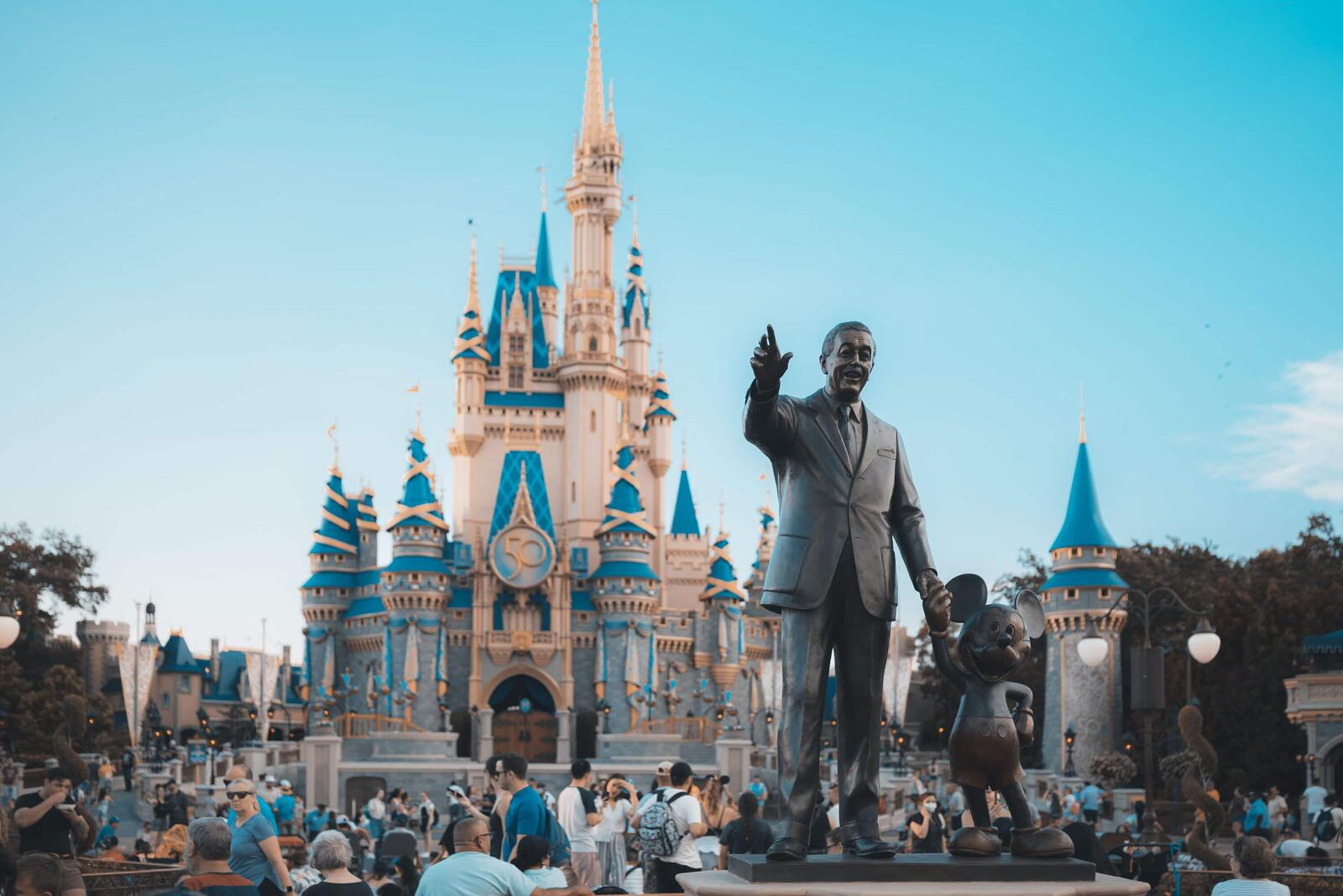
Picture a Disney designer with a pencil, a cooling cup of tea and a rough sketch of a new attraction that currently looks like a potato with big ambitions. Normally that doodle has to be redrawn, rendered and refined many times before it becomes anything a construction crew could build from, but Disney’s Imagineering teams are already using AI on that first stretch.
On 9 November, Disney and Adobe announced a multi-year alliance that includes building AI models around Disney’s own characters, worlds and visual styles. It isn’t a story about pictures appearing at the press of a button; it’s about one of the biggest names in entertainment letting a machine into the creative workshop to see what happens.
Giving AI A Proper Disney Education
The technology behind it is Adobe Firefly Foundry, which lets a company build private AI models around its own material instead of leaning on a general image generator. Ask a general tool for a cartoon castle and you’ll get a castle that could belong to anybody, whereas a model customised on Disney’s characters, environments and visual styles is meant to give you one that looks like it belongs in a Disney film instead of one that took a wrong turn on the way to a different studio. According to Adobe, these customised models are designed to produce commercially safe and production-ready results.
Rather than asking AI to guess what Disney looks like, Disney is giving it a detailed education in its own universe. None of that amounts to an AI writing and producing a Disney film on its own; Disney and Adobe describe the models as human-centred and artist-led, which is a long way from handing a machine the keys to the studio.
From Rough Doodle To Rendered Concept Art
Walt Disney Imagineering Research & Development is already using a sketch-to-image model that turns hand-drawn concepts into fully rendered 2D concept art, alongside a custom image model that produces on-brand assets across franchises including Frozen and Moana. A designer sketching a new ice-themed attraction could explore dozens of directions rather than just one, which could help identify costly design changes before construction begins.
Speed is one of the biggest benefits so far. According to Reuters, Kyle Laughlin, a senior vice president of R&D, technology and engineering at Walt Disney Imagineering, said that work which used to take months can now be done in hours or days. Adobe’s earlier June announcement also described a 3D modelling tool that could turn 2D designs into prototypes for planning builds and estimating materials.
More from Artificial Intelligence
- Your Patient Records Could Become AI Training Data – What Do Privacy Rules Say About De-Identified Health Data?
- Google Says AI Could Help Make Software “Unhackable”, But Is That Realistic?
- Experts Comment: Was Last Week’s Tech Stock Crash A Warning Sign For Investors
- Nobody Agrees On What AI Is Doing To The Workforce (And That’s What’s Causing The Real Problems)
- Mercedes-Benz Is Moving Small AI Models Into Its Cars – How Much Of The Cloud’s Work Can They Take On?
- What Is Model Context Protocol, And Why Is It Becoming So Important For AI?
- The Sandbox Fights Back: Joe Security Launches Adaptive Detonation
- The Rise Of The AI Stack: Why Small Businesses Are Turning To Multiple AI Tools
What Happens When The Film Studio Gets Involved
Adobe has also joined StudioLAB as an innovation partner, which is the Walt Disney Studios hub where creative and technical staff prototype ideas and try to turn experiments into proper tools. The partnership will see Adobe work with Disney’s creatives and technologists to explore and expand internal creative workflows, with co-innovation projects already underway.
At this stage, the work at StudioLAB is about finding ways to bring AI into the creative process. The companies want to give teams more opportunities to develop ideas while protecting the creative work behind them. If some of the slower development tasks become quicker, studios could have more time to experiment with different approaches, visual concepts and storytelling ideas.
Who Gets To Be Creative When AI Joins The Team?
For the artists working in entertainment, AI brings a big question: which parts of their jobs could eventually be handled by software? The technology could take some of the repetitive work out of developing concepts, giving artists more time to experiment with designs and refine their ideas. It could also allow teams to produce more visual options without spending as long on each one.
There are concerns on the other side, too. If studios become more reliant on AI-generated assets, could demand for certain creative roles fall? Who owns the work when AI has helped produce it? And could faster production make entertainment feel less personal if human involvement becomes less visible?
Disney’s position is that the models are artist-led, with Laughlin telling Reuters that the tools were “in no way meant to replace” roles at Imagineering. The company is also facing wider pressure to reduce costs, with thousands of job cuts under consideration and some managers reportedly asked to target 20 per cent in annual savings.
Will Anyone In The Cinema Seat Notice?
Audiences are probably not thinking about the software behind a film’s backgrounds; they’re thinking about whether the story’s good, the characters feel believable and the popcorn justified its price. If AI helps build more elaborate worlds or more ambitious effects, viewers may only ever notice the result, which raises the possibility that entertainment gets judged on how it feels rather than how it was made.
The alliance reaches beyond animation too. ESPN Edge, ESPN’s innovation centre, will work with Adobe on using AI to engage sports fans and bring ESPN’s archive to life, again with projects already underway. For us fans, this could eventually mean new ways to find and revisit sporting moments from the archive.
The Sketch Still Needs Someone To Draw It
That first sketch might be a little rough around the edges, but deciding what a new Disney attraction should look like still takes a human imagination. Disney has spent decades building its worlds through artists, animators, designers and storytellers and what it’s testing now is whether the same people can get from a rough idea to a finished one faster.
AI may never need to replace the imagination behind entertainment to change the industry around it. It could give creative teams different ways to develop ideas, experiment with visual styles and bring ambitious projects to life. Whether those changes make the films, attractions and experiences audiences love even better will ultimately come down to what Disney does with the technology.


