


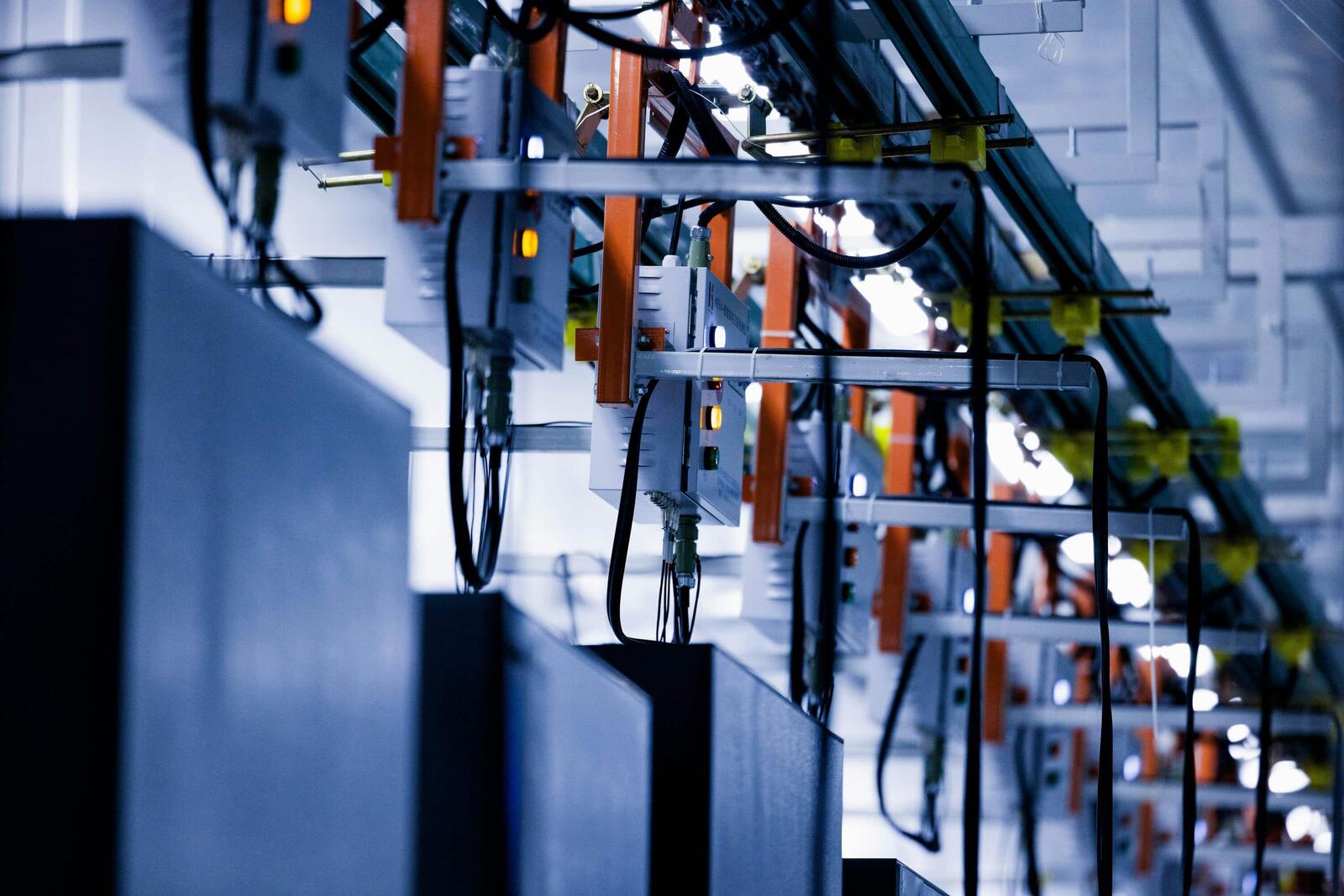
For most of us, the internet feels pretty intangible – a mysterious, intangible “something” that exists in the ether that allows us to open apps, stream films, send emails or ask AI chatbots questions without giving much thought to what happens behind the scenes. But all of these activities rely on something far less mysterious and intangible and rather something decidedly physical: data centres.
Believe it or not, these facilities have been supporting our digital lives for decades, yet it’s only recently, as the AI boom has been driving demand for computing power, that they’ve become a much bigger part of the public conversation. And not necessarily for the right reasons, and importantly, the conversation has lacked a great deal of understanding.
Across the world, proposed data centre developments are attracting opposition from communities that are concerned about electricity consumption, water usage, land development and the pressure placed on local infrastructure. The debate is, without a doubt, understandable, particularly as the scale of investment in AI continues to grow.
But beyond all of this is an underlying feeling that something doesn’t quite add up, and that’s because it’s overshadowed by the dark cloud of an insurmountable contradiction. That is, we all want faster technology, smarter AI tools, better digital services and increasingly connected lives, but we’re not keen on having the infrastructure required to make any of it possible. We want the world to be more efficient and connected, but we don’t want to acknowledge the technology and potentially harmful infrastructure that’s required to make that a reality.
We’ve Been Depending On Data Centres For Years
One of the reasons this debate is so interesting is that data centres are hardly a new invention, contrary to popular belief. Long before ChatGPT became part of everyday conversation, these facilities were already providing the computing, storage and networking infrastructure that allowed the internet to function.
Online banking, e-commerce, social media, email, video streaming and cloud-based business software all depend on data centres in some capacity, and they always have – this is no recent development. Every time we upload a photograph, save a document to the cloud or access information hosted on a remote server, we’re relying on infrastructure that most people rarely think about. Indeed, I’d go so far as saying that it was never really necessary to think about, in many respects, because that wasn’t something normal people bothered themselves with. Indeed, Adrianna K. Moore, Founder and Chief Strategy Officer of Chaos Consulting, explains that,”For decades, we’ve built our lives around data centers without giving them much thought”.
So, what’s changed? Well, the difference now is that AI is accelerating demand and making the physical consequences of our digital habits considerably harder to ignore. They’re overt, in our faces and it’s becoming more difficult to not understand and acknowlege it and that it is to ask questions and join the conversation.
As we know, AI applications need serious computing resources to train and run models, while the growing use of AI-powered services adds to the demand for data centre capacity too. As a result, technology companies are investing heavily in new facilities, bringing questions about their environmental and local impact into communities that might previously have had little reason to think about them.
And suddenly, the infrastructure behind the internet is no longer quite so invisible. It was always there (albeit in a smaller capacity), but it’s shed its invisibility cloak and now all the world can see it.
More from Artificial Intelligence
- Why Are AI Companies So Interested In Giving Their Models Memory?
- What Are Small Language Models And How Are They Different From Large Language Models?
- Disney Is Teaching AI Its Creative Style – What Does This Mean For The Future Of Entertainment?
- Your Patient Records Could Become AI Training Data – What Do Privacy Rules Say About De-Identified Health Data?
- Google Says AI Could Help Make Software “Unhackable”, But Is That Realistic?
- One Identity Unveils Identity Manager 10.0 LTS With AI And Modern UX
- Experts Comment: Was Last Week’s Tech Stock Crash A Warning Sign For Investors
- Yougov Publishes Scientific Validation Of Its AI Twins And Challenges Industry To Set Research Standards
A Problem That Goes Beyond AI
The scale of the challenge is becoming clearer as investment accelerates. According to the International Energy Agency (IEA), global data centre electricity consumption reached approximately 485 terawatt-hours (TWh) in 2025. What’s really concerning is that its latest projections suggest this could almost double to 950 TWh by 2030, accounting for around 3% of global electricity demand.
Of course, the other thing is that electricity isn’t the only concern at hand. Depending on their design and location, data centres can also require significant amounts of water for cooling, take up substantial areas of land and place additional demands on local electricity grids. And while their services are used by people all over the world, the consequences of hosting the infrastructure are much more concentrated, and the people within the physical proximity of the centres are going to get the hardest hit.
The friction that this has created has been seen and heard by everybody, both in the form of newsworthy protests and demonstrations as well as simply in general discussion and rhetoric around data centres and the AI industry more broadly. As Moore explained to us, “The convenience is personal and immediate, while the costs, from energy consumption to water usage and land development, are often concentrated in specific communities.”
Essentially, the point here is that the people benefiting from a service aren’t necessarily the same people being forced to deal with the consequences of building the infrastructure behind it, and that’s quite an important issue to acknowledge.
Are We Being Hypocritical, Or Asking The Right Questions?
It’s tempting to look at the situation and call it contradictory. We all want the convenience of AI, instant access to information and digital services that work around the clock, yet in the same breath, we’ll object when the buildings required to support them appear in our neighbourhoods. The contradiction is stark and it feels unavoidable, but George Varghese, Head of Investments at 0G Labs, argues that calling those opposed to these data centres hypocritical misses the point. As he puts it, “They want better technology, but they also want to know why their town should absorb the costs of serving customers elsewhere,” he says.
And sure, that’s a fairly reasonable question and it moves beyond mere contradcition or hypocrisy. Being dependent on data centres doesn’t mean communities should automatically accept every proposed development, particularly when information about its resource requirements and local impact isn’t readily available.
Jordi Esturi, CMO at Brickken, similarly argues that public acceptance depends on “who captures the productivity gains and who pays for the infrastructure”. Of course, the industry can’t expect communities to simply take its word for it. If companies want to build facilities that support an increasingly digital economy, they need to be transparent about what those facilities require and what local residents stand to gain.
However, if I were to play devil’s advocate, I’d say that sure, it’s totally reasonable to question why your community has to be the one to bear the burden for the entire industry, but that’s not really fair either. Surely, it shouldn’t just be about whether or not or own community should take one for the team but rather why any specific locality should have to do this. It shouldn’t be just, “not in my house” but rather, “not in anybody’s house” (or perhaps backyard is more appropriate). Of course, once we go in that direction, however, we find ourselves back at the original problem which is that if we aren’t willing to have data centres anywhere, in anybody’s local community, then surely we should also have to accept that we can’t have data centres at all, and everything that they bring with them. And that is, of course, not a realistic argument, nor is it one I think anybody really wants to make (or not many people, at least).
So, back to square one. We don’t like data centres, but we want the things they allow us to have and use. Perhaps then we need to shift slightly adjacent to the initial question: that is, if we can’t get rid of data centres, then how much are we, as technology users, prepared to change?
So, What Are We Actually Prepared To Give Up?
We can’t have an increasingly digital world without the physical infrastructure to support it, and that’s not an opinion; it’s a basic truth. If we want more AI, more cloud computing and more sophisticated digital services, we’re going to need more computing capacity. If we want our lives to be sophisticated, efficient and full of cool software, gadgets and more, we have to sacrifice something along the way.
However, perhaps that doesn’t necessarily mean building more data centres should be the only answer. Darryl Stevens, CEO and Founder of HumanBlend and DIGITECH Web Design Austin, argues that technology companies should also look at how they can reduce unnecessary computing in the first place. He points to more efficient code, caching, compression, smaller AI models and better data-retention policies as ways to improve efficiency.
There are also questions about how facilities are powered, how much water they consume and whether developers are making sufficient use of existing infrastructure. As Stevens puts it, “how they can be more energy efficient while at the same time increasing productivity” is one of the key questions facing the industry.
Ultimately, this is about more than whether we like having large buildings full of servers in our neighbourhoods – if only it were that simple. In fact, it’s about understanding the relationship between the technology we increasingly depend on and the resources required to make it work. We might not all need to understand exactly how a data centre operates, but we should probably understand that the internet isn’t some magical, weightless service floating around in the cloud. It takes buildings, electricity, cooling systems, equipment and people to keep it running, and as much as we’re getting something out of it, the value is coming from somewhere that cannot be ignored.
And unfortunately, as AI becomes a bigger part of everyday life, that physical footprint is likely to become an even more important consideration. So perhaps we need to accept that data centres are going to be part of the world we live in, just as power stations, telecommunications infrastructure and other essential utilities are. But still, acceptance shouldn’t mean a free pass for developers, nor should it mean that communities have to shoulder the costs without a say or any input at all – to the contrary.
Rather, we simply need to be mindful of both sides of the equation and possible contradictions we’re giving rise to by simultaneously being worried about infrastructure while benefiting from that which it produces. Because it’s just not helpful to keep demanding more technology while pretending the infrastructure behind it doesn’t exist. The more complicated, less fun, truth is that we’re going to need to be prepared to make the compromises, investments and changes that will be necessary to support the digital future we’re so keen to have; or, we’ll have to accept that we may not be able to have the high-tech future we’ve seen in movies.
Our Experts
- Gary Watson: Managing Director of Stellanor Datacenters
- Adrianna K. Moore: Founder and Chief Strategy Officer of Chaos Consulting
- George Varghese: Head of Investments at 0G Labs
- Jordi Esturi: CMO at Brickken
- Darryl Stevens: CEO and Founder of HumanBlend and DIGITECH Web Design Austin
Gary Watson, Managing Director of Stellanor Datacenters

“Some level of debate around the growth of data centres is inevitable, particularly as AI investment increases, but we shouldn’t lose sight of what these facilities enable. They underpin the digital services we use every day, from banking and healthcare to transport and AI.
“There is an inherent contradiction in demanding the benefits of modern technology while opposing the infrastructure that makes it possible. The answer isn’t to step back from the infrastructure we depend on, but to ensure it is developed responsibly, and in a way that benefits the communities around it.
“Operators also have a responsibility to be good neighbours, manage their environmental impact and make a positive contribution to the people who live, study and work nearby.
“This is something Stellanor takes seriously. Alongside investing in sustainable operations to ease pressure on grid capacity, we support initiatives that deliver meaningful local benefits. This includes funding the Urban Growing Club project in a local school in Islington, which gives children the opportunity to grow fresh food while learning about sustainable food production, as well as donating laptops to help improve access to technology and digital learning. Ultimately, communities need to see these commitments in action, not just hear them.”
Adrianna K. Moore, Founder and Chief Strategy Officer of Chaos Consulting

“Technology has a remarkable ability to make its infrastructure invisible until that infrastructure physically shows up in someone’s backyard.
“For decades, we’ve built our lives around data centers without giving them much thought – streaming, social media, most any modern use of the Internet. AI has only accelerated demand, making the physical costs of our increasingly digital lives much harder to ignore.
“What’s interesting is how differently people perceive the benefits and consequences of innovation. The convenience is personal and immediate, while the costs, from energy consumption to water usage and land development, are often concentrated in specific communities.
“That’s where technology companies are running into trouble. They’re selling a vision of collective progress without always demonstrating its value to the people most directly affected.
“The next challenge for the tech industry is much more difficult than simply building more infrastructure to keep up with demand. Increasingly, they’re being tasked with earning public permission to build it.”
George Varghese, Head of Investments at 0G Labs

“I think people understand the trade-off better than we give them credit for. They want better technology, but they also want to know why their town should absorb the costs of serving customers elsewhere. Banking, email and online commerce depended on data centres long before this AI boom, so calling residents hypocritical gets us nowhere, especially when their concerns can determine whether a project gets built.
“Working on decentralised AI at 0G, I spend time thinking about who can afford to participate in this economy. There’s enormous potential in giving a small business access to computing that once required a corporate budget, and connecting existing resources more effectively can help alongside new construction. That’s why I’m optimistic: as access improves, more people can build businesses and services we haven’t anticipated yet. We should be ambitious about building the capacity to support them and serious about earning local support.”
Jordi Esturi, CMO at Brickken

“The tension is understandable when digital infrastructure distributes benefits widely while concentrating costs locally. Data centres supported financial markets long before generative AI. Financial institutions now use AI for research, risk analysis and market surveillance. Our work on agentic capital markets at Brickken brings that dependence into focus: as software takes a more active role in financial operations, computing capacity becomes a strategic requirement.
“Across Europe and the US, public acceptance rests on who captures the productivity gains and who pays for the infrastructure. Communities deserve credible commitments on electricity, water and grid investment. Meeting those obligations strengthens the investment case. I see enormous scope for AI to reduce friction in capital markets and make sophisticated financial services more accessible. The economies that build the capacity to support that progress, and secure public confidence in it, will have a substantial competitive advantage.”
Darryl Stevens, CEO and Founder of HumanBlend and DIGITECH Web Design Austin

“Data centers support far more than AI. According to the International Energy Agency, conventional workloads still account for a substantial share of data center electricity consumption. The truth is that data centers are essential infrastructure for many digital services. In fact, they are necessary for many companies that rely on the internet to do business. Efficiency is not the sole measure of how a technology is used within an institution.
“We need to ensure infrastructure decisions are more accountable. Communities have legitimate concerns about the industry’s impact. What is more, a lack of transparency makes it hard to gauge the environmental impact of a particular data center. Technology companies can avoid unnecessary computing by implementing efficient code, caching, compression, AI models that are small enough to fit their needs, and appropriate data-retention policies. A question that arises with regards to data centers is how they can be more energy efficient while at the same time increasing productivity.”


