


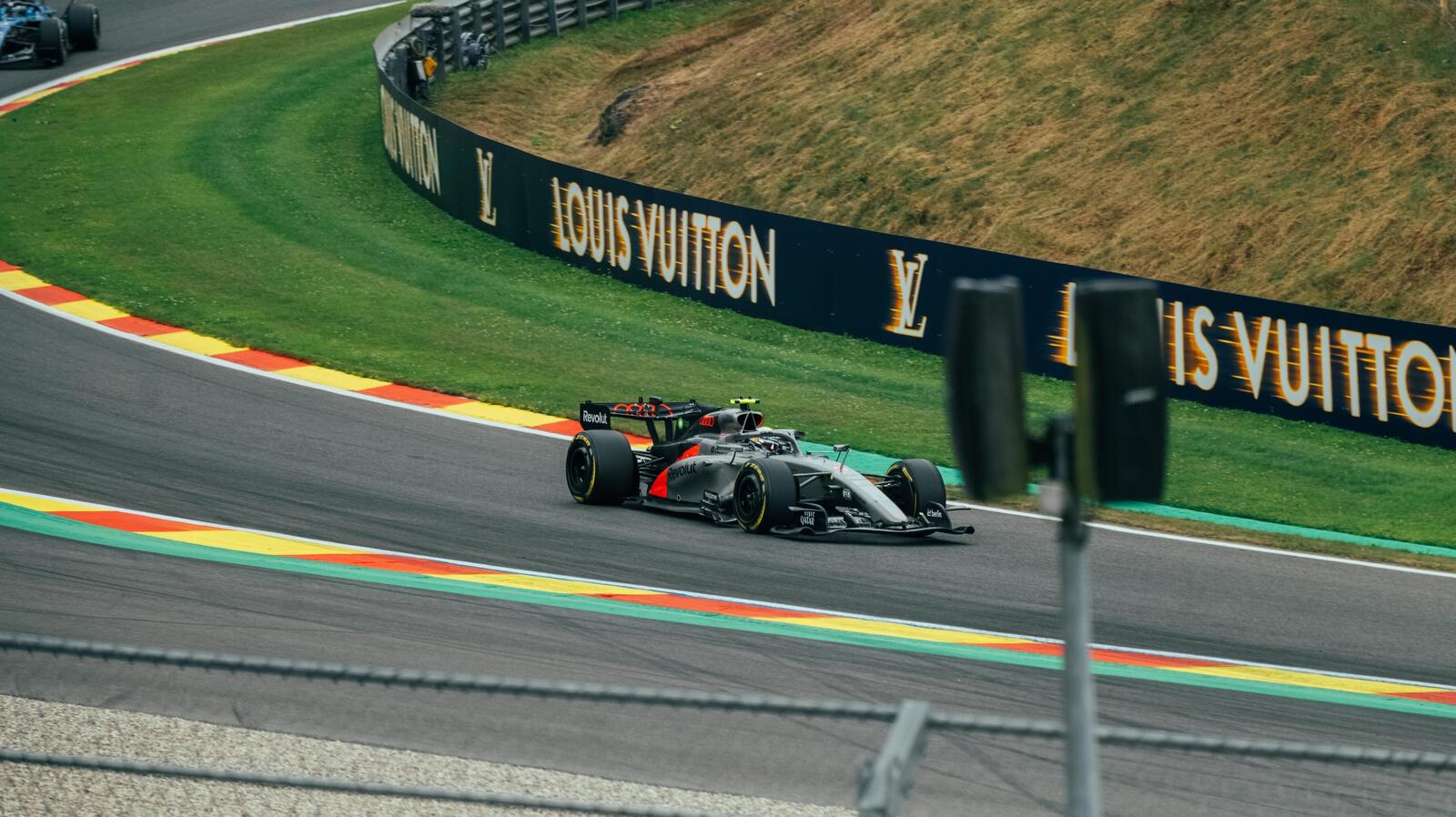
A Formula 1 trophy travelling in a Louis Vuitton trunk probably isn’t what fans tune in to see on a Sunday. Neither is a pair of Ferrari trainers or a Heineken campaign telling people not to drink before driving. Yet these have all become part of the business surrounding the sport. Netflix has taken that world a step further, turning the personalities, rivalries and politics of the paddock into a series watched well beyond the usual motorsport audience.
F1 has become a pretty useful marketing vehicle for companies selling everything from beer and luxury luggage to fashion and entertainment. Each partnership puts a different side of the sport to work, from the prestige of the podium to the personalities behind the wheel and the racing heritage fans can wear.
Heineken – The Sponsor That Spends Its Time Telling You Not To Drink
When Heineken became a global F1 partner in 2016, one detail stood out: its branding wouldn’t appear on any of the cars. Instead, the partnership included circuit branding, television advertising, digital campaigns and live fan experiences. It also introduced the “If You Drive, Never Drink” campaign, featuring former F1 world champion Jackie Stewart as an ambassador for its responsible-drinking message.
At races, Heineken has also used pop-up bars, DJ performances and paddock hospitality to put its brand directly into the weekend’s social scene. In 2023, the company announced that its extended partnership would put more emphasis on Heineken 0.0, its alcohol-free beer. Dutch DJ Martin Garrix was also brought into the partnership as a global ambassador, performing at F1 events.
The partnership offers two messages to communicate at once: its beer brand is part of the social side of race weekends, while its alcohol-free range gives it a product to promote through responsible-consumption campaigns.
Louis Vuitton – Handing Over The Trophy In A Trunk
Louis Vuitton’s relationship with F1 began at the Monaco Grand Prix in 2021, when it became the race’s official trophy travel case provider. The arrangement expanded in 2025, when parent company LVMH began its ten-year global partnership with F1. Louis Vuitton became an official partner, creating bespoke trophy trunks for Grand Prix races around the world.
These aren’t simply standard cases with a logo added. According to Louis Vuitton, each trophy trunk is handcrafted by its artisans at the Maison’s historic workshops in Asnières, just outside Paris. The designs use the familiar Monogram canvas, with a distinctive “V” for Victory that references the circuit’s finish line. Each trunk also reflects the colours and identity of its host city, giving the cases details specific to each Grand Prix.
The trunks are part of the trophy presentation, meaning the brand appears in photographs and broadcast coverage when drivers collect their trophies. Louis Vuitton has also published behind-the-scenes material showing the artisans making the cases, bringing attention and appreciation to the craftsmanship before the trophies even reach the podium.
More from Business
- Europe Keeps Launching Scaleup Funds, But Is Cash Really What Founders Are Missing?
- How To Build A Global Talent Visa Evidence Portfolio That Shows Your Contribution
- Mailchimp Is Changing Hands Again As GetResponse Offers Customers Two Years Of Stability
- Top Strategic Communications Companies For Startups In The UK
- Top FinTech Startups In The Netherlands To Watch In 2027
- What Is Belgium Doing To Attract More Businesses?
- Experts Comment: Could Your Digital Reputation Become More Valuable Than Your CV?
- How IntraTEM Helps Enterprises Navigate Telecom Expense Management During Growth and Acquisitions
Red Bull Racing – The Team That Doubles As A Content Studio
Red Bull didn’t settle for sponsoring an F1 team. It acquired Jaguar Racing from Ford in November 2004, before making its debut as a constructor in the 2005 season. That gave the energy drink company ownership of a team competing in the championship, rather than just a space on its cars.
Owning the team also means Red Bull has a steady supply of racing footage, driver appearances and behind-the-scenes access for its own media channels. In a 2013 interview with Marketing Week, the company’s then head of marketing, Dominik Mitsch, described its two F1 teams as “content assets” for the business. Their activities could feed into Red Bull Media House, promotional campaigns and other brand channels.
Red Bull also takes its cars and drivers directly to the public through showruns. In April 2025, it brought four drivers from Red Bull Racing and Racing Bulls to Tokyo for a demonstration event in Odaiba. The programme featured historic F1 machinery from the teams’ collection and attracted around 12 000 spectators.
Unlike a conventional sponsor, Red Bull can take its own cars and drivers into city centres, organise public demonstrations and produce footage afterwards. The team gives the company access to the cars, drivers and racing stories that form the basis of its content and promotional events.
Netflix – Turning The Paddock Into A Drama Series
Netflix isn’t a sponsor in the usual sense. Its relationship with F1 took a different route through “Formula 1: Drive to Survive”, the behind-the-scenes documentary series produced by Box to Box Films, which debuted in 2019.
The series follows drivers, team principals and the people working behind the scenes, but its appeal comes from what happens between races as much as what happens on track. Contract negotiations, disagreements between team bosses, driver rivalries and the pressure of keeping a seat all provide storylines that a traditional race broadcast doesn’t have time to explore.
For Season 8, released in 2026, F1 reported that the production crew attended all 24 Grands Prix in the 2025 calendar, using up to six main cameras at races and as many as 20 radio microphones. The production also receives access to F1’s broadcast feeds, including footage from more than 24 track cameras and up to 80 onboard cameras. The finished series is distributed in more than 190 countries and translated into over 50 languages.
The series has also been credited with attracting new viewers to F1. A 2022 Morning Consult survey found that 53% of US F1 fans said “Drive to Survive” had played a role in making them fans. Among those under 45, that figure rose to 74%.
The storytelling approach has attracted criticism, too. Max Verstappen chose not to take part in interviews for the series in 2021, saying some situations were made to look fake or exaggerated. He also objected to rivalries being presented that he felt didn’t exist. His criticism highlights the tension involved in turning a real sporting championship into entertainment: the producers want compelling stories, while the people featured still want their words and actions represented accurately.
Ferrari And PUMA – Fireproof Driver Shoes To The High Street
PUMA announced its partnership with Ferrari in 2004, becoming the team’s official supplier of racing gear. Its motorsport footwear has a history of its own, too. The original Race Cat debuted in 1999 as a low-profile, fireproof racing shoe for Formula 1 drivers. The lifestyle Speedcat followed in 2000, taking the low-profile racing aesthetic into everyday footwear.
The Ferrari partnership gives PUMA a direct link to one of motorsport’s most recognisable teams.The collections include trainers, jackets, caps and other everyday clothing, with Ferrari colours and racing details adapted for people who want to wear the brand away from the circuit.
The race-weekend collections give PUMA an opportunity to connect those products to specific events and moments in Ferrari’s history. For the 2024 Miami Grand Prix, PUMA and Ferrari released a blue collection inspired by the team’s historic racing colours from the 1960s and 1970s, including its association with drivers such as John Surtees and Niki Lauda.
A year later, the Miami collection took a different direction. The 2025 white edition drew inspiration from the white accents on Ferrari’s SF-25 car and the tradition of football away kits. Charles Leclerc and Lewis Hamilton wore the collection’s white replica apparel alongside matching race suits, gloves and Speedcat Pro footwear. Fans could buy the limited-edition pieces through PUMA and Ferrari stores and websites during race week.
Rather than releasing the same team merchandise each season, PUMA can draw on Ferrari’s history, current drivers and individual Grand Prix locations to give collections a distinct look. The racing references also give the shoes and clothing an identity beyond the team’s usual replica merchandise.
A shoe designed for the demands of racing now has to survive something rather different: the high street, fashion trends and the occasional puddle.
What Marketers Can Take From The Paddock
These collaborations use F1 in very different ways. Heineken builds activations around race weekends and uses the partnership to promote its alcohol-free range. Louis Vuitton puts its craftsmanship into the trophy presentation. Red Bull owns a team that produces content and live experiences, while Netflix turns the people behind the sport into a documentary series. PUMA uses Ferrari’s racing identity to sell fashion and footwear.
The difference lies in what each company actually does with its F1 involvement. Heineken has the social side of race weekends, Louis Vuitton has the prestige of winning, Netflix has the personalities and rivalries, while PUMA has the team’s history and visual identity.
A logo can put a name in front of fans, but these collaborations give them something more specific to associate with the brand. That might be a campaign they see at a race, a trophy presentation, a documentary they watch or a collection they can buy.
More Than A Logo On The Grid
Formula 1 might be the setting, but the products and campaigns reach into industries well beyond motorsport. For Heineken, that’s beer and alcohol-free alternatives. For Louis Vuitton, it’s luxury craftsmanship. For PUMA, it’s fashion. For Netflix, it’s entertainment. The racing brings them together, but each partnership still has its own commercial purpose.


