


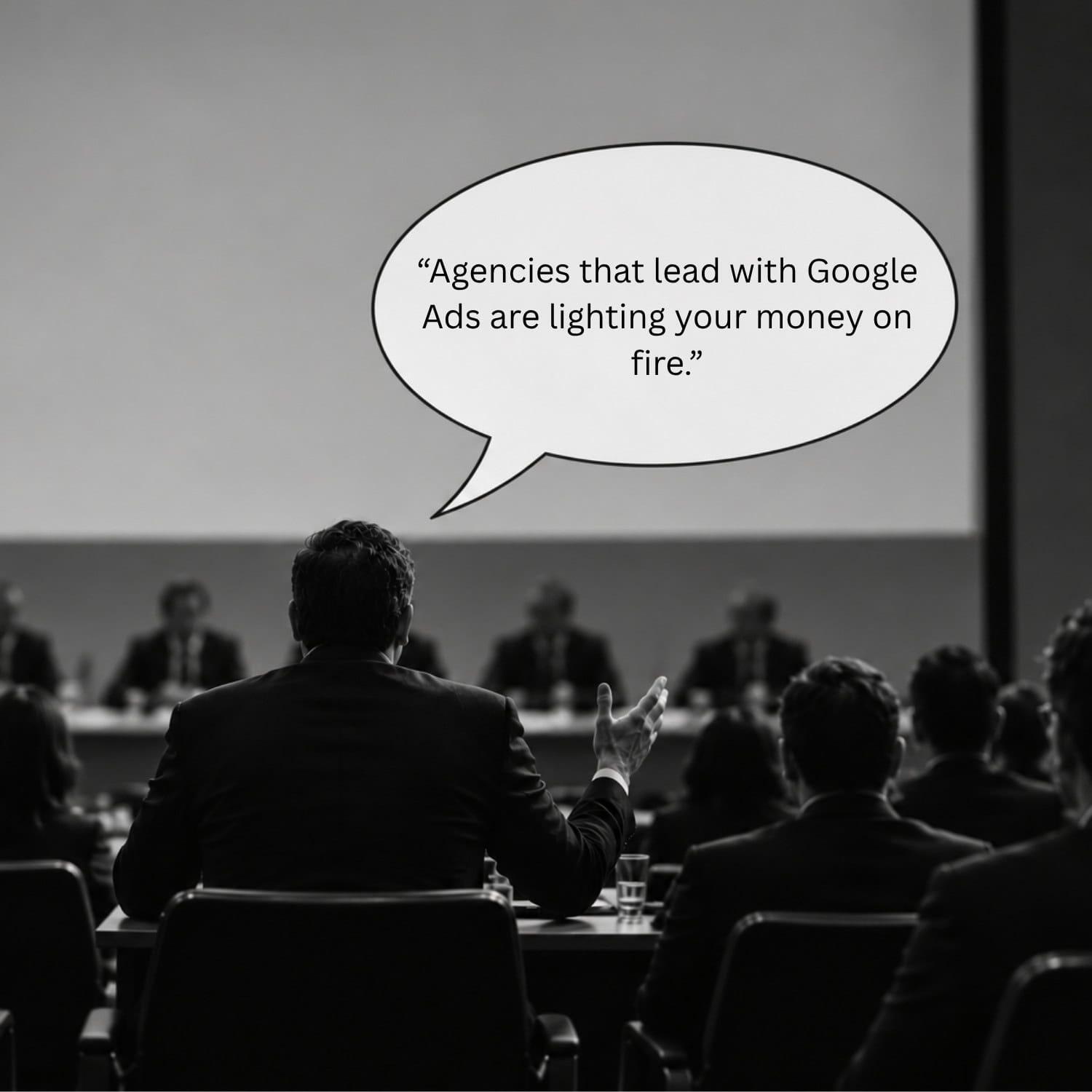
“Agencies that lead with Google Ads are lighting your money on fire.”
We seem to be living in an increasingly polarised world, in which we’re constantly forced to pick a side: you agree or you don’t, you’re for something or against it, you’re either part of the conversation or you’re on the wrong side of it.
But the thing is, reality is rarely quite so straightforward.
There is, after all, plenty of space between two opposing viewpoints, but we seem to have forgotten about the grey. People can hold conflicting ideas, change their minds and see merit in arguments they don’t entirely agree with. In fact, it’s important that we remember that we can do these things.
But the problem is, nuance doesn’t always make for a particularly satisfying headline, and we seem to be coming more and more comfortable with seeing things in absolutes.
That’s where Quite Contrary comes in. TechRound’s series is built around challenging assumptions, questioning conventional wisdom and giving a platform to opinions that don’t necessarily fit neatly into the mainstream narrative.
Because disagreement doesn’t have to mean division, and sometimes, the most interesting conversations happen when we stop trying to decide who’s right and start asking why.
More from Business
- The UK’s Scale-Up Problem Starts Earlier Than We Think
- Companies Invest in Employee Training But Are They Measuring What People Learn?
- Experts Comment: Is Anthropic’s IPO Warning About Existential Risk Legal Caution Or Strategy?
- What Is Sweden Doing To Attract More Entrepreneurs?
- Why Do Economic Downturns Sometimes Create Startup Booms?
- Big Businesses Are Losing Track Of Billions In Contract Value, So What’s Going Wrong?
- Thinking Outside The Box: How Unusual Packaging Can Become A Marketing Tool
- Why The Reception Desk Is Becoming A Digital Experience
This Week’s Contrarian
This week, our “unpopular opinion” comes from Danny Sullivan, Founder and CEO of Nomada Digital. Sullivan believes, in perhaps one of our hottest takes yet, that digital marketing agencies that lead their campaigns with Google Ads are, essentially, lighting your money on fire…
Danny Sullivan, Founder and CEO of Nomada Digital
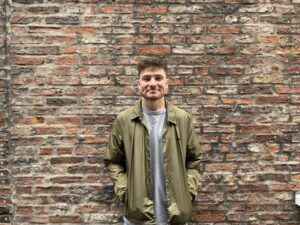
Danny Sullivan is the Founder and CEO of Nomada Digital, a B2B SEO Agency operating in both UK and US markets. Founded in 2020, the remote-first agency specialises in SEO, AI visibility, paid media, PR and CRO, helping businesses improve their visibility across the platforms where modern buyers search and make decisions.
Danny’s Hot Take
“Agencies that lead with Google Ads are lighting your money on fire.”
“Many founders I talk to want to start with Google Ads because it feels fast – you turn it on, get clicks, and see something happen straight away. But Google Ads works best when everything else is already in place, when organic visibility is building, quality scores are climbing, and your brand already means something to the person searching. When you run it first, in isolation, you’re paying premium prices just to convince strangers you’re credible, which is one of the most expensive mistakes a growing business can make.
“I’ve seen businesses burn through months of budget on paid clicks that convert at a fraction of what the same budget would deliver once the foundation exists. But Google Ads isn’t the problem, the sequencing is. It should be the layer you add once search, content and earned media have already built some trust for you, not the thing carrying your entire visibility on its own.”
Here’s What the TechRound Community Had To Say
- Raúl Menoyo: Founder at Citora
- Andre Magrini: Global CRO, AI Revenue Architect, OGI Systems
- Christina Lindley: Founder and CEO at VPRG Consulting
- Chris Coussons: Founder at Visionary
- Patrick Gibbs: Founder at Epiphany Dynamics
- Carlos Benavides: Founder at Barlo Digital
- Dr. Morissa Schwartz: Founder of GenZ Publishing and Dr. Rissy’s Writing & Marketing
- Patricia Gunter: Fractional Chief Marketing Officer at Duplia Marketing
- Chris Ferris: Senior Vice President of Digital Strategy at Pierpont Communications
- Peter Kiefer: Founder at Mirel
- Maciej Turek: Independent Growth Consultant
- Robin Dimond: Founder and CEO of Fifth & Cor, Business Growth Strategist and Marketing Innovator
- Nick Trinnaman: Founder of RankMoss and Ecommerce Director at Esposti Ltd.
- Bruce Shields: Founder and President, ABS Tag & Title
- John Colascione: Founder and CEO at SEARCHEN NETWORKS®
Raúl Menoyo, Founder at Citora
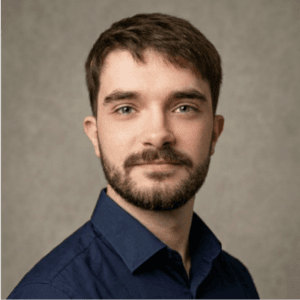
“I run a small AI visibility agency in Spain and I have never bought a click for it. I agree with the sequencing, and I would push it one step further. Ads buy you attention inside Google. They buy you nothing inside an assistant. When a buyer asks ChatGPT or Perplexity for a shortlist in your category, the model builds that list out of things that already exist, comparison pages, forum threads, editorial coverage. There is no bid there. Ranking and being recommended by AI have become two different games, and paid search only plays one of them.
“Where I do not fully agree, ads are the fastest honest way to find out if anyone wants what you sell, and that is worth paying for. What I would not ask them to do is carry your credibility, because the person who clicks goes and checks you anyway.”
If you skip the organic foundation and go straight to ads, what convinces a stranger you are credible?
“Other people’s pages. Nothing you write about yourself does that work. The click lands, they search your name, they read what someone else wrote, and increasingly they ask an assistant what it knows about you. If that answer comes back thin, the ad paid for a visit that ends in doubt. I track this as a rate rather than a position, because the same question asked twice does not always return the same answer, so what I can tell a client is how often they show up, not where they sit.”
Andre Magrini, Global CRO, AI Revenue Architect, OGI Systems
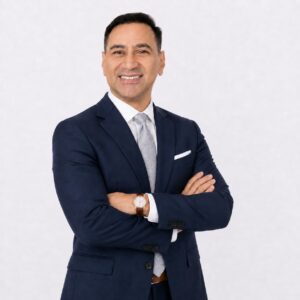
“Google Ads is not inherently wasteful; using it before the commercial system is ready is. Paid search can validate demand quickly, but it cannot manufacture trust, differentiation, or conversion discipline. Before scaling spend, a company needs a clear offer, evidence that the problem matters, credible proof, a useful landing experience, and a process for turning inquiries into revenue. Organic visibility helps, but the deeper requirement is an operating foundation: positioning, proof, data, follow-up, and accountability.
“I have seen companies treat clicks as progress while their funnel leaks after the first interaction. In that situation, ads only make an inefficient system fail faster and more expensively. The right sequence is not always “organic first, ads later.” It is “evidence and conversion readiness first, controlled paid experiments second, scale third.” Google Ads should accelerate a working growth architecture, not substitute for one. Once the foundation is measurable, paid search becomes a useful instrument for learning and growth rather than a costly substitute for strategy.”
If you skip the organic foundation and go straight to ads, what convinces a stranger you are credible?
“Independent proof, specific client outcomes, authoritative third-party coverage, transparent expertise, and a coherent landing experience that all tell the same story. ”
Christina Lindley, Founder and CEO at VPRG Consulting
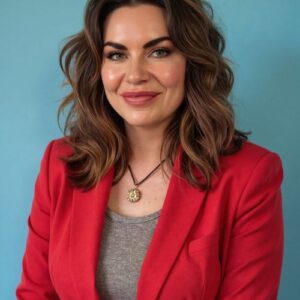
“I agree, but Google Ads aren’t the problem. Paying for attention before anyone has a reason to trust you is. Founders like ads because they can see the clicks and costs in real time. But if your offer is unclear, your proof is thin, or your landing page does not convert, you are just paying more people to notice. Before I put money behind ads, I want sharp positioning, customer results, a credible website, and evidence that the message works. Organic search and content can build that foundation, but so can partnerships, press, referrals, reviews, and trusted communities.
“I have seen one good partnership create more confidence than months of posting content. Ads work when they amplify something people already understand and believe. Asking them to create awareness, credibility, and conversion all at once is where the money disappears. That is not a channel problem. It is a sequencing problem.”
If you skip the organic foundation and go straight to ads, what convinces a stranger you are credible?
“Credibility has to come from somewhere: customer results, reviews, press, a respected partner, or a community that already trusts you. Ads can introduce you. They cannot make an unsupported claim believable.”
Chris Coussons, Founder at Visionary
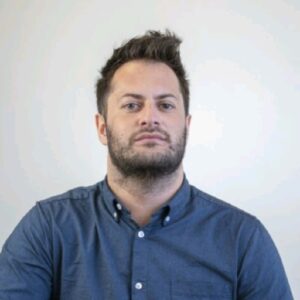
“I think saying that agencies which lead with Google Ads are ‘lighting your money on fire’ is too broad, because for plenty of businesses paid search is one of the quickest ways to find out whether there’s real demand, what people are actually looking for, which messages resonate and which searches convert when there’s genuine intent behind the click.
“I also wouldn’t necessarily tie organic visibility too closely to Quality Score, because Google bases that on expected click-through rate, ad relevance and landing page experience.
“Where I do agree is that it can become expensive when businesses start paying for traffic before getting the basics of the landing page right. If someone lands on the site and it’s not immediately clear why they should choose that business, there’s little there to give them confidence or the page makes it difficult to take the next step, putting more money into ads isn’t going to solve those issues.
“For me, the order matters less than making sure what you’re offering and the experience after the click are strong enough before you start paying to send people there.”
If you skip the organic foundation and go straight to ads, what convinces a stranger you’re credible?
“That credibility has to come from what they see after the click. Clear messaging, genuine reviews, transparent information, recognisable trust signals and a site that gives people confidence in the business can all do that. Organic visibility can strengthen trust, but I wouldn’t say it always has to come first.”
Patrick Gibbs, Founder at Epiphany Dynamics

“I run an AI automation agency, so I watch this mistake happen from the buyer’s side constantly. A business with no reviews, no organic presence, and no brand recognition turns on Google Ads expecting it to fix all three at once. It can’t. Every click is paying full price to introduce yourself to a total stranger, and strangers convert at a fraction of the rate of someone who already found you organically, read a review, or got a referral. I’ve had prospects come to me wanting a paid campaign built before they’d even claimed their Google Business Profile or fixed a site that loaded in six seconds. The ad spend doesn’t fail because the targeting is bad. It fails because the thing the ad points at hasn’t earned trust yet. Ads convert existing credibility into revenue. They don’t create credibility from nothing.
If you skip the organic foundation and go straight to ads, what convinces a stranger you are credible?
“If you skip the organic foundation and go straight to ads: nothing convinces the stranger you’re credible in that scenario, which is exactly the problem. The click has to do double duty, sell trust and sell the product in one visit, and it almost never manages both.”
Carlos Benavides, Founder at Barlo Digital
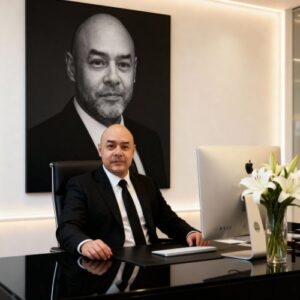
“Google Ads does burn money when it runs first, but organic maturity is not what decides that. Measurement is. I run paid search for home services companies. Across $867,000 in spend and 191,000 clicks in Texas, California and Florida, we booked 4,420 jobs at a $196 cost per acquisition. None of those accounts had a strong organic foundation underneath them.
“The account that taught me this was recording 1,150 conversions while only 278 of them ever reached the bidding algorithm. Google was optimizing against a quarter of the truth and charging full price for the guess. The founder believed the channel was expensive. The channel was fine. The feedback loop was broken.
“Money burns in paid search when the algorithm is fed bad data, not when the brand is unknown. An unknown business with accurate conversion tracking will beat a familiar one without it.”
If you skip the organic foundation and go straight to ads, what convinces a stranger you are credible?
“The landing page does, not the brand. Nobody arriving from a paid ad has heard of you, and most of them arrive on a phone. We render client pages at 390 pixels wide, the viewport that traffic actually lands on, and check what breaks there before we check anything else. What convinces a stranger is specific evidence: real job counts, real service areas, real prices, and a phone number that connects to a person. Strangers are not looking for fame. They are looking for proof you will show up.”
Dr. Morissa Schwartz, Founder of GenZ Publishing and Dr. Rissy’s Writing & Marketing

“I agree with the sequencing argument, with one caveat: Google Ads can sometimes validate demand before a full organic engine exists. The danger is treating clicks as proof of brand trust. Ads amplify whatever foundation is present, including confusion, weak positioning, or a landing page that answers none of the buyer’s doubts. For most growing businesses, organic search, useful content, reviews, earned media, and a recognizable point of view lower the burden ads must carry.
“They give prospects repeated evidence that the company understands the problem and will still exist after the click. Paid search can then accelerate a credible story instead of renting attention at premium rates. I would test small, tightly scoped campaigns early, use them to learn which messages convert, and build organic assets from those lessons. Scale comes later, once the site, offer, proof, and follow-up experience can turn borrowed traffic into durable demand more effectively.”
If you skip the organic foundation and go straight to ads, what convinces a stranger you are credible?
“If you skip the organic foundation, credibility must come from independent proof: specific results, reviews, earned media, recognizable clients, a precise offer, and a landing page that answers the buyer’s real doubts. An ad can create attention; it cannot manufacture trust.”
Patricia Gunter, Fractional Chief Marketing Officer at Duplia Marketing
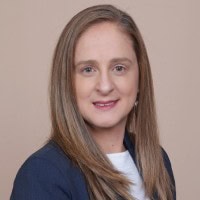
“Google Ads give you visibility while you continue to pay; once you stop, you become a ghost online. These ads don’t influence how AI engines recognize your business. When buyers consult ChatGPT or Copilot for recommendations, their responses rely on your organic presence. Your potential clients are already using AI tools to search online. Forrester found that 94% of B2B buyers now use generative AI or conversational search
“When I launched Duplia Marketing, I decided to invest in its organic online presence rather than in Google Ads or paid search. Within only 2 months, the website appeared in over 17,000 searches on both Google and Bing for more than 600 terms. One blog post was cited 283 times by Copilot in a single month, and leads were generated through AI search. My recommendation: focus on building your organic presence first and use paid ads only for keywords where organic search has not yet established visibility.
If you skip the organic foundation and go straight to ads, what convinces a stranger you are credible?
“Google Ads will for sure drive people to your website. A second step in the purchase process will be to research your website, your company name, and whatever the AI engine reports about you. If your information is inconsistent or not credible in those other sources, you’re risking paying for visitors who won’t engage or even consider buying from you. Establishing credibility is key, and Google Ads won’t do that for you.”
Chris Ferris, Senior Vice President of Digital Strategy at Pierpont Communications

“Non-branded Google Ads can be valuable before a company has sufficient brand awareness. A smart non-branded search campaign can drive prospects to your site. So in this case, it’s not necessarily lighting money on fire.”
If you skip the organic foundation and go straight to ads, what convinces a stranger you’re credible?
“If you go straight to ads and they do drive prospects to your website, you have to have a high-quality, professional website. Too many businesses spend money on online ads only to lose customers because of a poor experience on their website. Invest in a good website before investing in online advertising!”
Peter Kiefer, Founder at Mirel

“I’m somewhere in between. Google Ads can waste money when an agency treats it as a substitute for positioning, credibility and a website that converts. But paid search does not always need to wait for organic visibility. For a new business, it can test demand, reveal which messages resonate and reach high-intent buyers while SEO and earned media take time.
“The real issue is readiness, not whether organic or paid comes first. Before spending heavily, a business needs a clear offer, credible proof, focused landing pages, accurate tracking and a sensible follow-up process. Without those foundations, ads amplify weaknesses and make every lesson more expensive.
“I would start with a tightly controlled campaign, not make Google Ads carry the whole growth strategy. Use it to gather evidence and capture existing demand, while building content, reputation and organic visibility alongside it. Paid and organic should reinforce each other from the outset.”
If you skip the organic foundation and go straight to ads, what convinces a stranger you’re credible?
“Specific proof: relevant case studies, recognizable clients, genuine reviews, clear expertise and a landing page that directly answers the searcher’s need. Without those signals, an ad only buys attention. It does not create trust.”
Maciej Turek, Independent Growth Consultant
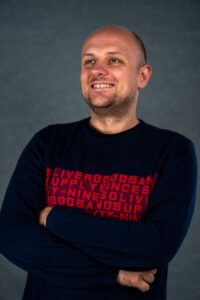
“I disagree with the absolute claim. Google Ads can waste money when the offer, tracking and landing page are weak, but that does not mean organic visibility must come first. For businesses serving demand, paid search is often the quickest way to learn which queries, propositions and customer segments convert. Waiting months for organic traction before testing that demand can be the more expensive decision.
“The real sequencing question is not paid versus organic. It is whether the basics are credible: a clear offer, proof, a landing page, conversion tracking and a follow-up process. If those are missing, ads simply expose the problems faster. I would use Google Ads early, but narrowly. Start with high-intent searches, control the query mix, measure qualified leads or revenue rather than clicks, and use the findings to improve the website and organic strategy. Ads should produce learning before they are expected to produce scale.”
If you skip the organic foundation, what convinces a stranger you’re credible?
“The landing page has to do that work: a specific offer, relevant proof, credible case studies, a clear process and a low-risk next step.”
Robin Dimond, Founder and CEO of Fifth & Cor, Business Growth Strategist and Marketing Innovator
“Google Ads aren’t the problem. Expecting Google Ads to do the job of an entire marketing strategy is.
“As AI becomes part of how consumers discover, research, and evaluate brands, organic visibility and third-party credibility have become increasingly valuable. A brand needs a digital ecosystem around it: social content, earned media, executive thought leadership, authoritative articles, strong search visibility, and consistent messaging across channels.
“That foundation does two things. It gives consumers more reasons to trust you when they encounter an ad, and it gives AI platforms more credible signals to understand who you are and why you matter.
“Paid media can accelerate visibility, but it cannot manufacture authority. If someone clicks your ad and finds very little evidence that your brand is established, credible, or relevant, you paid for attention you weren’t prepared to convert.
“The smartest strategy isn’t organic versus paid. It’s building the foundation first, then using paid media to amplify it.”
If you skip the organic foundation and go straight to ads, what convinces a stranger you’re credible?
“If you skip the organic foundation, you’re giving a stranger very little reason to believe your brand is credible. An ad can buy their attention, but it can’t buy their trust.”
Nick Trinnaman, Founder of RankMoss and Ecommerce Director at Esposti Ltd.

“Google Ads isn’t lighting money on fire – running it first is. Ads are an amplifier, not a foundation. Point them at a brand people already trust and they compound. Point them at a cold, thin site and you pay a credibility tax on every click: premium CPCs to rent attention you haven’t earned. I’ve seen businesses burn months of budget on paid clicks that converted at a fraction of what the same spend delivered once the foundation existed. The sequencing matters because trust now lives outside the ad.
“When someone clicks, they check whether the site actually answers their question, whether the brand is mentioned anywhere else, whether the tools they use vouch for it. If there’s nothing there, the click is wasted. Build the foundation first – organic visibility, useful content, earned mentions – then let ads pour fuel on a fire that’s already lit.”
If you skip the organic foundation and go straight to ads, what convinces a stranger you’re credible?
“If you skip the organic foundation and go straight to ads, almost nothing on the ad itself convinces a stranger you’re credible. Credibility is what they find after the click – reviews, real content that answers their questions, mentions elsewhere, and increasingly what an AI says about you when they ask. Skip the foundation and you’ve paid for a click into a credibility vacuum.”
Bruce Shields, Founder and President, ABS Tag & Title
“I think there’s a lot of truth in this opinion. Too many businesses view Google Ads as a shortcut to growth when, in reality, it’s often an amplifier. It works best when there’s already something worth amplifying. If a prospective customer clicks an ad and finds a weak website, little proof of expertise, few customer reviews, and no meaningful content, the business ends up paying for traffic that was never likely to convert.
“That said, I wouldn’t go as far as saying agencies that lead with Google Ads are always wasting money. The issue is whether paid advertising is being used strategically or as a substitute for building trust. At ABS Tag & Title, we’ve found that educational content, customer success stories, industry expertise, and a strong reputation make every marketing dollar work harder. When prospects already recognize your name or can quickly verify your credibility, advertising becomes much more efficient. Trust lowers acquisition costs, and trust is rarely built through ads alone.”
If you skip the organic foundation and go straight to ads, what convinces a stranger you’re credible?
“Very little. Most buyers look for validation before they take action. They check your website, search your company name, read reviews, look for industry expertise, and evaluate whether you’ve helped organizations like theirs before. If those trust signals aren’t there, you’re asking a stranger to believe your ad instead of your reputation, and that’s a difficult and expensive sales process.”
John Colascione, Founder and CEO at SEARCHEN NETWORKS®
“Agencies aren’t ‘lighting your money on fire’ simply because they lead with Google Ads. They’re lighting your money on fire if they lead with Google Ads without first ensuring the destination can convert the traffic they’re buying.
“Google Ads solves a traffic problem. But it doesn’t solve a credibility or conversion problem. Credibility comes from what the visitor finds when they arrive: demonstrated expertise, real people, strong reviews, professional affiliations, certifications, BBB membership, recognizable clients and a website that gives them confidence in the business.
“If purchased visitors arrive at a weak website that fails to establish trust or give them a compelling reason to choose the business, buying more clicks simply means paying to expose those weaknesses to more people.
“Both organic and paid visibility are extremely valuable. Without a strong website and some level of credibility, you’ll be chasing your tail with either one. Get those pieces right, and both can be extremely effective.”
If you skip the organic foundation and go straight to ads, what convinces a stranger you’re credible?
“Credibility comes from what the visitor finds when they arrive: demonstrated expertise, real people, strong reviews, professional affiliations, certifications, BBB membership, recognizable clients and a website that gives them confidence in the business.”


