


For the majority of UK founders, finance is a back-office function that receives attention only when absolutely necessary. Priorities are product-market fit, talent acquisition and scaling. Bookkeeping is often viewed as a ‘trailing indicator,’ an operational drag to be tidied up once the business hits its next milestone.
However, the regulatory landscape for manual reporting is about to vanish. On 6 April 2026, the first wave of Making Tax Digital (MTD) for Income Tax Self Assessment (ITSA) goes live. For sole traders and landlords with a qualifying income over £50,000, the transition to mandatory quarterly updates represents a fundamental shift in how business data must be managed.
This isn’t merely a compliance milestone; it’s a catalyst to de-risk your internal infrastructure. While the reporting frequency is increasing, the tools available to automate these workflows have moved beyond basic digitisation into true real-time visibility.
The 2026 Roadmap: De-Risking The Transition
HMRC’s phased rollout allows for a strategic approach to implementation. Identifying your window is the first step in moving from a reactive to a proactive financial stance.
| MTD Deadline | Target Audience | Qualifying Income (Gross) |
| 6 April 2026 | High-earning Proprietors & Landlords | Over £50,000 |
| 6 April 2027 | SME Owners & Landlords | Over £30,000 |
| 6 April 2028 | Micro-businesses & Partnerships | Over £20,000 |
Solving The ‘Ingestion Gap’
True digital independence doesn’t start with cloud software like Xero or Sage. It starts at the point of ingestion.
In a high-growth environment, unstructured data; receipts, multi-page contracts and invoices remains a primary source of data. The industry reality is that ‘AI cannot open a filing cabinet’. For data to be useful, it must first be ingested accurately and efficiently.
While smartphone apps are a convenient tool for occasional use, they often lack the governance and throughput required for consistent business reporting. For a founder managing significant transaction volumes, the photo-per-page approach is a high-friction process that is difficult to delegate and impossible to scale.
Driving Operational Leverage
Automation at the ingestion point provides immediate ROI by reclaiming productive capacity. The maths of efficiency is clear: even if removing manual filing and data entry saved just 30 seconds per document, for a business processing 1,000 files, that translates to a full working day recovered, a significant dividend that can be reinvested into higher-value tasks.
More from Guides
- In-Office Apps UK Businesses Use To Retain Top Talent
- How Does HR Prioritise Employee Well-Being?
- Legal Planning For Founders: Protecting Assets, Shares And Stability
- AI is Not Just About Speed: The Truth About GRC Wisdom
- How To Check IBAN Owner Details Safely And Quickly
- What Is An Internet Service Provider (ISP)?
- Pros and Cons of Free Web Hosting: Is It Worth the Risk?
- Best Broadband for Startups Running Heavy CRM Automations
Infrastructure As Strategy
While the mandate officially begins on 6 April 2026, the true operational impact hits on 7 August 2026, the first statutory deadline for quarterly updates. This four-month window is effectively an implementation phase. Attempting to build a hardware-to-software bridge during the first filing crunch is a high-risk strategy.
Implementing your digital ingestion system now, well ahead of the August deadline is a strategic move to ensure continuity. It allows you to move from ‘testing’ to ‘business as usual’ before the first mandatory submission.
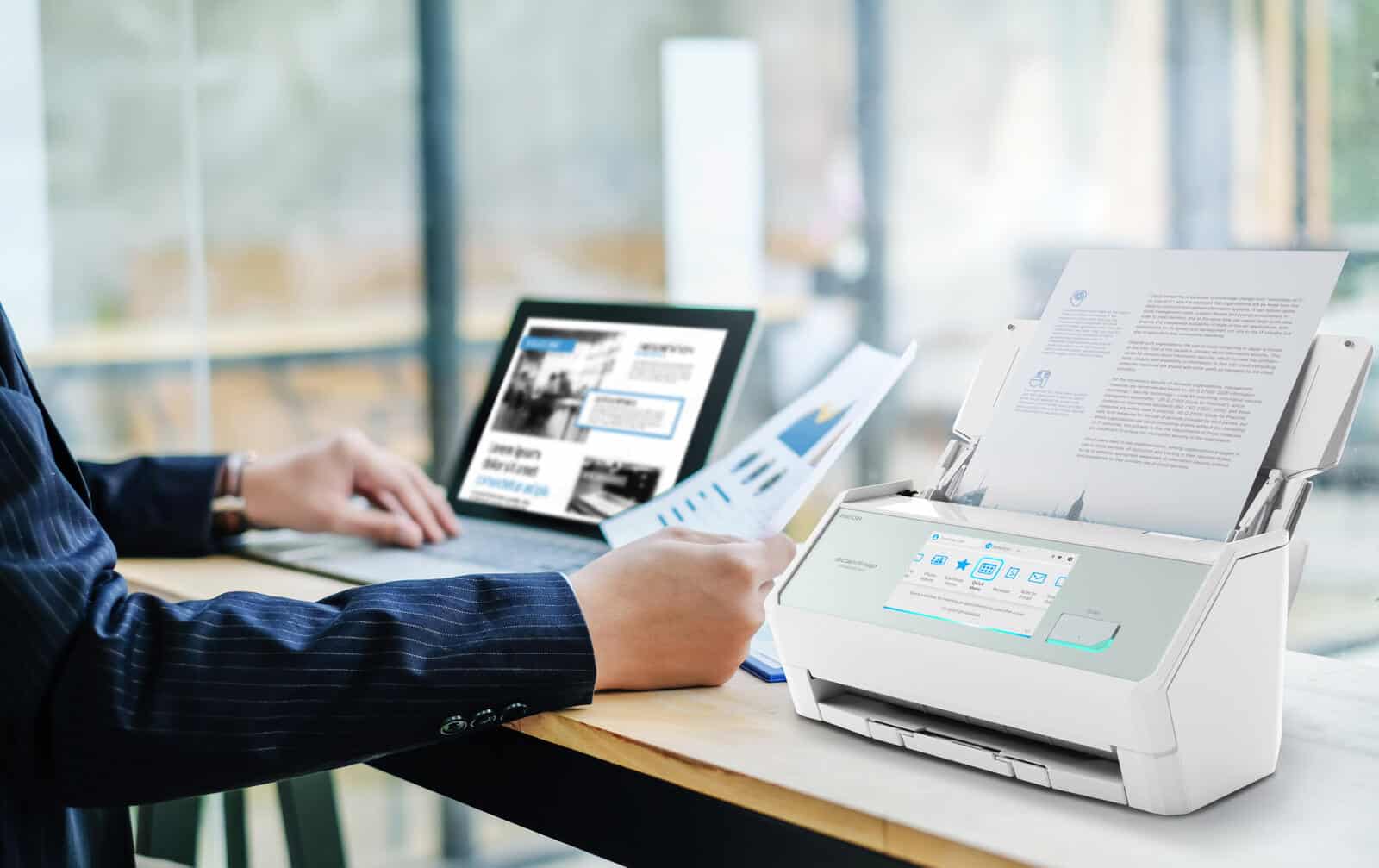
One solution for MTD readiness and long-term productivity is the ScanSnap iX2500. Engineered to free people from the ‘weight of paper’ by allowing them to easily digitise their lives, this unit is a standalone gateway for individuals and teams who require a plug-and-play experience. It features a 100-sheet automatic feeder, one-pass duplex scanning and a 5-inch touchscreen that routes data directly to the cloud or accounting software completely bypassing the PC.
By automating blank page removal and instantly generating searchable PDFs, editable Excel or CSV files, it converts a manual burden into a high-speed, one-touch workflow.
Purchase the ScanSnap iX2500 for MTD Readiness and Productivity.
MTD 2026 FAQ
- Does MTD mean I pay tax four times a year? No. You submit quarterly updates so HMRC has a real-time view of your liability, but your actual payment deadlines remain the same. The change is about the frequency of reporting, not the frequency of payment.
- Why move beyond smartphone scanning apps? It is a matter of professional throughput. While apps are useful for one-off captures, they often lack the governance and speed required for consistent business reporting. For anyone managing batch volumes, dedicated hardware provides a level of reliability and direct cloud integration that mobile cameras cannot replicate at scale.
- Can I scan directly to accounting software like Xero or Sage? Yes. Modern digital infrastructure allows for direct routing. By using a hardware-to-cloud bridge, you can send documents directly to specific folders or accounting platforms without the need for an intermediary laptop or desktop. This bypasses manual steps and streamlines data entry into your financial workflow.
- Do I need to retain original paper receipts? Generally, no. Provided you have a high-quality, legible digital copy stored within MTD-compatible software, HMRC does not usually require you to maintain a physical paper archive. Moving to a ‘digital-first’ filing system is often the most efficient way to remain audit-ready.
—TechRound does not recommend or endorse any financial, investment, gambling, trading or other advice, practices, companies or operators. All articles are purely informational—


