


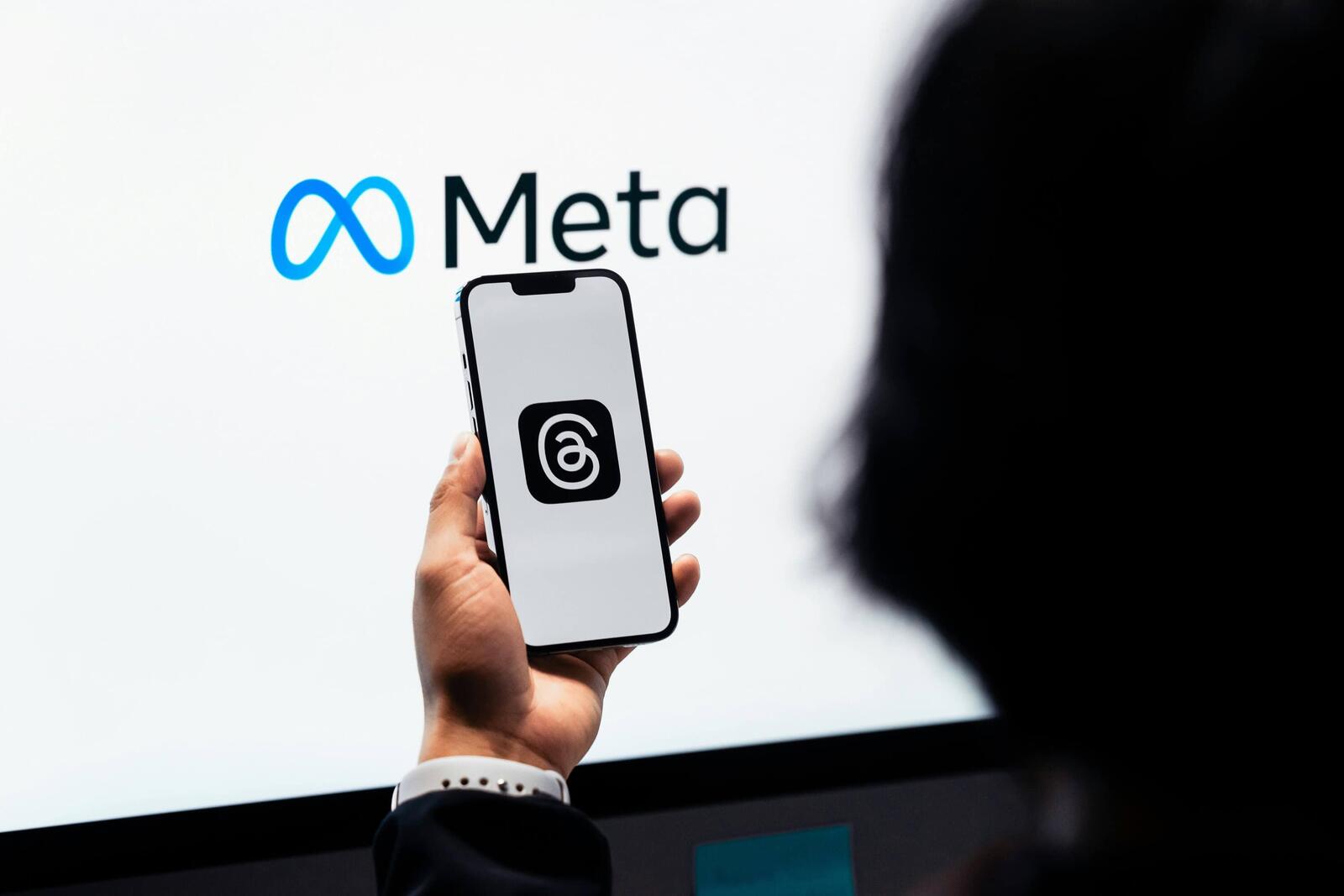
When people hear Meta, they think Facebook: the little blue app with the white ‘f’- we all know it, even if we don’t use it. Facebook is a powerhouse which is only a small part of a much larger machine. Meta Platforms, formerly the company Mark Zuckerberg renamed from ‘Facebook’ in 2021, now runs a sprawling portfolio of apps, hardware and other products that together generated over £157 billion in revenue in 2025.
So, how does Facebook and Meta actually make money? From Instagram Reels and WhatsApp Business Tools, to Meta Quest virtual reality headsets, Horizon Worlds and other virtual reality and artificial intelligence hardware and software, to the quieter but increasingly important business of renting out its own AI models.
Meta’s Two Reportable Segments
Before we dive into individual products, it is helpful to understand how Meta actually reports its finances. Meta splits its business into two segments:
Family of Apps (FoA) – Facebook, Instagram, Messenger, WhatsApp, Threads and related services
Reality Labs (RL) – Meta Quest headsets, AI smart glasses, Horizon Worlds and other AR/VR hardware and software.
In 2025, the Family of Apps segment generated $198.76 billion in revenue, with 98.7% of that coming from advertising. Reality Labs, by comparison, brought in $2.21 billion- a much smaller slice, but one Meta is betting will matter a great deal more in the years ahead.
Meta relies on advertising as one of the main sources of revenue. (Advertising alone accounts for approx. 99% of Meta’s total revenue). This says a lot as Meta is an advertising company. However, we are writing this to discuss how Meta relies on advertising, how this advertising has shifted and how this advertising is not the Facebook News Feed.
More from Guides
- What Is Customer Acquisition Cost?
- What Are Knowledge Graphs And Why Are AI Companies Using Them?
- What Is Human-In-The-Loop-AI?
- How to Make Hybrid Work Easier With Software
- What Is E-Waste And How Is Technology Being Used To Reduce It?
- Best ISO 27001 Tools And Software For UK Businesses: 8 Platforms For 2026
- What Is End Point Security And How Does It Work?
- Price-To-Sales Ratio Vs. Price-To-Earnings Ratio: What’s The Difference?
Instagram, the Quiet Advertising Powerhouse
Instagram doesn’t release separate revenue figures. Meta bundles it in with the Family of Apps total. Analysts agree it is now Meta’s single biggest earner -likely outpacing Facebook itself in ad revenue.
The advertising dollars come from Reels. Short-form video has restructured how users interact with Instagram and Meta follows the users with ad inventory. Now, Reels make up 50% of all time spent on Instagram, with users sharing 3.5 billion Reels daily across Facebook and Instagram combined. Every scroll through that feed is an opportunity for a sponsored video to appear.
Instagram Also Drives Significant Revenue
Shopping and product tags that let brands sell directly within the app and influencer and creator partnerships, where Meta takes a cut of certain monetisation tools. Further, story and Reels ads, which now rival and in many markets exceed traditional feed ads in performance. For UK businesses in particular, Instagram has become the default advertising channel for reaching younger, mobile-first audiences, which keeps demand for ad inventory (and prices) high.
Lite-Touch Monetisation for WhatsApp
With Meta buying the app for $19 billion in 2014, Meta kept WhatsApp free of ads and free to the public for more than a decade. Now things are beginning to change – though in a way which is true to WhatsApp’s original guarantee: Meta makes money when a company pays to send a message through WhatsApp’s API, or when an advertiser pays to place a click-to-WhatsApp ad – not by collecting data about messages people send to their family and friends.
Threads: Meta’s Response to X
Meta’s Threads app was created in 2023, as a text-based competitor to X (previously Twitter). Threads has quickly surpassed the expectations of almost everyone. Threads reached more than 400 million users by late 2025. For the first time, Threads surpassed X in terms of number of active daily mobile users. While Threads still lags behind Instagram and Facebook when it comes to its monetisation potential, Threads provides a valuable monetisation surface as an advertising platform. Meta has built a large and well-established advertising technology infrastructure for Facebook and Instagram that Meta can apply to Threads.
Messenger and Business Messaging
By late 2025, the messaging app Messenger also reached over 400 million users. Like its sibling apps Facebook and Instagram, Messenger is strongly monetised through a variety of advertising and sponsored messaging services. It’s less prominent in Meta’s public messaging than WhatsApp these days, but it remains a meaningful contributor to the broader ‘other revenue’ and advertising totals within Family of Apps.
Reality Labs: Quest Headsets and AI Glasses
This is the part of Meta’s business that gets the most headlines and the least profit- at least for now. Reality Labs covers Meta’s Quest VR hardware, Horizon Worlds, Ray-Ban Meta and Oakley Meta AI glasses and the Orion AR prototype. The numbers tell an interesting story. Reality Labs revenue hit $470 million in Q3 2025 alone, a 74% year-over-year increase driven by holiday inventory shipments to retailers, but the division posted a $4.4 billion operating loss in that same quarter. Across the whole of 2025, Reality Labs brought in $2.21 billion in revenue.
Why does Meta keep giving money to a division that loses billions of dollars a quarter? There are two main reasons:
Meta has already dominant hardware. In Q3 of 2025, Meta’s Reality Labs shipped 73% of the entire global VR headset market, giving it a commanding lead in a market it (likely) believes will eventually be much larger.
Smart Glasses as the New Computing Platform
The Ray-Ban Meta and Oakley Meta AI glasses are Meta’s bet that the next major personal computing device won’t be a phone or headset, but a lightweight augmented reality (AR) glasses computing device with an inbuilt Artificial Intelligence (AI) agent. If they get there first, they will gain control the next great advertising and commerce platform.
AI: The New Revenue Frontier
While Meta doesn’t break out AI as its own segment in reporting, it does centre around how the company offers, and intends to offer, a range of diverse service offerings, in three distinct ways:
1. Improved Targeted Ads Using Advanced AI Systems
Currently, Meta’s AI systems optimize the delivery of ads and, in the process, help advertisers achieve better return on ad spend through improved audience matching and optimisation of creatives, while the overall average cost of each ad increased by 10% year-over-year, according to Q3 2025 results.
2. AI as a Product Surfacing
The AI assistant Meta has created is embedded across Facebook, Instagram, WhatsApp, and Messenger. It may not be directly monetized by subscription as ChatGPT Plus is, but it helps Meta keep users more actively engaged longer within Meta’s applications. More time spent actively engaged on an application typically means more opportunities for ad impressions to be served.
3. Llama and the Open-source Play
Meta offers its Llama family of large language models to developers largely for free, which seems like an odd business strategy, but it’s a deliberate one. By making Llama widely adopted, Meta positions itself at the centre of the AI developer ecosystem, builds goodwill (and talent pipelines) that a fully closed competitor like OpenAI doesn’t get and keeps its own AI capabilities sharp through community feedback and contributions.


