


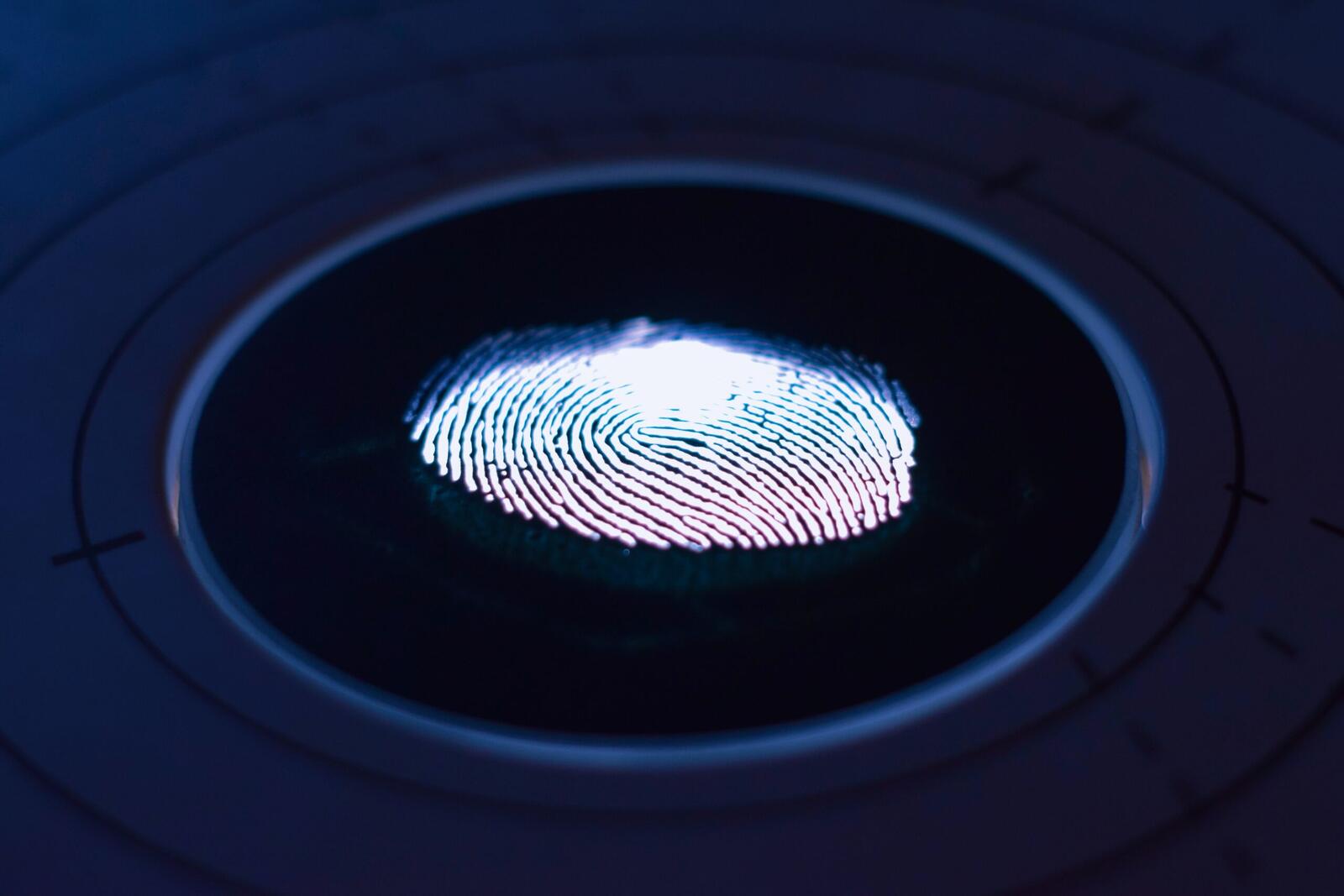
Research from Columbia University challenges the long-standing belief in the uniqueness of fingerprints. The study, conducted by a team at the university, trained an AI tool to analyze 60,000 fingerprints, questioning whether fingerprints from different fingers of the same person are genuinely unique.
Professor Hod Lipson, who supervised the study, admitted, “We don’t know for sure how the AI does it.” The AI seemed to focus on the orientation of ridges in the center of a finger, deviating from traditional forensic methods.
Graham Williams, professor of forensic science at Hull University, commented, “We don’t actually know that fingerprints are unique.” The potential implications extend to both biometrics and forensic science, challenging the conventional understanding of fingerprint analysis.
The AI, with 75-90% accuracy, could identify whether prints from different fingers belong to the same individual, introducing a new perspective to crime scene investigations.
AI’s Journey into Forensic Territory
Led by undergraduate student Gabe Guo, the Columbia University team’s breakthrough sparks interest in the forensic community. Guo, without prior forensics knowledge, used an AI system to analyze fingerprints in a novel way.
The AI’s ability to discern similarities in seemingly unique fingerprints challenges the established norms of forensic science. Guo explained, “It seems like it is using something like the curvature and the angle of the swirls in the centre.”
Despite skepticism from the forensics community, the team persisted in refining the AI system. Professor Lipson emphasised the importance of the findings, stating, “If this information tips the balance, then I imagine that cold cases could be revived, and even that innocent people could be acquitted.”
The AI, while not ready for court evidence, holds potential for generating leads in forensic investigations.
More from News
- Anthropic Selects Build Circle As A UK Partner To Help Supercharge AI Realisation For Clients
- An OpenAI Engineer Is Charged Over A $14 Recording Device – What Does It Say About Security At AI Labs?
- Mhance Acquires CPS And City Dynamics To Strengthen Its Copilot, Modern Work And Business Solutions Capabilities
- What Can Startups Learn From HSBC’s AI-Driven Job Cuts?
- Moterra AI Achieves Select Partner Tier In Anthropic’s Claude Partner Network
- GoDaddy Launches Web App Hosting With API For AI Coding Tools
- 7 In 10 Consumers Have Never Investigated What’s Inside Their Smartphone
- Tango Turns Live Communities Into a Force For Breast Cancer Research
The Rejection and Persistence of Changes
The journey of the Columbia University study wasn’t without obstacles. Initially rejected by a forensics journal, the team faced skepticism about the AI’s capability to detect similarities in fingerprints. Undeterred, they continued refining the AI system, eventually achieving acceptance in Science Advances.
Aniv Ray and Judah Goldfeder, involved in analyzing the data, highlighted the need for broader datasets to validate the AI’s performance across genders and races.
The rejection raised questions about the AI’s reliance on angles and curvatures in fingerprint swirls and loops rather than traditional minutiae. This discovery introduces a new forensic marker that had eluded experts for decades.
Professor Lipson sees this as an example of AI-led scientific discovery challenging established beliefs. The study’s implications extend beyond forensics, signaling a potential surge in transformative innovations driven by AI.
Democratising Scientific Exploration with AI
The Columbia University study not only challenges fingerprint uniqueness but also underscores the transformative potential of AI in scientific discovery. Gabe Guo’s approach, despite lacking forensics expertise, demonstrates how even non-experts can contribute to groundbreaking scientific revelations.
Professor Lipson anticipates an “explosion of AI-led scientific discovery by non-experts,” urging the expert community and academia to prepare for this imminent revolution.
AI is creating new ways and opportunities for those without specialised knowledge to engage in scientific exploration. The democratisation of scientific discovery through AI challenges the traditional ways of expertise-driven progress.
The study’s findings, despite initial skepticism, clearly open doors to rethinking established beliefs and methodologies in various fields beyond forensics.


