


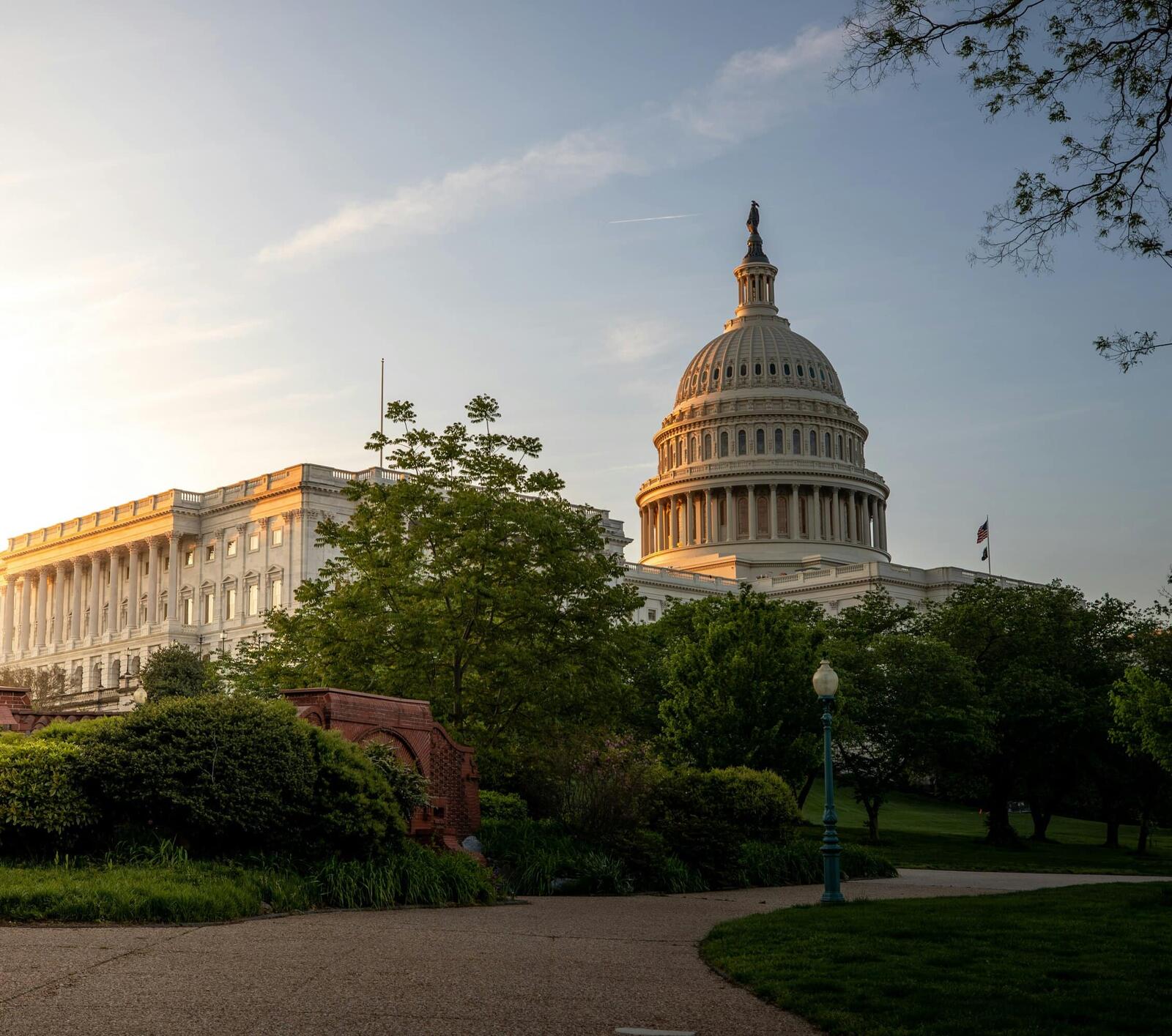
The relationship between Washington and Silicon Valley has always been complicated. Big Tech depends on government decisions over everything from export licences to competition rules, while politicians increasingly regard the tech sector as a matter of national and economic security.
Of course, these things have become particularly pertinent in recent years, as AI and Big Tech in general have grown tremendously, attracting more attention than ever before and becoming significantly more important to state interests.
But Donald Trump’s reported intervention in Nvidia’s leadership over the last few days has brought that long-standing entanglement into sharper focus. There have been several pointed examples of this crossing of boundaries during Trump’s second term, with some reported incidents even going as far as being labelled as “insider trading”. But his outright and completely unapologetic involvement in the company’s decision about reinstating Jensen Huang raises questions that go well beyond one CEO or one boardroom. Especially since before the shocking announcement about Huang’s return was made, Nvidia’s board had quite clearly asserted that it was not planning on having the former CEO return to his position: in fact, as Reuters reported last week, board chair Harvey Jones had announced that Nvidia’s board had unanimously accepted former CEO Jensen Huang’s resignation and was not intending to reinstate him as chief executive.
The statement was clear, and it was firm. It left no room for interpretation, and (other than those who may have had an inkling that the US President would attempt to intervene) the view for most people, at that point, was that the situation for Huang as pretty cut and dry.
Alas, that wasn’t to be, as the world was told earlier this week that Nvidia had supposedly done a complete 180 and reversed on its decision, now welcoming back the former CEO with open arms. Of course, this happened almost immediately. Trump reportedly made direct contact with Nvidia’s board (his words, not mine) and suddenly, balance had been restored to the universe. Oh, and magically, Trump’s reported 32,000-370,000 Nvidia shares, as of 30 September, were in far better standing than they had been a few hours prior, as noted by the Financial Times and several other sources.
In the wake of such blatant, unapologetic interference that the US President himself claimed responsibility for (“I convinced them,” he gloated) – because, let’s be honest, he simply cannot resist stroking is own ego – there are some very serious questions left on the table that affect just about everybody. That is, when political influence reaches into a private company, where does legitimate government interest end and corporate independence begin?
There’s a serious case for Washington taking an interest in Nvidia: its chips are central to America’s AI ambitions, and the government has a responsibility to assess national security risks. Yet, there’s a difference between scrutinising a company’s role in a strategic industry and appearing to influence who runs it, especially when the company’s Board had previously explicitly stated that it did not intend to do what it ended up doing five minutes after the President hopped on the phone. And this is especially true when the company’s stock surges nearly 30% immediately after the call is made and the President just so happens to have very significant personal investment in said company.
When National Security Reaches the Boardroom
Nick Henderson-Mayo, Head of Compliance at VinciWorks, argues that the White House had a legitimate interest in establishing whether a genuine corporate or national security risk existed. He also cautions against treating every personal failing by a high-profile CEO as grounds for dismissal. But the question, I believe, isn’t simply whether the government had possible reason to be concerned. It’s whether that concern should extend to a company’s leadership decision and what it means when a president publicly takes credit for helping reverse it. Never mind when this is all followed by massive
Political scientist Daniel Schatz describes the reports as signalling “an increasingly troubling merger of corporate power and political power”. Washington, he says, has legitimate interests in semiconductors, AI and national security, but that can’t become “a licence for political involvement in ordinary boardroom decisions”. The government can set the rules, impose restrictions and assess risks, but a president intentionally and directly influencing the outcome of a boardroom decision is something else entirely. Even if the intervention is presented as being in the national interest, it still raises very serious questions about the independence of the company and the limits of executive power.
More from News
- Growing Firms Slower To Fix Their Most Serious Software Flaws, Research Finds
- Can Anthropic Go It Alone? What Nvidia’s Crisis Means For Its Big IPO
- Shaking Up Ride Hailing: Zipo Is Officially Live In London
- Exabeam Advances Exabeam Sherpa Into AI-Guided Partner Operating System
- Has Microsoft’s Latest Outage Exposed How Dependent Businesses Have Become On Technology?
- COP31’s Antalya AI Pledge Asks Tech Companies To Disclose Their Energy Use – Is A Voluntary Promise Enough?
- Jensen Huang Is Out Amid Spy Allegations. How Bad Could The Fallout Get For Nvidia, AI And Global Chip Supply?
- Brits Want AI to Help Not Take Over New Research Finds
What Does This Mean for Nvidia’s Board?
One thing that may not be the primary focus in this situation is the way in which the whole debacle makes Nvidia’s directors look – like they have egg on their collective face, to be rather blunt. The board had reportedly accepted Huang’s departure and said it did not intend to reinstate him: it said so very, very clearly, and it had accepted his resignation with no comments or caveats. It then reversed course after government input and Trump’s intervention, and there’s simply no grey area here.
Now, that doesn’t prove that the directors acted improperly, nor does it tell us what they thought in private, but it does invite serious scrutiny: how independently was the decision reached, and how much weight did the president’s wishes carry? And if the reversal of the Board’s decision was indeed motivated by the US President’s influence, then how much power does the board have at all? Do they simply exist at the mercy and whims of Donald Trump and his wishes? Do they have the power to go against his wishes at all?
For shareholders, the issue isn’t simply whether Huang is the right person to lead Nvidia, but whether the board can demonstrate that it acts in the interests of the company, rather than in response to political pressure. A board that appears to change course at the president’s behest risks looking less like an independent governing body and more like another player in Washington’s political theatre, and that’s not a good look.
As Schatz puts it, “Markets work best when rules are stable and equally applied – not when access to the White House becomes a competitive advantage.”
Political Access May Be Becoming a Business Asset
The implications stretch way beyond Nvidia, and that’s why this should be concerning to anyone and everyone existing in the political or startup ecosystem in and near the United States (or even just in relation to AI). If proximity to the White House appears to shape corporate outcomes, political access could become a competitive advantage in its own right. Companies may find themselves devoting more attention to cultivating relationships with those in power, and less to competing through innovation, execution and commercial value. Indeed, some way say this has already been happening for a little while…cough cough, Elon Musk, cough, DOGE, cough, cough (even though they appear to be going through a “rough patch” in their friendship, but that’s beside the point).
Nicole Pitts, Founder at Ethintegrity, warns that the overlap between political and corporate power creates risks around conflicts of interest and accountability. “My biggest concern is that we’re normalising two sets of rules,” she says. And that concern is especially acute when government decisions can affect access to markets, technology and export licences. The Nvidia episode raises questions about who receives political support, who’s left without it and whether the rules are applied consistently.
Of course, the question of personal financial benefit is incredibly serious and requires sensitive handling. However, he did have stocks and shares surged after the announcement. So, sure, there may not be official confirmation of Trump’s profits (just yet), but hey, if it walks like a duck and quacks like a duck…it’s probably a duck.
A Donald Duck, to be precise.
But in all seriousness, these questions do expose a very real and significant problem that’s emerging, which is that when political and corporate power become so closely entwined, it becomes harder for the public to distinguish national interest from private advantage. Never mind to know whose interests are actually being served (beyond the obvious).
Babar Khan Javed, a Chartered PR Practitioner and Financial Communications Specialist at Aberrant, argues that the US risks losing credibility when it criticises state-directed capitalism abroad while blurring the boundary between government and business at home. It’s more than a little hypocritical, and it’s likely to attract some very serious scrutiny.
America’s strategic interest in AI is real, and so is the need to protect sensitive technology. But when those priorities appear to reach right into the pockets holding the leadership decisions of private companies, the country risks weakening the principles it says set its system apart from its rivals.
What Do Experts Think?
- Nicole Pitts: Founder at Ethintegrity
- Nick Henderson-Mayo: Head of Compliance at VinciWorks
- Daniel Schatz: Political Scientist, Author and International Affairs Expert
- Babar Khan Javed: Chartered PR Practitioner and Financial Communications Specialist at Aberrant
Nicole Pitts, Founder at Ethintegrity

“Corporate and political power have always been intertwined. But when the administration that controls your export licenses starts influencing who runs your company, how independent is your board really? Add in government officials who own shares in these companies to the mix, and you introduce serious risks around conflicts of interest, insider trading, and market manipulation.Then there’s the push for Big Tech to regulate itself. Who is independently assessing the risks to the public when these companies have so much economic and political influence?
“And what happens when the administration changes? If political access becomes a competitive advantage, businesses risk becoming increasingly vulnerable to political shifts, creating instability in global markets.
“My biggest concern is that we’re normalizing two sets of rules. When wealth, influence and political connections can shield corporate leaders from accountability, where do we draw the line?
Nick Henderson-Mayo, Head of Compliance at VinciWorks

“There is certainly a danger of treating every personal failing by a superstar CEO as grounds for dismissal. Jensen Huang’s private life is his own, unless it creates a genuine corporate or national security risk. Given Nvidia’s extraordinary importance to America’s AI infrastructure, the White House had a legitimate interest in establishing whether such a risk existed.
“The market reaction, I think, also demonstrated how much was at stake. Huang’s departure rattled the technology sector, while his reinstatement helped restore investor confidence. Since the administration was the only entity that could provide credible national security assurances, President Trump’s intervention may have been a sensible way to reset an escalating crisis.
“Of course Nvidia’s directors must retain their independence, and investigations into potential misconduct should continue according to their own procedures. But where national security is involved, then clearly there is a legitimate role for government.”
Daniel Schatz, Political Scientist, Author and International Affairs Expert

“If reports of presidential intervention in Nvidia’s leadership are accurate, they signal an increasingly troubling merger of corporate power and political power. Washington has legitimate interests in semiconductors, AI and national security; these industries are central to American strategic competition with China. But that cannot become a licence for political involvement in ordinary boardroom decisions.
“The danger is not simply a question of appearances. Companies whose leadership, investment choices or regulatory treatment seem contingent on political favour become less independent, less predictable and less attractive to long-term investors. Markets work best when rules are stable and equally applied—not when access to the White House becomes a competitive advantage.
“For allies and rivals alike, the message matters: US technology policy is becoming more strategic, but it must not slide into crony capitalism.”
Babar Khan Javed, Chartered PR Practitioner and Financial Communications Specialist at Aberrant

“In China, corporate governance becomes subservient to state industrial policy. Less than 72 hours after meeting Xi, Trump has blurred the boundary between free-market capitalism and state-backed national champions.
“Short-term market rallies mask long-term instability: if corporate independence depends on political favor, capital allocation shifts from innovation to lobbying.
“Globally, America loses moral authority criticizing state-directed rivals while simultaneously raising geopolitical risk premiums across the entire technology sector.”


