


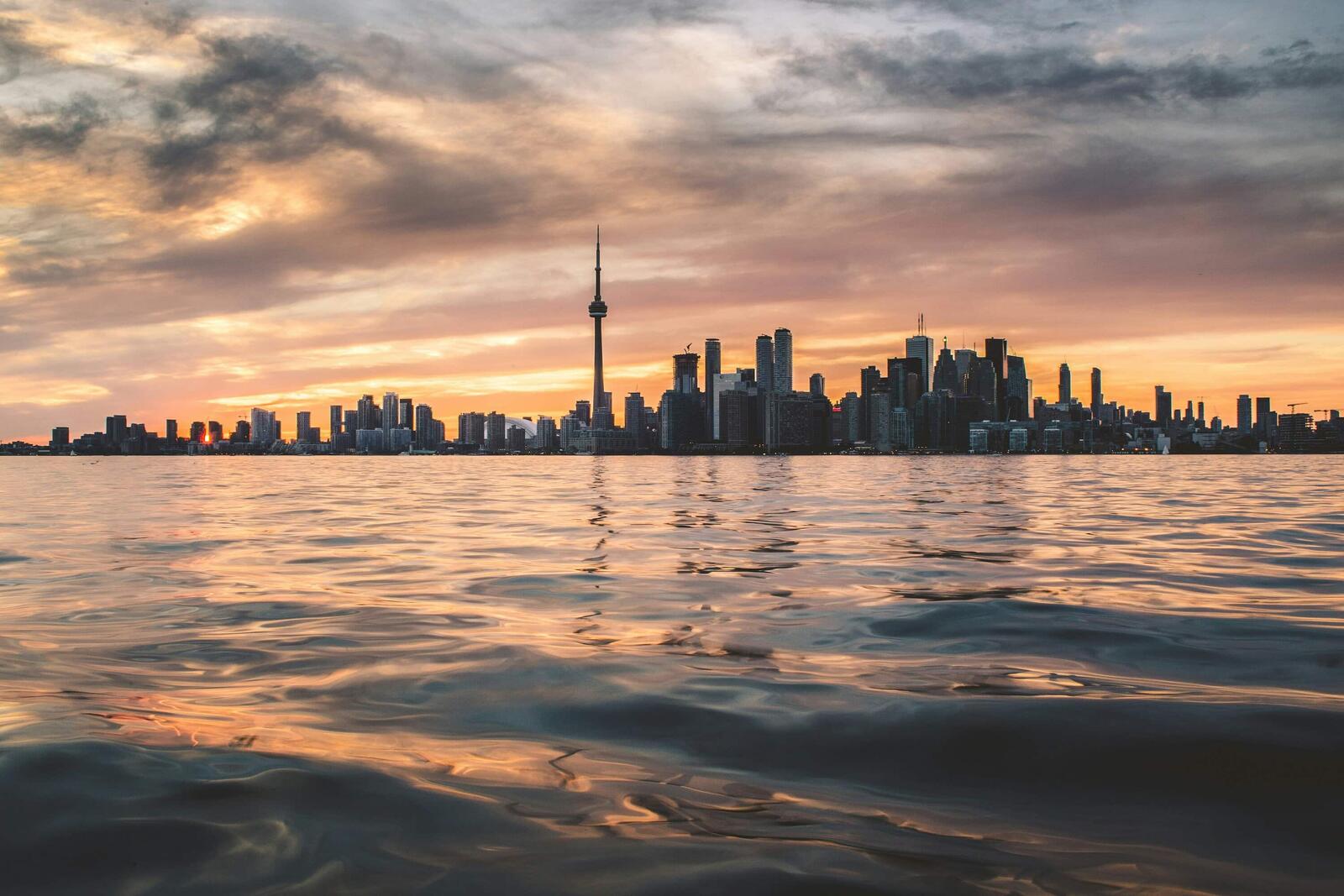
What’s the name of the lake between the US and Canada? Lake Ontario? No, wait, Lake…America?
Depending on which map you open – and where you are when you open it – you could get a different answer.
According to the Los Angeles Times, Google and Apple have now both updated their maps following the US decision to rename Lake Ontario “Lake America” for US purposes. US users see Lake America, while Canadian users continue to see Lake Ontario. Users elsewhere can see both names.
It might seem like a fairly trivial dispute over a name, but maps just aren’t what they used to be. Today, they’re navigation tools, search engines, databases and crucial infrastructure for businesses. Map data can feed advertising, business listings, location searches and even AI-generated answers.
So, when tech companies decide which name to display, are they simply reflecting reality or helping to define it?
Is This Really a Tech Company’s Decision To Make?
John Raisor, Growth Director at occamsraisor.com, takes a particularly sceptical view of the situation.
“The whole situation is absurd, because the source is absurd. Google must need a favor or something. I don’t know of any other reason they’d go along with such nonsense.
“Politics has always been theatre, but it became pro wrestling in 2016. Except that pro wrestling is honest about the fact that it is theatre, and the stakes are much lower in wrestling.”
Whatever your view of the political side of the dispute, there’s a more interesting technological question underneath it. That is, who gets to decide what millions of people see when technology becomes the primary way they access information?
A Map Isn’t Just a Map Anymore
For a long time, changing the name on a physical map meant changing a printed document. Thus, it was a massive endeavour that required significantly more than the quick backend edit needed today.
Indeed, digital maps are different. Their information is constantly updated, personalised and distributed across countless other systems pretty much instantly.
Carlos Benavides, Founder at Barlo Digital, says that this difference is particularly important for businesses. “A map name is not a label to us, it is infrastructure,” he says. According to Benavides, map data can feed into ad geo-targeting, business listings, address validation and AI answers. If different providers use different names for the same location, the inconsistency can travel far beyond the map itself, having far-reaching consequences. His concern is that “nobody downstream can see which version they got.”
That’s potentially a much bigger issue than whether someone simply prefers one name over another. If businesses, software platforms and AI systems are all pulling geographical information from different sources, a disagreement that begins with a name can become a data consistency problem.
The Problem with Choosing One Version
While this may be more shocking than anything we’ve seen before, it’s not an entirely new problem for technology. Systems constantly have to deal with conflicting information. The question is what happens when a platform simply chooses one version and hides the fact that there was ever a disagreement.
Egiziago Cioffi, CEO at SynSphere Italia, compares the situation to master data management: “When two systems inside a company disagree about the name of the same customer, an inexperienced architect picks a winner and overwrites the loser. An experienced one keeps both, records who asserted each and when, and lets the consuming application decide what to display.” Basically, his argument is that maps could take a similar approach. Rather than flattening a disputed name into one value, technology companies could show both names and make it clear why they differ.
As Cioffi puts it: “A map that reads, “Lake Ontario (US: Lake America)” has not taken a side, it has reported one.” That could be a more useful model for other areas of technology, too.
Are Different Users Getting Different Realities?
One of the strangest aspects of digital maps is that two people can open essentially the same product and see different information. Zeyuan Gu, CEO and Founder of Adzviser LLC, points out that geographical information has never been entirely apolitical. Borders, disputed territories and country names have always involved decisions about what gets put on a map. But now, the difference is that digital maps can personalise those decisions.
“An American can open a map and see ‘Lake America,’ while a Canadian looking at essentially the same product sees ‘Lake Ontario,’” Gu says. “At that point, the map isn’t just describing geography; it’s serving [a] geographically personalised political reality.”
And what happens if we extend that idea beyond maps? Search engines already personalise results, social platforms personalise feeds and AI systems can provide different answers depending on their data, settings and context. So if maps begin presenting different versions of disputed information to different users, where does that leave the idea that technology platforms are simply showing us an objective version of the world?
More from News
- Two Thirds of Brits Are Telling AI Chatbots Their Secrets But Don’t Trust The Companies Behind Them
- Video Game Companies Are Abandoning “Buy Our Console To Play This” – Here’s Why
- UK Gambling Operators Face New Deposit Limit Rules From 30 September
- How A Ransomware Gang Hijacked A Rival Gang’s Website – And Is Now Extorting Them For “2.333% Of Their Net Worth
- Meta Promised Unmatched Privacy For Muse – So How Did Researchers Crack It So Quickly?
- Digital Avatars Are Bringing Deceased Artists Back To The Stage – Where Do We Draw The Line?
- Can Europe Solve Its Critical Minerals Problem Fast Enough To Support Its Tech Ambitions?
- Google Has Agreed To A £260 Million Settlement: Who’s Eligible For Compensation?
Should Big Tech Be Transparent About the Disagreement Instead?
There’s a strong argument that tech companies shouldn’t be expected to settle geographical disputes themselves, and they shouldn’t have to pick sides.
Kyle Szives, Founder of ANTLR Interactive, argues that maps should provide users with as much information about a dispute as possible rather than positioning the technology company as the final authority. “Tech companies shouldn’t become the unofficial authorities rewriting geography,” he says. “Their responsibility is to represent information accurately, explain differences, and give users context, not quietly choose a side.”
So, maybe this doesn’t necessarily mean Google or Apple should never make a decision about what appears on their maps. After all, digital products have to make decisions constantly. But, in cases like this when information is contested, transparency may be more valuable than pretending there’s only one answer.
So, Lake Ontario Or Lake America?
The Lake Ontario/Lake America dispute will probably remain a relatively small footnote in the enormous world of technology. But it certainly brings up an interesting issue when it comes to the relationship between big tech and politics.
As companies like Google and Apple become increasingly important gateways to information, their databases and interfaces inevitably influence how people understand the world around them. And that doesn’t mean tech companies should become arbiters of geography, politics or truth, but it does mean that perhaps we need to pay more attention to the decisions happening behind the interfaces we use every day.
Because when millions of people rely on a platform to tell them where something is, what something is called or even what something means, a label isn’t always just a label. And perhaps, as Zeyuan Gu puts it, there’s a simple reason to keep that in mind:
“After all, Google can change a label overnight. Moving the actual lake is considerably harder.”
Comments from the TechRound Community:
- Carlos Benavides: Founder at Barlo Digital
- John Raisor: Growth Director at occamsraisor.com
- John W.: President and Owner of Sureway Comfort
- Walter Meyer: Author
- Phillip Hamnett: CEO at TalentAid
- Colby Hager: Owner at Prime Client Marketing
- Doug Stephens: CEO of Retail Prophet
- Egiziago Cioffi: IT/Enterprise Architect and CEO at SynSphere Italia
- Julia Stafi: Architect, Intl.Assoc.AIA, ACSA, UIA
- Kyle Szives: Founder of ANTLR Interactive
- Zeyuan Gu: CEO and Founder at Adzviser LLC
Carlos Benavides, Founder at Barlo Digital

“Whether they should is already beside the point. They do, and the part nobody sees is what happens downstream.
I run paid search and local search for small US businesses. A map name is not a label to us, it is infrastructure. It feeds ad geo-targeting, business listings, address validation, and the AI answers that quote them. When two providers disagree on a name, the same place resolves differently depending on which map a tool read, and nothing throws an error.
“I have watched that fail on our own side. A location lookup in our system read the wrong region code and silently returned New York results for 462 different metro areas. The output still looked valid.
“Political disputes make that ambiguity permanent. My concern is not the naming. It is that nobody downstream can see which version they got.”
John Raisor, Growth Director at occamsraisor.com

“The whole situation is absurd, because the source is absurd. Google must need a favor or something. I don’t know of any other reason they’d go along with such nonsense.
“Politics has always been theatre, but it became pro wrestling in 2016. Except that pro wrestling is honest about the fact that it is theatre, and the stakes are much lower in wrestling.”
John W., President and Owner of Sureway Comfort

“Running a local service business since 2014, I’ve learned that trust lives or dies on one thing: who’s actually making decisions that affect your community, and whether they’re accountable to that community. When a large private equity firm buys a local HVAC company, the trucks look the same but the decision-making moves somewhere far away — answerable to shareholders, not neighbors. Tech companies controlling map names has that same dynamic. The people affected most have zero say.
“What concerns me most is the accountability gap. When I make a call that affects a customer in Bridgeville or Mt. Lebanon, they can call me directly — John answers. When a platform silently decides what a disputed territory is named, there’s no equivalent accountability to the people living there. The real implication isn’t just political — it’s about who gets to define your reality and whether you can push back. Local ownership matters in home services for exactly that reason, and it matters on maps too.”
Walter Meyer, Author

“These are not decisions based in geography or science or common sense. They are the whims of a mentally unstable, petulant person, so of course no tech company or map company should follow these dictates without looking foolish and uninformed. There are good reasons it is Lake Ontario, the Gulf of Mexico, and Denali. Reasons based on hundreds or thousands (in the case of Denali) of years, not the momentary impulse of an angry person who has no knowledge of history or geography.
“Remember, this is the same person who thought George Washington’s troops wrested control of the airports from the British during the Revolutionary War, and that Japan is an Islamic republic in the Middle East. Nothing he says should be taken seriously, and using these made-up names is a mistake that will be corrected in a few years, leaving anyone who used them looking ridiculous—as it should.”
Phillip Hamnett, CEO at TalentAid

“Any product that crosses a border picks a default, and none of the defaults are neutral. We run TalentAid in 24 locales, and the choices that look purely technical, which language loads, whose CV conventions apply, what the document is even called, all carry an assumption about who the user is. Maps are the same problem with a much bigger audience.
“Showing different names in different countries is the part I would push back on. That’s a decision hidden rather than owned, and it leaves every user believing their own version is the settled one. If your label is the only one most people will ever see, publish the call and name who made it.”
Colby Hager, Owner at Prime Client Marketing

“Tech companies are already dictating geography, just at a smaller scale than a lake. I do local SEO work, and one of my clients has a Google Business Profile that’s been showing the wrong street address for months. The right address is on the state filing, on the website, and in every directory we control. Google still shows the other one. There’s nobody to appeal to. You submit a correction, and then you’re stuck just waiting for Google to agree with you.
“That’s the part I’d add to the Lake Ontario story. A map used to be a record of what somebody found. Now it’s the version people drive to and search from, and two companies can publish two different versions of the same water. Once the map is the thing people act on online, whoever edits it isn’t describing a place. They’re picking one.
“I run Prime Client Marketing, an SEO shop that works one vertical, real estate investors and brokerages, so Google Business Profiles and map data are most of what I touch in a week.”
Doug Stephens, CEO of Retail Prophet

“The renaming — and Google’s compliance with it — sums up perfectly where we are today. As a conflict drags on in Iran, as the battle grinds on in Ukraine, as wealth and income polarization hits an inflection point, as inflation spirals upward, as an entire generation of Americans is priced out of the life their parents and grandparents took for granted, as wildfires, floods, and famine ravage the world — this is the priority of the American president.
“This petty political act of retaliation is where he has chosen to focus what little waking effort he has to give. To my mind, it’s the perfect illustration of Donald Trump’s entire presidency: small-minded, malignant, and — measured against any great act that might move his country forward — utterly inconsequential. Simply another in a long list of things not bettered by this president but left broken.
“But it’s also a living testament to the complicity and acquiescence of technology companies. Companies that once fancied themselves free-thinking libertarian mavericks, unbound by the petty rules and norms that govern the rest of us mere mortals. They have bent the knee to a madman. For nothing more than money.
“So what to do? My hope remains that today’s business leaders will find their courage and their voices to demand a return to sanity, stability and to an agenda that truly works to better the lives of their consumers – on both sides… of Lake Ontario.“
Egiziago Cioffi, IT/Enterprise Architect and CEO at SynSphere Italia

“Wrong question, and the framing is the trap. Asking whether Google and Apple should decide the name assumes there has to be one name to serve. There does not, and the software is pretending otherwise.
“I spend my working life on this problem in a far less glamorous setting. When two systems inside a company disagree about the name of the same customer, an inexperienced architect picks a winner and overwrites the loser. An experienced one keeps both, records who asserted each and when, and lets the consuming application decide what to display. That discipline is called master data management, and its first rule is that a contested field must never be flattened to a single value, because flattening destroys the most important piece of information in the record: that the value was contested at all.
“A map is a database with a display layer on top. The name field currently holds one value, which is why a naming dispute forces the vendor into an editorial judgment it is not equipped to make and cannot make neutrally. Serving different names by location is the worse option, not the diplomatic one, because it conceals the disagreement from precisely the people who ought to see it and quietly assures every user that their version is the only one.”
“So the rule I would apply: where a name is disputed between states, show both and attribute each. A map that reads “Lake Ontario (US: Lake America)” has not taken a side, it has reported one. Tech companies are not qualified to arbitrate sovereignty. They are entirely qualified to show provenance, and provenance is exactly what the current design deletes.”
Julia Stafi, Architect, Intl.Assoc.AIA, ACSA, UIA

“We tend to call Google, Apple, and other technology corporations “megacorporations” or “supranational corporations.”
“Perhaps this is where some of the negativity surrounding the geographic dispute comes from. I prefer to think of Big Tech as civilization-forming enterprises. There is an old joke that when aliens attacked Earth, Google contacted God, and the aliens retreated.
“So why shouldn’t they participate in geographic disputes? Who should? Governments? They come and go; Google, as the joke goes, is with us forever.
“That does not mean I believe these companies should operate beyond democratic oversight. Quite the opposite: IT and AI giants must remain accountable to society. But that oversight needs to be progressive rather than merely reactive and emotional. We need institutions and rules capable of anticipating the enormous social power these companies are acquiring—not trying to regulate yesterday’s technology after tomorrow has already arrived.”
Kyle Szives, Founder of ANTLR Interactive

“Maps are all about information, so the best way to approach disputed geographic names is to provide as much information about the dispute as possible and let the map users sort it out from there.
“By adding a name that is itself disputed to their map, Google and Apple are putting themselves in a position of authority over science and geography.
“Rather than redefining map geography, it would be more effective to inform users of the accepted or disputed geography instead and leave the choices to map users.
“Tech companies shouldn’t become the unofficial authorities rewriting geography. Their responsibility is to represent information accurately, explain differences, and give users context — not quietly choose a side.”
Zeyuan Gu, CEO and Founder at Adzviser LLC

“The funny thing about this controversy is that maps have never really been apolitical. Borders, country names, disputed territories — someone has always had to decide what goes on the page. The difference today is that the page can change depending on who’s looking at it.
“An American can open a map and see “Lake America,” while a Canadian looking at essentially the same product sees “Lake Ontario.” At that point, the map isn’t just describing geography; it’s serving [a] geographically personalised political reality.
“I don’t think tech companies should be the Ministry of Truth for geography. But pretending they can be perfectly neutral is also unrealistic. The better approach is transparency: show disputed or alternative names and explain why they differ.
“After all, Google can change a label overnight. Moving the actual lake is considerably harder.”
Ashley Capps, Founder at AshCapps Media

“The public debate is missing a key fact. American taxpayers fund GPS for the entire world. The raw data is free and directly downloadable from the federal government. Companies like Google and Apple take that neutral, publicly owned data, build their own interfaces, and then effectively sell it back to users while layering on their own political choices.
“When Google shows “Lake America” and Apple shows “Lake Ontario,” they are not just mapping geography. They are commercialising a public resource and injecting corporate decision-making on top of it. If you want unbiased information, you can bypass the tech giants entirely and pull the raw GPS yourself. This is not a naming dispute. This is a question of who controls the data we all pay for.”
Disclaimer: This article has been updated since initial publishing, with Apple having officially updated its maps to “Lake America”.


