


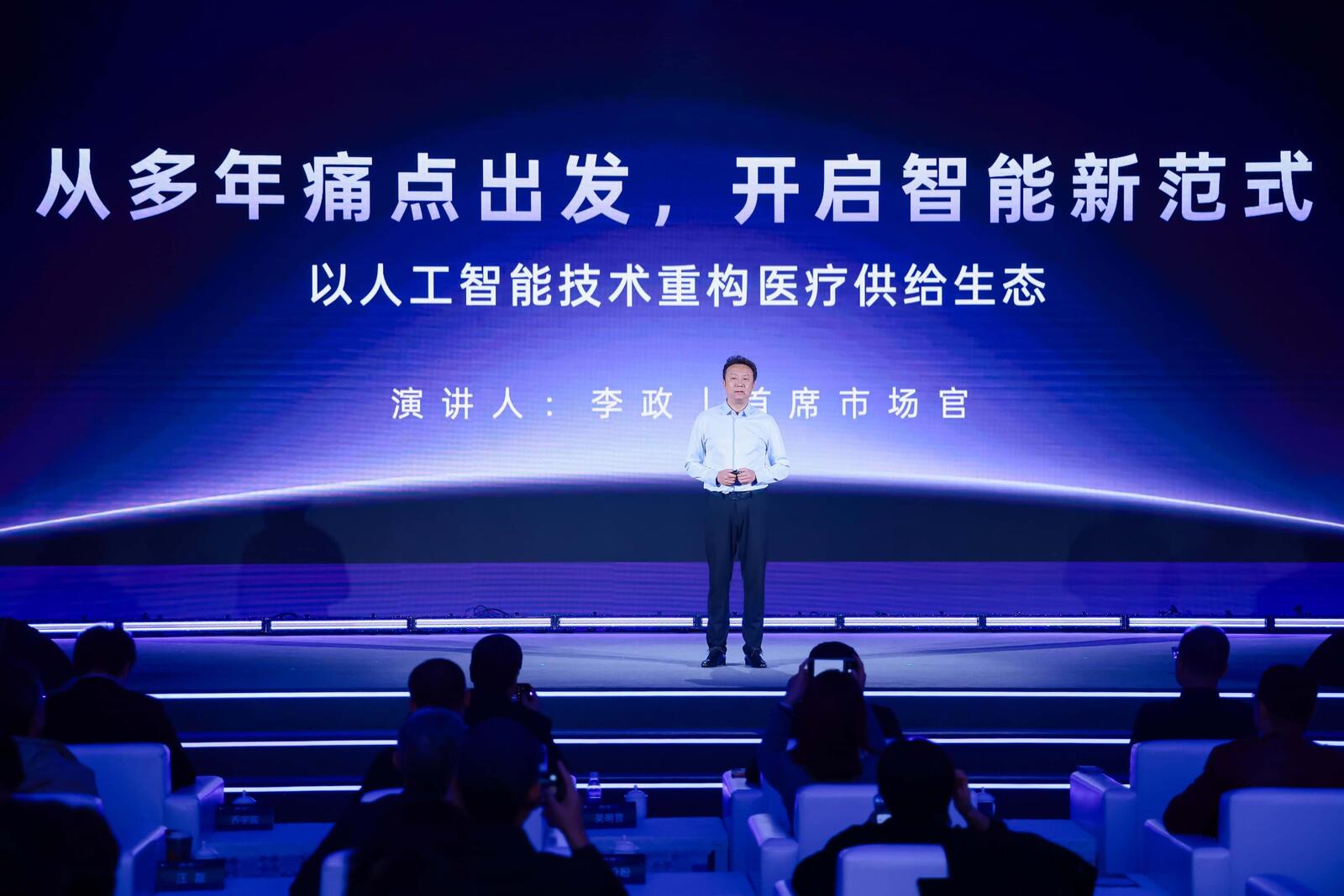
On October 21, 2026, Tairex, an AI healthcare technology company incubated by the Institute for AI Industry Research (AIR) at Tsinghua University, unveiled its Multidisciplinary Human-Agent Collaboration (MHAC) Ecosystem for Agent Hospital.
The challenge for medical AI is no longer simply to have different AI systems provide their own answers, but to enable them to work alongside physicians and coordinate around the same patient case.
Tairex’s approach is not to build a more powerful standalone AI doctor, but to develop Agent Hospital around physician digital twin agents, enabling multiple agents to collaborate and bringing the system into real-world hospital settings.
“AI needs to evolve and improve together with the healthcare system. Building isolated tools makes it difficult to create a mechanism for continuous improvement. The entire patient journey needs to be covered, with AI continuously contributing and improving throughout the process. That is how the system can become better over time,” said Yuchen Qiao, Chief Product Officer at Tairex.
From the outset, Tairex has chosen not to focus solely on a standalone AI tool. Instead, it is bringing together the patient, physician, and hospital to build an integrated healthcare system capable of continuous improvement.
From End-To-End Clinical Workflows To Real-World Validation
Since 2025, Agent Hospital has been steadily expanding into real-world clinical settings.
In August 2025, the system began internal testing at Tsinghua University Hospital, with the respiratory medicine specialist clinic serving as its first offline access point. In late November of the same year, the project entered its first phase of public testing. The initial pilot sites included Tsinghua Changgung Hospital, all other Tsinghua-affiliated hospitals and community health centres, as well as Dongxing People’s Hospital and Hechi People’s Hospital in Guangxi.
In Wuxi and other locations, Tairex is also exploring how AI can support primary healthcare. Faced with high patient volumes, the burden of medical-record documentation and limited access to specialist expertise, the system not only assists primary-level physicians in generating standardised medical records, but also provides real-time risk alerts and access to cross-specialty knowledge, helping improve the accuracy of initial assessments at the primary-care level.
These applications have been tested across multiple clinical settings, including outpatient care, clinical decision support and patient enquiries, helping physicians devote more time and attention to core clinical decision-making and patient-centred care.
Real-world clinical decision-making, however, is more complex than any single use case. This is particularly true for patients with multiple coexisting conditions and complex diagnoses, where clinical decisions often require the integration of knowledge and experience across multiple specialties.
Even a highly capable individual AI agent can struggle to move beyond the boundaries of a single specialty.
Launching The Multi-Agent Ecosystem And Exploring MHAC In Clinical Practice
To address this challenge, Tairex launched its Multidisciplinary Human-Agent Collaboration Ecosystem at the event.
Physician digital twin agents are linked to individual physicians and learn their clinical habits and decision-making logic, becoming jointly developed digital assets for physicians. When cross-specialty cases arise, agents from different specialties work simultaneously, presenting their recommendations and evidence on the same interface.
A key application of the ecosystem is the Multidisciplinary Human-Agent Collaboration (MHAC).
The system supports two forms of collaboration. In a single-specialty consultation, relevant specialty agents can provide prompts and alerts as needed. For complex cases, multiple agents can work simultaneously on the interface, with their inputs aligned across different sections of the case.
In one case tested by the system, a patient visited an endocrinology clinic for hyperthyroidism, while the patient’s medical history indicated a history of asthma. A medication commonly used in endocrinology could potentially trigger bronchoconstriction in patients with asthma. In this situation, the respiratory medicine agent proactively intervened and recommended an alternative medication.
When agents reach different conclusions, the system highlights the disagreement and provides recommendations supported by explanations and references. The final treatment decision remains with the human physician.
More from News
- I Woke Up To A Meta Account. When Did I Agree To That?
- Vidoser Launches AI-Powered Platform To Streamline Creator Marketing For Brands And Agencies
- Office Freedom Named Agency Of The Year And Deal Of The Year 2026
- A “Power Event” At Google Cloud’s London Region Affected Revolut And European Banks – What Happened?
- Anchor Launches Action Index, Cutting Computer-Use Agent Token Costs By 100X
- Anthropic Selects Build Circle As A UK Partner To Help Supercharge AI Realisation For Clients
- An OpenAI Engineer Is Charged Over A $14 Recording Device – What Does It Say About Security At AI Labs?
- Mhance Acquires CPS And City Dynamics To Strengthen Its Copilot, Modern Work And Business Solutions Capabilities
From Clinical Practice to Global Collaboration and Localised Applications
Beyond its work in China’s real-world healthcare environment, Tairex is also steadily exploring international partnerships and localised applications. Since April 10, 2026, Tairex has opened its virtual consultation room to physicians and medical students worldwide, supporting simulated clinical consultations in both Chinese and English.
As of June 6, 2026, users of the virtual consultation room in China spanned all provincial-level regions, while overseas users hailed from countries including Italy, the UK, Turkey, and Ireland, among others.
As it expands internationally, Tairex is committed to adapting to local market needs and conditions. Agent Hospital will adopt a localised approach, taking into account local medical guidelines and data-security regulations. Under a “plug-and-play large language model” mode, the system can use a locally designated and recognised large language model as its underlying foundation, while the upper-layer MHAC Ecosystem can be specifically trained and adapted to local requirements.
Given the adaptability of Agent Hospital to overseas healthcare settings, as well as the widespread shortage of high-quality medical resources globally, Tairex is actively expanding into international markets and has received partnership enquiries from governments, healthcare groups and institutions in multiple countries.
Tairex has held discussions with government departments in Singapore and Italy to jointly advance the development of regional cooperation networks. In Pakistan and Kazakhstan, Tairex is working with leading local universities and medical institutions to bring its AI capabilities into local healthcare settings.
From routine deployment in real-world hospital outpatient settings to collaboration among multiple AI avatars on complex clinical cases, Tairex is pioneering a new path for medical AI.


