


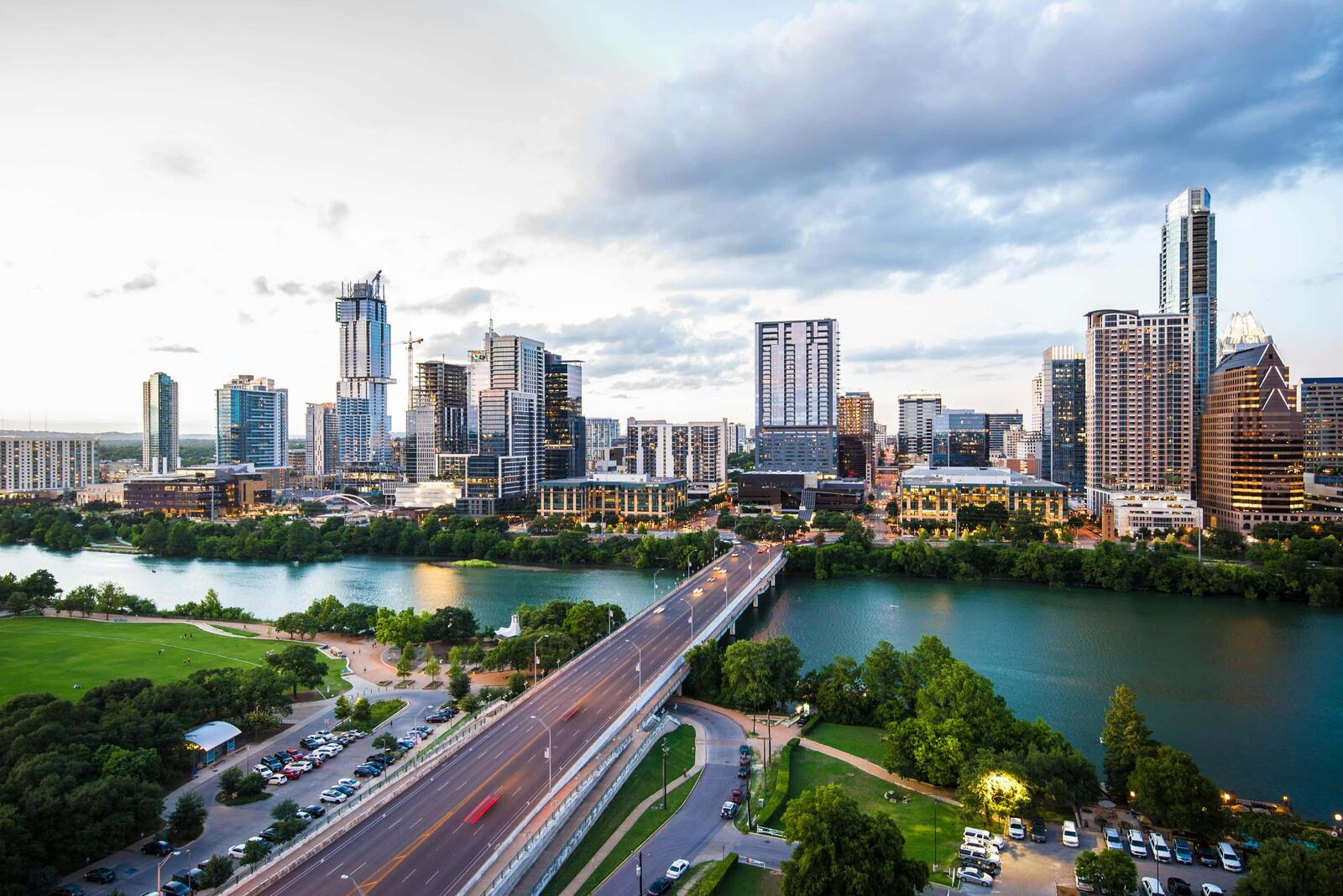
California used to be the obvious destination for startups and large businesses, but in recent years, there’s been a shift to the South. Indeed, Texas has become the promised land for businesses looking to escape California’s increasingly expensive, heavily regulated and decidedly blue business environment. With the promise of lower taxes, fewer regulatory hurdles and a more conservative political climate, the state quite quickly and obviously became an attractive alternative for some of America’s biggest companies and wealthiest tech leaders.
Elon Musk was among the most prominent converts, moving himself and several of his business interests from California to Texas. This included Tesla, followed by SpaceX and X, while Oracle also relocated its headquarters from California to Austin.
Now, it may have been assumed that the political situation in Texas was pretty solid. It’s generally been quite comfortably red, but that all changed last week when the results of the 2026 midterms were released, revealing that Texas had, in colloquial terms, gone blue.
Indeed, the state has undergone an historic political shift, with Democrats winning the governorship and taking control of the state House.
And so the state that once offered an appealing political alternative to California now has a very different leadership waiting in the wings.
This begs the question: what’s the plan now? Are Tesla, SpaceX and the rest of Big Tech going to start packing their bags again, or will they have to learn to live with a bluer Texas?
Texas Was Floated As the Answer To California’s Problems
For a while, the appeal of Texas was fairly straightforward. California has long been a major tech hub, but its high costs, taxes and regulatory environment have also attracted plenty of criticism from business leaders.
Musk in particular made no secret of his frustrations. After moving Tesla’s headquarters to Austin in 2021, he announced in 2024 that SpaceX and X would also move their headquarters from California to Texas. He explained that the reasons for his dissatisfaction were centred on California’s laws and political environment.
Oracle had already made a similar move, relocating its headquarters from Redwood City to Austin in 2020, and it went beyond these few large companies. Business Insider and Buildremote have both tracked the wider movement of companies relocating to Texas over the last few years, and this became a reflection of the state’s growing appeal as a corporate destination.
And all in all, it was good news for Texas. For companies and executives looking for a more business-friendly environment, Texas appeared to offer a fairly compelling alternative to more liberal states. It had the space, infrastructure, workforce and political climate that many felt California was no longer providing, and it’s not a stretch to understand why it was so appealing.
However, there was just one small detail that perhaps wasn’t factored into the equation, or that people didn’t think was worth worrying about just yet: that is, political landscapes can change.
More from News
- Huntress Offers Breached Businesses 60 Days Of Free Protection To Stop Hackers Coming Back
- Finite State Raises $27 Million To Help Device Makers Fight ‘Vulnpocalypse’ With AI-Powered Product Security
- The EU’s Digital Fairness Act Wants To Take On Online Manipulation And AI – What Would Change For Consumers?
- Three Companies, Three Chinese AI Models – What Do Revolut, Airbnb And DoorDash Have In Common?
- Nvidia, Jensen Huang And A Potential Below-The-Belt Security Scandal: Are We Equating Tabloid Fodder With Genuine Corporate Risk?
- Sanctioned At Home: A New Raw Docuseries, Forensically Dissecting The West’s Most Destructive Policy Weapon
- The Democrats Have Taken Congress. What Does This Mean For America’s Startups And SMEs?
- Say No To AI, Lose Google Search – Is That A Fair Choice For Schools To Face?
Is Moving Again Even Plausible?
The obvious question is whether companies that moved to Texas specifically for its political environment will now start looking elsewhere. Florida, Tennessee and other Republican-leaning states might seem like potential alternatives, as they’re seen by many as the least likely to fall under Democratic leadership in the near future. But before even considering alternative destinations, we need to consider the fact that relocating a headquarters is one thing in theory, but moving an entire business ecosystem is quite another.
Tesla doesn’t just have an office in Austin. Its 2024 proxy filing described Texas as central to its corporate identity, pointing to its headquarters, manufacturing operations and engineering workforce, alongside Gigafactory Texas, which covers more than 10 million square feet of factory floor. It’s safe to say that it’s pretty well established in the South.
And SpaceX is similarly entrenched and locked in. As Ars Technica points out, the company has major operations across Texas, California and Florida, with its Starship programme and Starlink manufacturing facilities firmly established in the Lone Star State. Thus, it’s reasonable to expect that a move would seriously disrupt the company’s ambitions and operations, possibly more than it would be worth from a regulatory standpoint.
In other words, Musk might be able to move his personal residence again, there’s nothing stopping him from doing that. But shifting an enormous manufacturing and aerospace operation is a way more complicated undertaking that, at this point, just doesn’t seem worth it.
Texas Could Still Present Some Familiar Challenges to the “Blue Wave”
Although the political change is significant, it doesn’t automatically mean Texas will become another California overnight. Incoming leaders don’t take office straight away, policies don’t change immediately and it’s reasonable to expect that there will still be significant challenges to proposed changes. Indeed, Democrats have won the governorship and taken control of the state House, but Republicans have retained their majority in the state Senate. And that means that the incoming administration will still have to negotiate with political opponents to get legislation through; and it’s not going to be a quick and easy process.
Nevertheless, businesses could face some changes in the areas that matter to them, and this may happen in the shorter term. One particularly interesting example is the data centre industry, which has become a major part of the wider AI infrastructure boom. That is, Governor-elect Gina Hinojosa has called for a pause on new data centre approvals until lawmakers can introduce stronger protections around electricity, water usage and local communities. According to the Texas Tribune, her proposals also include requiring operators to hire union workers and reconsidering tax incentives for large projects.
So for companies that are investing billions in AI infrastructure, these are not exactly small details. And Musk himself has already responded to the election results with a post suggesting that data centres in space are looking increasingly appealing, implying that there’s an expectation that data centre plans closer to home may indeed be more difficult to proceed with.
Of course, there’s an undeniable irony in the fact that some of the same regulatory and political tensions that made California less attractive to certain tech leaders could now become part of the conversation in Texas.
Where To Next for Big Tech?
So, is it reasonable to expect that companies will actually keep moving whenever a state becomes politically less appealing? Regardless of policy issues, it seems incredible to consider that that may actually be a plausible plan in the long run. If Texas no longer offers the environment they originally wanted, could Florida, Tennessee or another Republican-led state become the next corporate destination?
It’s possible that some businesses will reconsider where they invest, particularly when it comes to new projects that haven’t yet committed significant capital. The Houston Chronicle reports that some data centre developers are already considering other markets, while others remain committed to Texas and are prepared to work with its incoming leadership.
But repeatedly uprooting a business is expensive, disruptive and hardly a recipe for long-term certainty. Companies need employees, suppliers, infrastructure, customers and access to talent, and they also need to make decisions that will still make sense five, 10 or 20 years down the line, rather than simply reflecting the political preferences of whoever happens to be running a state today. Or, dare I say it, the political affiliations of a CEO.
The thing is, Texas is still Texas. Its location, energy resources, infrastructure and established technology ecosystem haven’t disappeared because of an election, and it still boasts many attractive qualities for businesses and investors. Sure, the incoming leadership may change some of the rules, but that doesn’t necessarily erase all the reasons companies moved there in the first place.
And perhaps that’s the lesson for Big Tech and the American business landscape more broadly. You can leave California because you don’t like its politics, but you can’t guarantee that your next home will always share your political preferences. And if the answer is to keep chasing red states around the country, companies might eventually find themselves spending more time looking for the perfect political climate than building their businesses.


