


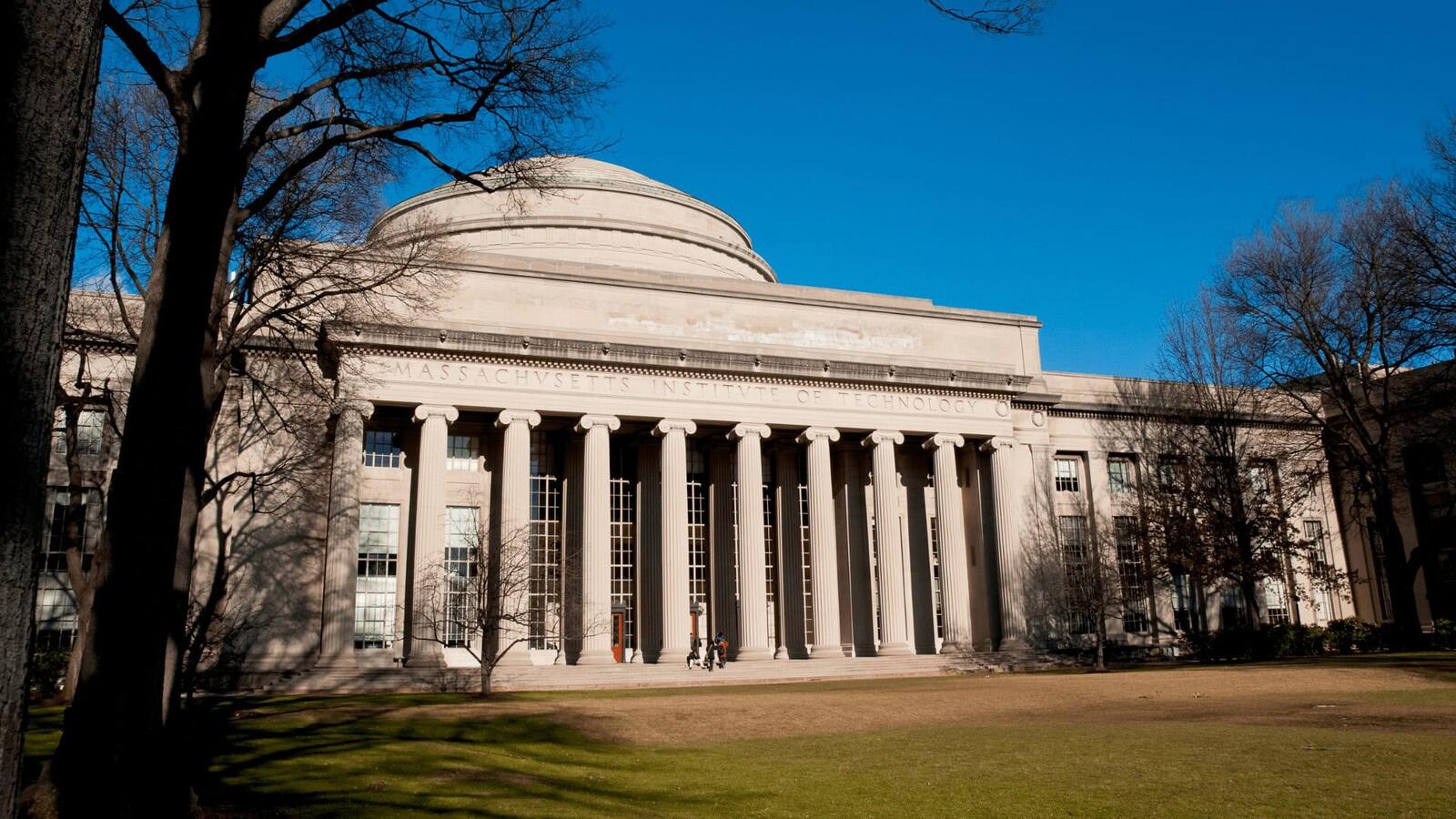
There’s a certain shape that MIT companies tend to have. They’re often build around a hard technical problem the founder has personally spent quite some time inside, whether that be a PhD thesis that turned into a product or a lab experiment that became a company.
It’s not often that you get pivot-happy consumer apps. Instead, you get carbon capture, humanoid warehouse robots and AI agents that are built by ex-neuroscientists. It’s the kind of work that requires actual prototypes and founders who are prepared to spend a decade on a single idea before it starts to pay off – Big Bang Theory fans will think of Howard Wolowitz here.
It’s part of the reason why MIT-founded companies tend to be a bit quieter than their Bay Area counterparts, at least early on. Most of them spend the first few years inside a specific industry before anyone outside that industry has really heard of them. And then they surface, usually with a working product and enterprise customers already rearing to go.
What Actually Gets Built At MIT?
MIT startups usually sit at the physical, rather difficult, end of the innovation stack. Think chips, materials, robots and grid infrastructure – all of which require labs, factories and that decade of patience before anyone starts to see a return. This is why a lot of the money and infrastructure around the Massachusetts Institute of Technology has been built specifically for that kind of startup.
The Engine, MIT’s tech accelerator, has been backing science-heavy startups since 2016 – with longer time horizons than a typical VC will tolerate. The Martin Trust Centre runs MIT Sandbox and the delta v accelerator for student teams. And you’ve got Kendall Square, just south of the campus, which has become the densest square mile of biotech, robotics and applied AI in the world.
Everything that gets built out of MIT reflects what gets funded and mentored there.
10 Successful Alumni Who Founded Startups
These ten founders cover about six decades of MIT entrepreneurship. Some of what they’ve built is already sitting in your car, or on your desk and is the kind of hardware and infrastructure you don’t really give a second thought because it just works.
Some of it is still in pilot phase waiting for the market to catch up to the technology. And some of it only really made sense to build once the current AI wave was properly underway. These founders are taking on wildly different problems but the common thread is that they all started on the MIT campus.
1. Drew Houston, Co-founder & CEO of Dropbox

Drew Houston graduated from MIT in 2005 with a computer science degree and the idea for Dropbox came from a real mundane pain – he forgot his USB stick on a bus from Boston to New York. On that same bus trip, he sketched the idea that became Dropbox, teaming up with fellow MIT student Arash Ferdowsi.
In 2007, they went through Y Combinator and the company became one of the defining consumer cloud products of the decade. It went public in 2018 and is now used by more than 700 million registered users worldwide, and is one of the most-cited YC alumni stories.
Houston has since become a regular voice on AI, work and what happens to knowledge workers next.
2. Amar Bose, Founder of Bose Corporation
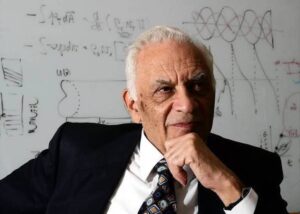
Amar Bose earned his doctorate in electrical engineering from MIT in 1956 and then taught at the Institute for more than 45 years. In 1964, frustrated by the poor-quality of the hi-fi speakers he’d bought as a student, he founded Bose Corporation with one of his former research supervisors.
Bose speakers, headphones and automotive audio systems now sit in millions of cars, offices and living rooms around the world. In 2011, Amar donated the majority of Bose stock to MIT so that a good chunk of the Institute’s research is now, in effect, funded by the company that he built.
3. Anant Bhardwaj, Founder of Instabase
Anant Bhardwaj was a PhD student at CSAIL when he decided to pack up his research and drop out. He moved to San Francisco in July 2015 and turned his PhD project on unstructured data into a company called Instabase.
The pitch is that approximately 80% of enterprise data is trapped in PDFs, scanned forms, emails and other formats that traditional software can’t read, and someone needed to build the layer to unlock it all.
Instabase’s AI Hub uses agentic models to extract structured data from those documents at enterprise scale and the company is now valued at $2 billion with customers across banking, insurance and government.
More from Startups
- 5 Startups Crowdfunding w/c 05.10.2026
- Founder Of The Week: Danny Jenkins
- Abacus AI Expands Its AI Platform With Smaug, AI Agent And More
- Top 10 Agritech Startups In South Africa To Watch In 2027
- Startup of the Week: Rainbow Crops
- 8 Startups Crowdfunding w/c 28.09.2026
- Top Aerospace Startups In Saudi Arabia
- The Top 7 Debt Recovery Startups To Keep An Eye On
4. Dr. Robert Yang, Co-founder & CEO of Fundamental Research Labs
Dr. Robert Yang held the Silverman (1968) Family Career Development Professorship in MIT’s Brain and Cognitive Sciences Department, which is the sort of tenure-track appointment that most academics spend their careers chasing.
In 2023, he packed up and went to San Francisco to built Fundamental Research Labs (formerly Altera). The company is building AI agents with enough social intelligence to plan, act and hold context across time. To date, they’ve shipped Shortcut, an Excel agent that reportedly beats first-year Wall Street analysts by 89% of the time and Fairies, a general-purpose consumer assistant.
The company has also raised over $45 million, led most recently by Prosus Ventures.
5. Diego Villegas, Co-founder & CEO of Slang

Slang began as a research project at MIT in 2013 to explore whether natural language processing could make language learning faster. Diego Villegas, a Colombian entrepreneur who’d previously run an oil-services business, arrived at MIT Sloan in 2012 to do his MBA.
He co-founded Slang with Kamran Khan and the company now runs the biggest professional English platform in the world with more than 150 industry-specific courses covering finance, law, healthcare and logistics.
Some of Slang’s customers include Nestlé and Hyatt across more than a dozen countries and was named a World Economic Forum Technology Pioneer in 2022.
6. Ritesh Ragavender, Co-founder & CEO of Reflex Robotics
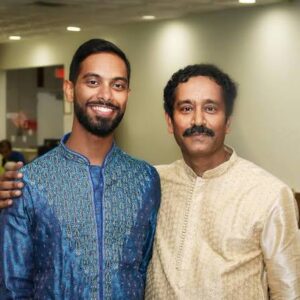
Ritesh Ragavender studied maths and computer science at MIT and did stints at Jane Street and Quantlab before founding Reflex Robotics in 2022. The company builds general-purpose humanoid robots designed to do monotonous warehouse work that tends to cause labour shortages like shelf picking, order replenishment and quality checks.
Reflex robots run on a wheeled base and are currently deployed in a “human-in-on-the-loop” model, where a remote operator can step in when the robot hits an edge case.
The team includes MIT alumni with prior experience at Boston Dynamics, Tesla and Amazon.
7. Tim Heidel, Co-founder & CEO of VEIR
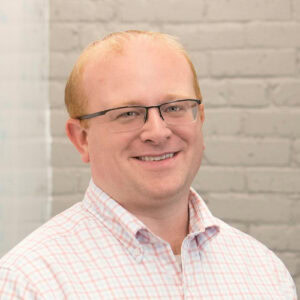
Tim Heidel co-founded VEIR to solve one of the most important, but not so glamorous, problems in the energy transition and that would be: transmission. Modern grids need to move roughly two to three times more power to handle the shift to renewables, but new transmission lines are incredibly hard to permit and even harder to build.
VEIR’s answer is a superconducting transmission line cooled with liquid nitrogen that can carry five to ten times the power of conventional cables on essentially the same footprint.
The company installed its first commercial line in Woburn, Massachusetts and is now scaling capacity from 400 megawatts towards gigawatt-class deployments.
8. Cameron Halliday, Co-founder & CEO of Mantel
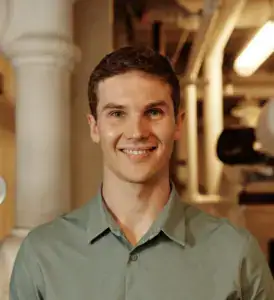
Cameron Halliday arrived at MIT from the UK with a Chemical Engineering degree from Loughborough and left with an MBA and PhD. He spent much of that PhD trying to find a material that could reliably absorb CO₂ at the ridiculously high temperatures inside industrial furnaces and kilns.
In 2019, he tested a molten salt called lithium-sodium ortho-borate. While it absorbed 95% of the CO₂, it didn’t degrade. He founded Mantel alongside Sean Robertson and Danielle Colson to turn that discovery into an industrial system.
It bolts on to cement plants, steel mills, pulp and paper factories and other heavy industries difficult to decarbonise, capturing emissions before they leave the stack.
9. Dr. Jimmy Rojas, Founder & CEO of Evoloh
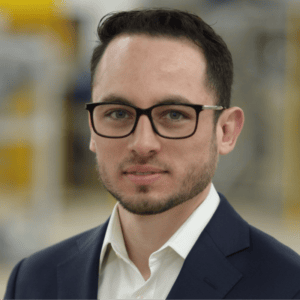
Dr. Jimmy Rojas holds two bachelor’s degrees from MIT, one in Nuclear Engineering and one in Mechanical Engineering, followed by two master’s and a PhD from Stanford.
He founded Evoloh in 2020 to tackle the manufacturing bottleneck that exists in green hydrogen. The company builds electrolyser stacks – the core component that splits water into hydrogen and oxygen – using standard, high-throughput equipment and 100% domestic supply chain, cutting the cost of production dramatically.
In 2022, Dr. Rojas made the Forbes 30 Under 30 list for Energy.
10. Tony Chen, Co-founder & CEO of Manolin
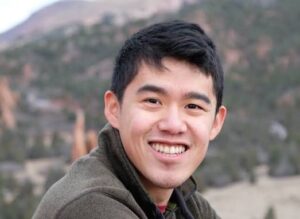
Tony Chen studied computer science at MIT, then wrote software for the US government while running a doomed basement aquaponics experiment on the side (unfortunately, all of the fish perished).
He and his college roommate, John Constantino, turned the hobby into a company in 2018 after realising how much data Norwegian salmon farms were sitting on and how little of it they could actually use.
Manolin builds AI-powered health analytics for aquaculture, spotting sea lice outbreaks, predicting disease and giving farmers a real-time look at what’s happening across their region.


