


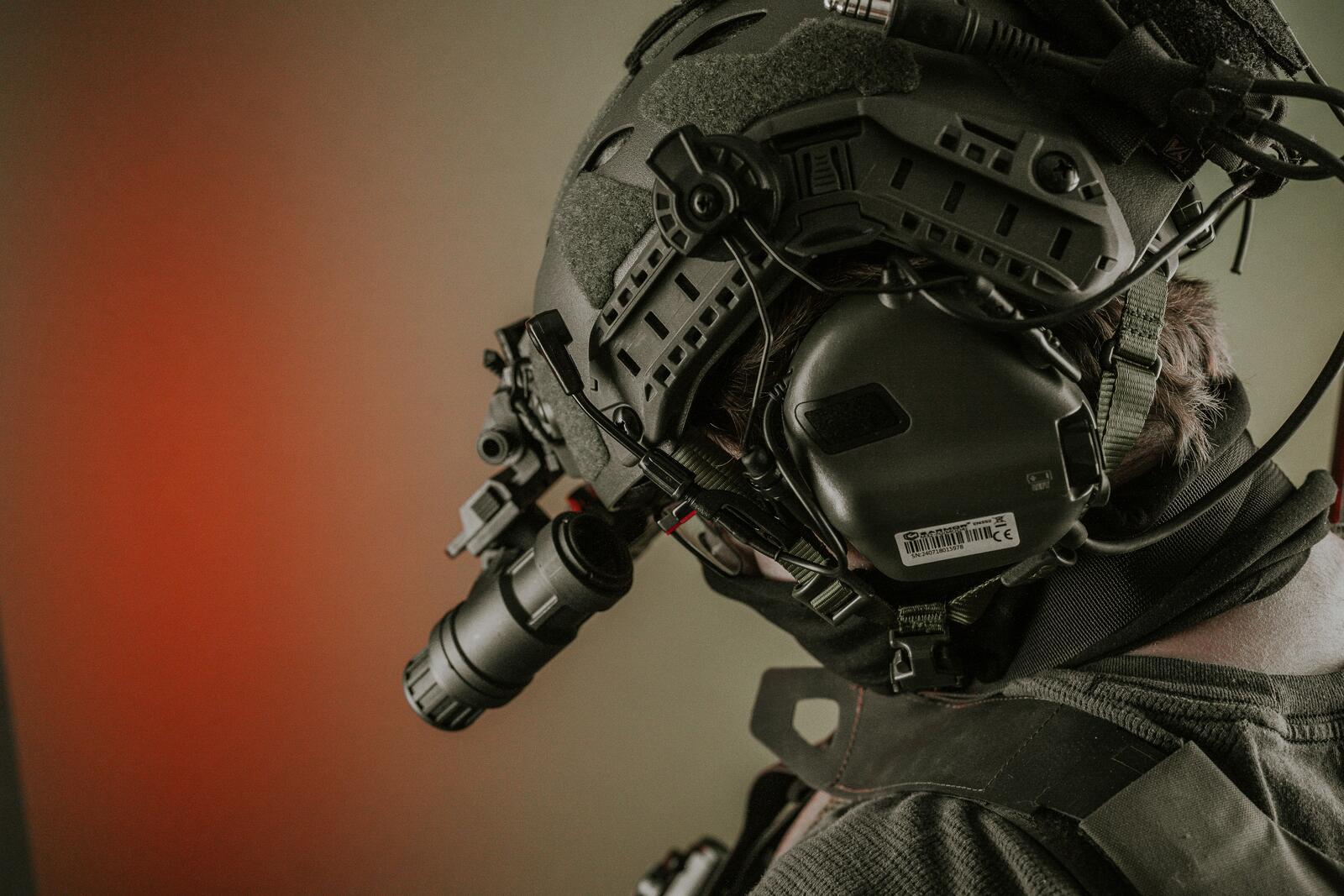
National security is being fundamentally transformed in an age of geopolitical uncertainty, contested sea lanes, and rapid technological change.
They can’t count on population size or piles of conventional hardware anymore. Instead, the cutting edge of military superiority is increasingly being defined by software agility, quantum precision, autonomous systems and secure real-time communications.
Singapore’s Defence Sector Development And The Dual-Use Imperative
For decades, Singapore has held a formidable defence posture in Southeast Asia, historically relying on deterrence through high-tech hardware and a strong national service model. However, the city-state’s defence architecture has evolved rapidly as regional security dynamics and modern warfare have moved into electronic, subsea, space, and algorithmic domains. Traditional military contractors and sovereign defence labs are no longer the sole drivers of defence preparedness. Most importantly, Cap Vista, the strategic investment arm of Singapore’s Defence Science and Technology Agency (DSTA), along with dedicated innovation hubs and strategic investment vehicles, points to a crucial paradigm shift toward dual-use venture ecosystems.
Singapore’s small landmass and relatively small population mean strategic tech force-multipliers are essential. This creates an urgent need to tap commercial deep-tech startups whose agile R&D pipelines can adapt cutting-edge commercial breakthroughs for defence, intelligence, and sovereignty preservation. Singapore fosters a homegrown ecosystem of dual-use startups, allowing for rapid technology adoption, sovereign control over crucial IP and resilience against supply chain disruptions during times of crisis.
More from Startups
- Founder Of The Week: Danny Jenkins
- Top 10 Agritech Startups In South Africa To Watch In 2027
- Startup of the Week: Rainbow Crops
- 8 Startups Crowdfunding w/c 28.09.2026
- Top Aerospace Startups In Saudi Arabia
- The Top 7 Debt Recovery Startups To Keep An Eye On
- Top AI Startups In Australia To Watch In 2027
- Founder Of The Week: Xile He
Top Defence Tech Startups In Singapore
Singapore has a lot of notable defence technology startups. These startups are embedding commercial breakthroughs involving quantum mechanics, synthetic AI, subsea robotics and laser communications into military frameworks to help build a resilient, technological deterrence model for the modern era.
Atomionics

The reliance on the Global Positioning System (GPS) is a critical vulnerability in modern warfare where adversarial jamming, spoofing and anti-satellite capabilities can instantly blind military assets. Atomionics uses quantum mechanics in order to tackle this operational challenge. Atomionics uses the wave nature of cold atoms to detect minute differences in gravity and to perform inertial navigation with very high accuracy, producing ultra-precise quantum sensors. In defence, this allows submarines, unmanned underwater vehicles (UUVs), armoured vehicles and aircraft to manoeuvre with surgical precision through subterranean environments, deep ocean trenches and heavily jammed airspace without requiring external satellite signals.
Transcelestial

Traditional radio frequency (RF) communications are becoming more vulnerable to electronic warfare, spectrum congestion and interception. Transcelestial has transformed wireless networking with its proprietary Centauri laser-communication platform. Transcelestial harnesses deep-space laser technology to project invisible, ultra-secure optical beams that transmit multi-gigabit data over long distances without physical cables. This gives the defence forces an ultra-secure, zero RF footprint communications network.” These directional laser links operate outside the radio spectrum and are thus virtually immune to RF jamming, direction-finding interception and electronic counter-measures, making them critical to forward operating bases and resilient tactical networks.
BeeX

But as maritime domain awareness becomes a key factor for regional stability, the protection of underwater infrastructure and coastal surveillance is critical. BeeX is developing sophisticated Hovering Autonomous Underwater Vehicles (HAUVs) with advanced edge AI. Unlike traditional remotely operated vehicles (ROVs), which require tethered support ships and manual piloting, BeeX platforms navigate autonomously in challenging subsea conditions, currents and zero-visibility waters. In national defence, BeeX software and hardware are used to inspect critical infrastructure such as subsea communication cables and energy pipelines, support harbour security, conduct hull reconnaissance, and detect mines autonomously.
Bifrost

Modern military AI models depend heavily on computer vision for drone navigation, satellite imagery classification and autonomous target recognition. However, real-world battlefield datasets are often impossible to obtain, sensitive or cost-prohibitive. Bifrost overcomes this bottleneck by creating hyper realistic 3D synthetic environments and data generation pipelines. Bifrost’s generative technology enables defence developers to quickly generate complex operational scenarios, from contested urban combat zones to rare environmental conditions, to train computer vision algorithms. It enables military artificial intelligence to recognise camouflage, detect unusual vehicle placements, and navigate GPS-free environments before it encounters them in real combat.
Subnero

Radio waves die out almost immediately in water so communicating underwater is one of the toughest problems that the Navy has to deal with. Subnero has developed software-defined acoustic communications and underwater networking solutions that provide reliable wireless delivery of data beneath the surface of the ocean. They have reconfigurable acoustic modems that enable a range of naval systems, such as underwater sensors, sea-floor sensors and autonomous vessel swarms, to form flexible, ad-hoc networks. This sub-surface command-and-control architecture is a key part of coordinated subsea surveillance, quiet undersea intelligence collection and maritime mine countermeasures.
Seventh Sense

Where the stakes are high and tactics must be decisive, intelligence processed at a remote data center can inject latency that field operatives simply cannot afford. Seventh Sense focuses on ultra-lightweight algorithms for computer vision and face recognition that run locally on low power and resource-constrained edge devices. Their technology would make wearable body cameras, tactical drones and field sensors real-time threat detection tools in defence applications. Operatives can do identity verification, crowd behaviour analytics and threat recognition right at the point of action without high-bandwidth connectivity to central servers.
Aliena

While satellite miniaturisation has democratised access to space, small satellites have traditionally lacked the propulsion needed to maintain orbit or manoeuvre tactically. Aliena is developing ultra compact, high efficiency electric propulsion engines for small and micro-satellites. Military operators can deploy platforms into Very Low Earth Orbit (VLEO) using satellite constellations with Aliena’s propulsion systems. The closer the operating distance to Earth, the greater the tactical benefits, including ultrahigh resolution satellite imagery, lower signal latency for satellite intelligence, surveillance and reconnaissance (ISR) and the ability to make rapid orbital adjustments to avoid tracking or space debris.


