


The goal with most technology has pretty much always been to make devices better, faster, more capable and just all-around smarter, and the same goes for smartphones. They’ve become our cameras, maps, wallets, entertainment centres, calculators, news sources, personal assistants and, for many of us, the first thing we reach for in the morning and the last thing we look at before bed (whether we like to admit it or not).
But over the last few years, there’s been a growing feeling that we may be allowing our cell phones to become a little bit too good at their jobs. We’re at the point where there’s very little they can’t do, and because of that, we simply don’t go anywhere or do anything without them.
As concerns about children’s screen time, social media use and online safety continue to grow all around the world, a different kind of smartphone is starting to attract attention. Rather than giving users access to absolutely everything and relying on parental controls to limit what they can do, some devices are taking a more restrictive approach from the outset.
For instance, recent partnership between electronics brand TCL and UK mobile technology business Rebel Telecom is one example. The companies have introduced a child-focused version of the TCL K70 5G that runs on RebelOS, a custom Android operating system that excludes social media and unrestricted internet browsing altogether. Children can still make calls, send messages, use maps and access more than 300 vetted apps, but parents in control of managing screen time, approved applications and location through a companion app.
It’s a practical response to a genuine concern, particularly when it comes to children, but a more significant concern is that we seem to be looking for more and more ways to make our phones less capable, rather than simply learning to use them differently. Or, dare I say it, just using them less.
The Growing Appeal of Dumb Phones
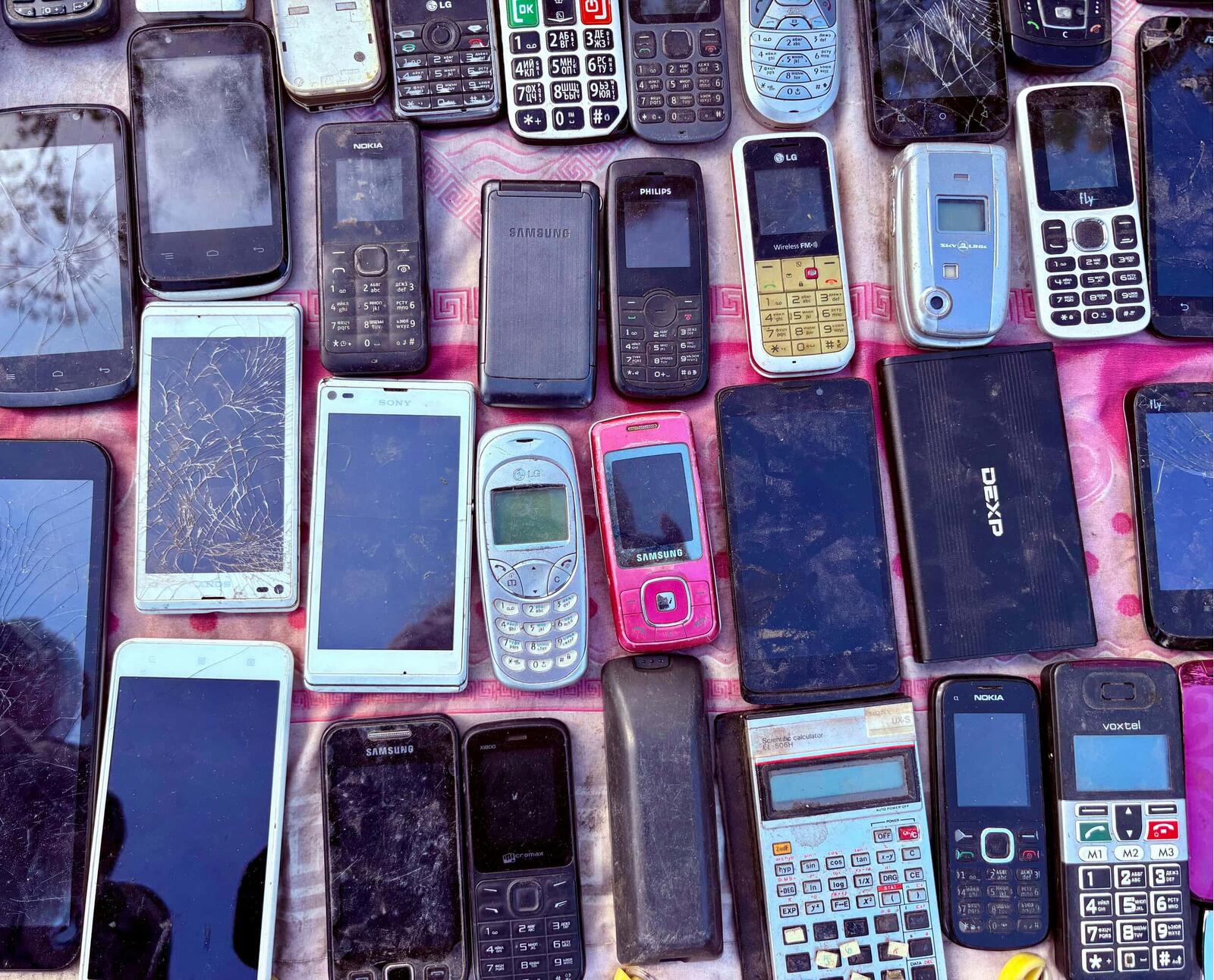
This isn’t just about parents trying to manage their children’s screen time. There’s also a growing interest in something that’s been around for decades, it’s just that our perception of them has changed: we’re talking about the humble dumb phone.
Unlike smartphones, dumb phones (sometimes called feature phones) generally offer a much more limited range of functions. Things like calls, texts, perhaps a basic camera, music player or navigation feature, but no endless social media feeds, sophisticated apps or constant stream of notifications.
And that’s precisely the appeal to a surprising number of people. Indeed, there’s a growing market for minimalist phones that are specifically designed to strip away the features that make smartphones so difficult to put down. Some people are swapping their iPhones and Android devices for basic handsets altogether, while others are keeping their smartphones but then using a second, simpler phone when they want a break from the digital world.
It’s not necessarily about rejecting technology or wanting to go back to the days before the internet. Rather, it’s about being more selective about what technology we actually need.
After all, do we really need access to Instagram, TikTok, emails, online shopping, games and a dozen other distractions every time we pick up our phones to check the time or send a message? Probably not, but I’m not sure we need an entirely different phone for less access either.
More from Tech
- Women In Tech: Top 9 Women In Adtech In 2026
- Top Cleantech And Energy Startups In Sweden To Watch In 2027
- How Technology Is Changing The Future Of Personal Mobility
- Harmless Escape Or Real-Life Cost? The Gaming Debate GTA VI Just Reignited
- UrbanTech Explained: Technologies Changing The Way Cities Work
- Can LEGO Make Imagination Programmable? The Classic Toy Gets A Digital Makeover
- A 167-Year-Old Maths Problem Has Reportedly Been Proven With AI: Why Are Tech Leaders Now Talking About Superintelligence?
- How Automotive Technology Is Powering The Japanese Car Industry
Have Smartphones Become Too Good At Keeping Us Hooked?
One of the biggest problems with modern smartphones is that they’re not simply tools we use when we actually need them. They’ve become a gateway to platforms and services that compete for our attention, and we’re finding it incredibly difficult to resist the tempatation to login.
And perhaps it’s not entirely our fault, because social media platforms, in particular, are designed to keep people coming back. Endless scrolling, personalised recommendations and notifications give us very little natural reason to stop. There’s always another video, another post or another piece of content waiting.
And it’s not necessarily that people don’t want to put their phones down; it’s more that doing so can be surprisingly difficult when the devices in our pockets are intentionally built around keeping our attention. And so the the appeal of dumb phones is rather telling of our own human nature. Instead of relying on willpower, users can remove some of the temptation altogether, because if there’s no social media app to open, there’s no possibility of losing an hour scrolling through a feed. Of course, that’s not going to solve everyone’s relationship with technology, but it does offer a different approach to managing it.
Are We Better Off With Less?
We can’t help but notice that there’s something quite ironic about using increasingly sophisticated technology to make our lives less connected. We’ve spent years developing smarter devices, only to start looking for phones that deliberately do less and offer less access to things we once dreamed of. But that may also be less backwards than it initially sounds.
Smartphones are incredibly useful, and few people would seriously argue that we should abandon everything they offer. they give us access to maps, banking, communication tools and information wherever we go has made everyday life considerably easier. But the problem is that all these useful features sit alongside an enormous number of distractions, and for many, many people, separating the two is becoming difficult.
I’m not sure that the answer is just to swap every smartphone for a basic handset. Maybe, the solution is being more intentional about what we allow our devices to do. That could mean using a dumb phone, restricting certain apps, switching off notifications or keeping social media off our home screens. And for some people with great self-control, it may just be logging in less often.
Ultimately, we shouldn’t have to make our phones less smart to become smarter about using them, but if the growing appeal of dumb phones tells us anything, it’s that having access to absolutely everything, all the time, isn’t necessarily making our lives better, and it’s simply not what we thought it would be. Technology should give us more control over our time, not leave us constantly fighting to get it back, feeling like our lives are lacking something and making us feel unfulfilled.


