
For decades, psilocybin and MDMA were locked away in the same legal category as heroin: Schedule 1 drugs with no medical utility. Today, that narrative is shifting, as emerging clinical research dismantles the rationale behind their prohibition.
Randomised trials have reported large, rapid effect sizes for psilocybin in treatment-resistant depression and for MDMA in PTSD, with symptom improvements sustained months after single or very few dosing sessions. NICE – the National Institute for Health and Care Excellence – is evaluating psilocybin for the treatment of severe, resistant depression. UK universities including Cambridge and King’s College London have launched Home Office-licensed trials. UK biotech companies have raised tens of millions to advance psychedelic compounds through clinical development, and specialist VC funds focused specifically on psychedelic medicine have launched in the UK.
For years, the industry’s central question was simple: Is this real? The answer is now a resounding yes. The trial data is sound, the results are significant and regulators are paying close attention, but a tougher challenge looms. Efficacy is no longer the primary obstacle; the new challenge lies in solving the operational puzzle required to make these therapies widely accessible.
Psychedelic-assisted therapies require long, intensive, therapist-led sessions. They can’t be delivered through an app, a prescription or a fifteen-minute GP consultation. And the NHS, which already can’t meet demand for conventional talking therapies, has no obvious workforce or commissioning infrastructure to deliver them at scale.
Clinical Promise Meets NHS Reality
The clinical evidence for psychedelic-assisted therapies is stronger than many people realise, and more qualified than the investment narrative sometimes suggests.
Systematic reviews find positive signals across depression, PTSD and some addiction indications, but consistently call for larger, phase 3, double-blind trials to confirm efficacy and safety at population size. The trials conducted to date have been small, often open-label and in highly selected patient populations. That’s appropriate for early-stage research, but not sufficient for NHS commissioning decisions.
The difficulties surrounding implementation are deep-seated and structural, persisting regardless of the strength of the clinical data. Even if NICE issues a positive recommendation for psilocybin in treatment-resistant depression – which would be a significant moment for the field – the NHS would then face the task of training therapists capable of delivering preparation, dosing and integration sessions, securing appropriate facilities, building commissioning models that can fund multi-hour therapeutic encounters and designing data governance frameworks for recordings of highly sensitive psychological sessions. None of those things exist at the scale required – most of them don’t exist at all.
The capital flowing into the UK’s psychedelic biotech sector is substantial, and a significant portion is fuelling rigorous, evidence-based scientific research. But commercial incentives and clinical development timelines don’t always point in the same direction. The risk that the field identified by critics is that rapid VC funding accelerates premature productisation. Digital platforms designed to scale a therapy before the therapy itself has been validated at population level, or before the therapist training standards exist to ensure quality and safety across a distributed delivery network.
We asked founders and practitioners working inside the psychedelic medicine space to address the infrastructure question directly.
More from Tech
- Top Deep-Tech Startups In Finland To Watch In 2027
- Are VoIP Calls Secure? Let’s Talk About Who Could Be Listening
- The Tech That Shapes F1 Car Performance From Circuit to Circuit
- From Alton Towers To Thorpe Park: The Technology Bringing Theme Parks To Life
- Women In Tech: Top 10 Women In EdTech In 2026
- Why Is It So Hard To Put Tech Down? The Design Choices Behind Our Attention
- Can A Trading App Truly Be Risk-Free When Real Financial Habits Are On The Line?
- The Tech F1 Teams Use To Prepare For Unfamiliar Tracks
Our Experts
- Natalya Gevorgyan, The Magic Church
- Derek Chase, Founder and President, Psilouette
- Robert Grover, Co-Founder, The Journeymen Collective
Natalya Gevorgyan, The Magic Church

“The biggest challenge facing psychedelic medicine is no longer proving that a compound can produce a clinical effect. The challenge is building the infrastructure required to support those effects safely and consistently at scale.
“Much of the public discussion focuses on regulatory approval, but approval is only the beginning. Psychedelic therapies are unusually dependent on preparation, supervision and follow-up. Unlike a conventional prescription, outcomes are shaped not only by the intervention itself but also by what happens afterward. Our computational analysis of over 19,000 public psychedelic experience reports found that psychological vulnerability and help-seeking peak consistently in the 48 to 72 hours after a session – a window that current clinical protocols and regulatory frameworks largely ignore.
“The organisations most likely to succeed will not necessarily be those with the most novel molecule. They will be those that solve implementation challenges: scalable models for therapist support, digital tools that improve continuity without replacing human judgement, and governance frameworks that help identify and respond to risk during vulnerable post-treatment periods.
“The future of psychedelic medicine will depend on whether the field can build systems that are as sophisticated as the compounds themselves. If they do not advance together, the field risks creating demand that existing healthcare systems are not prepared to meet.”
Derek Chase, Founder and President, Psilouette

“Psychedelic medicine is advancing along three parallel tracks that don’t always agree with each other. The first is the therapeutic track: licensed clinicians working with clients through state-regulated systems or privately within harm reduction frameworks. The second is the pharmaceutical track, where companies are developing proprietary compounds and patentable therapy protocols that can be standardised and monetised within a for-profit model – this track has capital and regulatory infrastructure behind it, but critics argue it’s solving a problem that doesn’t exist. The third is the research track, where universities and medical institutions are generating the evidence base that will ultimately shape regulation.
“Platforms built around specific diagnosed conditions – rather than broad consumer wellness – are best positioned to survive. The ketamine space offers the clearest working models. Joyous, Mindbloom and Journey Clinical have demonstrated what a sustainable operation looks like: telehealth prescribing through licensed providers, structured preparation and integration, symptom tracking, therapy support, insurance billing and standardised medications sourced through legal pharmacies. These aren’t wellness apps – they’re healthcare platforms that happen to use psychedelics, which is precisely why they’ve survived regulatory contact.
“Three things need to change for this category to scale. Regulation must become more flexible without becoming less rigorous. The workforce needs to expand beyond the narrow facilitator model currently required in programmes. And insurance coverage is non-negotiable for access at scale. Without reimbursement pathways, psychedelic medicine will remain a boutique offering regardless of how compelling the clinical evidence becomes.”
Robert Grover, Co-Founder, The Journeymen Collective
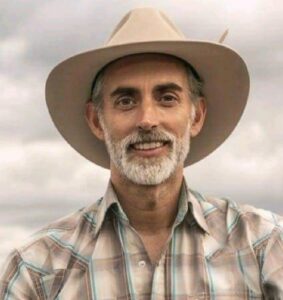
“We work with leaders who have carried depression and anxiety for most of their lives – people who have moved through therapy, medication and every credible intervention available to them. So we hold a particular vantage point on the scaling question the field is now facing.
“The clinical promise is real. The delivery problem is more formidable than the investment narrative admits, and the reason sits in the part nobody can compress. The medicine itself occupies a small fraction of the actual work. The preparation, the human presence during the session and the months of integration afterward carry the rest – and that is precisely the part that resists scale. It depends on trained, present, genuinely skilled guides, and those people take years to form.
“Our honest concern is that commercial pressure pushes the category towards patentable analogues and platform-led delivery before the human infrastructure exists to hold it safely. Technology can support scheduling, screening and continuity of care. The encounter at the centre stays human.
“The category fulfils its promise when workforce development is funded with the same seriousness as the molecules. Build the guides first. The rest follows from there.”
For any questions, comments or features, please contact us directly.