


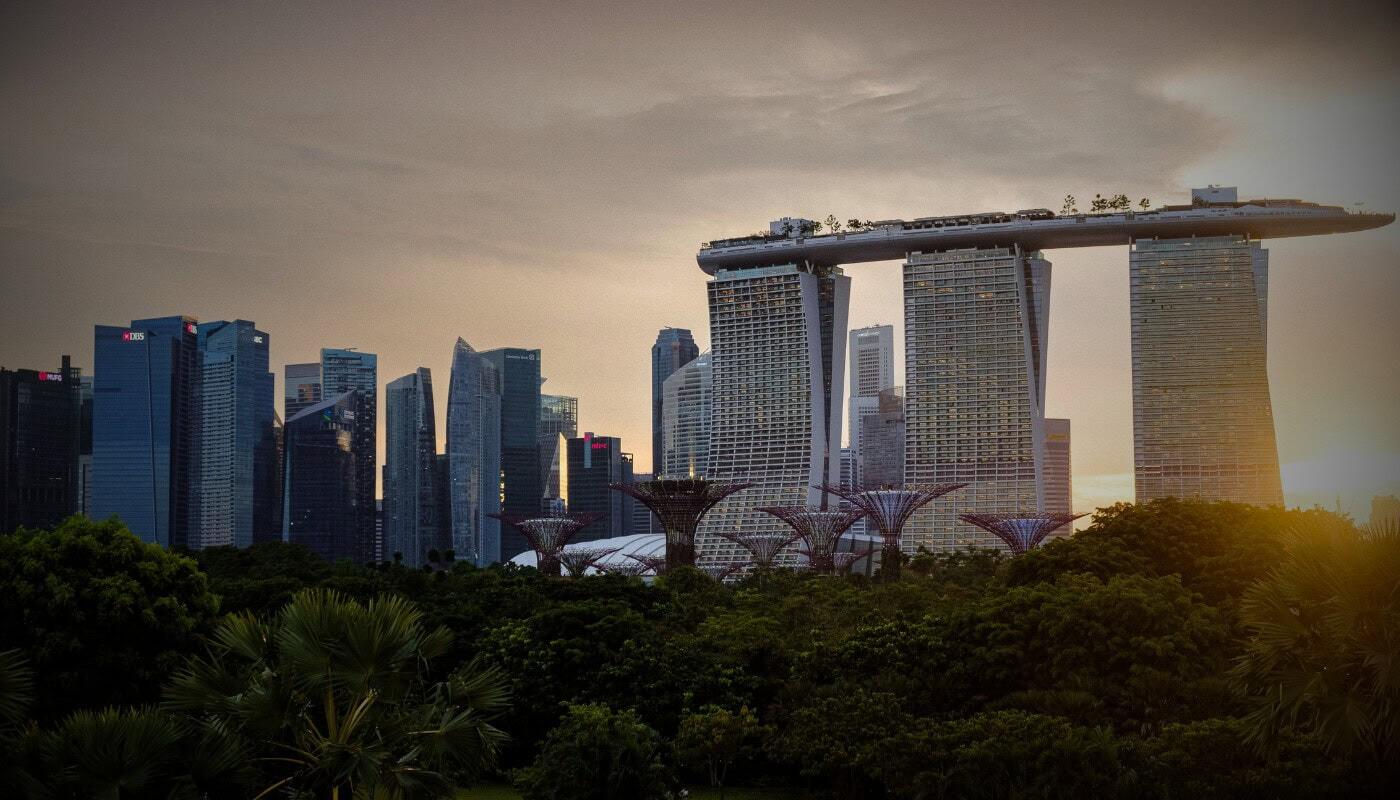
Singapore wants to go green in a big way, but there’s a hitch too: it’s kind of out of space. Whenever a compact island nation hits a geographic wall, importing solutions becomes the default move, and power generation is no exception.
On 26 October, regulators at the Energy Market Authority handed Sembcorp Utilities approval to import up to 1.3GW of low-carbon electricity, eyeing Malaysian solar and Vietnamese offshore wind for a 2035 start. The premise couldn’t be simpler: Singapore can’t grow enough clean power at home, so some of it has to come from nations that can.
The approval is conditional, which leaves plenty of work to do. The project still needs sign-off from relevant jurisdictions, power purchase agreements with buyers and financing to match. Power from Vietnam would pass through Malaysia on its way to Singapore. Until all of that is in place, 2035 is just a target, not a delivery date.
Why Is Singapore Importing Its Clean Power?
Even with solar panels on every available roof, local solar is expected to meet only about 3% of Singapore’s power needs by 2030, and cloud cover doesn’t help. Importing electricity allows the city-state to spread its bets and decarbonise without tying itself to a single fuel or supplier.
Those import targets have climbed quite a bit. Singapore initially targeted 4GW of low-carbon electricity imports by 2035, roughly 30% of expected supply, before bumping the figure to around 6GW. By August 2026, the Energy Market Authority had conditionally approved 13 separate projects totalling 9.25GW, with clean power coming from Australia, Cambodia, Indonesia, Malaysia and Vietnam.
The latest approval adds a cross-border twist to that strategy. Offshore wind generated in Vietnam would route through Malaysia, which acts as both a recipient and a transit country, while Malaysian solar would be backed by battery storage. It’s a shared regional corridor across three countries, and whatever goes wrong along the way lands on the grid at the receiving end.
More from Tech
- Hidden Ship Activity In The Strait Of Hormuz Dodged Standard Tracking – How Did Satellite Radio Data Catch It?
- Women In Tech: Top 8 Women In Biotech In 2026
- The F1 Technology Gold Rush: The Growing Value Of Motorsport Partnerships
- Designed for Every Mind, Or Just the Average User? How Technology Is Rethinking Cognitive Accessibility
- Top Agtech Startups In Ireland To Watch In 2027
- The Convenience Paradox: Is Technology Giving Us Time Back?
- The Supersonic Comeback: Can Modern Aviation Solve Concorde’s Biggest Problems?
- Are We Taking Noise Cancellation Too Far? Why Open-Ear Audio Technology Offers An Alternative
Energy Security Without Energy Independence
Imports may widen Singapore’s options, but experts are careful about how much security they buy. Josephine Liu, Chair of the Asia Pacific Technology Policy Committee at the Association for Computing Machinery, has a clear view of what 1.3GW can and can’t do:
“Given its natural constraints, Singapore is far from energy independence. With most of its electricity generated from imported natural gas, 1.3GW of renewable imports could strengthen energy security by providing more choices, rather than making it self-sufficient.”
She adds that Singapore still has to balance security against affordability and sustainability. Renewable electricity isn’t automatically cheaper or safer once backup capacity, infrastructure and geopolitics are factored in.
With data centres and AI expanding across Southeast Asia, she sees reliable power as central to Singapore’s standing in technology and finance.
One Corridor, Many Moving Parts
Liu is more concerned about the route the power takes:
“My bigger concern is the combination of technical and political risks. Although electricity comes from different countries and technologies, it still relies on a common transmission corridor through Malaysia. What happens if that corridor is disrupted, or neighbouring countries face their own energy shortages? Whose national interests take priority? Commercial agreements cannot eliminate these uncertainties.”
Her answer is regional cooperation. Liu argues that mutual dependence between Singapore and its neighbours, through bodies such as ASEAN and APEC, can balance political leverage. However, she notes those shared interests aren’t yet enough to secure Singapore’s supply.
She also says diversifying into other technologies, nuclear included, and building partnerships with China and the US would give Singapore more room to manoeuvre.
Power Lines Versus Pipelines
Not everyone sees imported renewables as a new source of risk, though. Wesley Herche, PhD, Founder at Sovereign Futures, describes Indonesia’s October reduction in pipeline gas exports to Singapore as a fossil fuel problem as opposed to an energy one. In his view, oil and gas move through supply chains that can be attacked or blockaded, and sellers facing shortages will always put their own needs first.
“Importing wind and solar does not trade that risk for a new one. When countries have cut power to their neighbours, as Iran did to Iraq and Russia to Finland, it was petrostates passing gas shortages and war down a transmission line.
“No country has ever had to cut off a neighbour because it ran out of sunshine and wind.”
A Grid That’s Still Being Drawn Up
With approval in hand, the project’s backers still have the hardest part ahead of them: turning a conditional green light into signed contracts and funded infrastructure. Each step will test how well a three-country corridor works once it leaves the project plan.
Liu’s caution and Herche’s confidence will both be tested by the fine print of those agreements. Nine years is a long time in energy, and the agreements signed before then will show how firmly Vietnam, Malaysia and Singapore are prepared to tie their grids together.


