


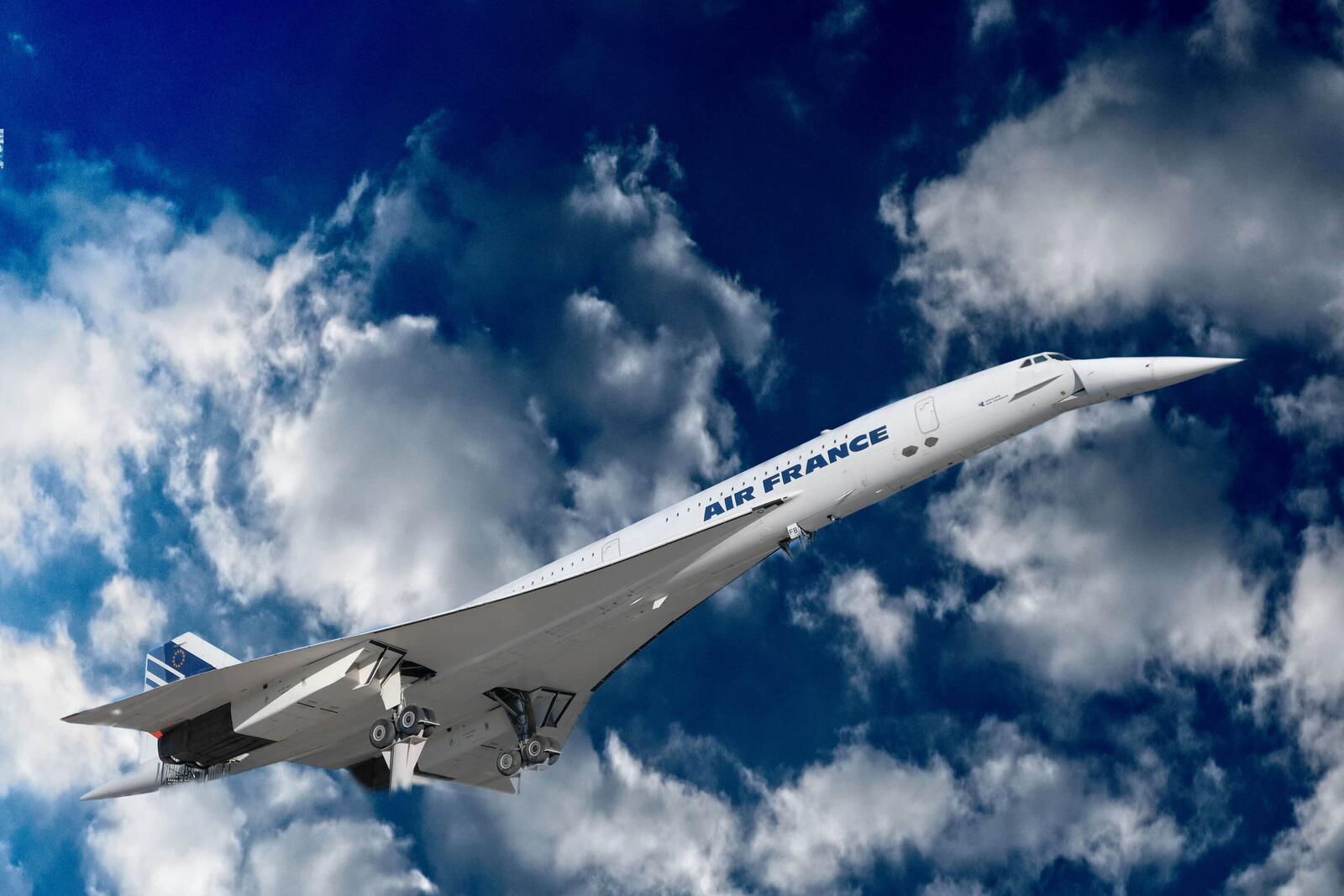
British Airways operated its final Concorde service on 24 October 2003, according to the Smithsonian National Air and Space Museum. Concorde could cross the Atlantic in under four hours, roughly half the time of a conventional passenger jet, but bringing that speed back to commercial aviation has proved harder than building a pointy plane.
Boom Supersonic wants to make faster transatlantic travel possible again, while NASA is testing whether aircraft can fly faster than sound without subjecting everyone underneath to a sonic boom. Concorde was loud, thirsty and expensive. Modern engineering might help with all three, although a better computer still can’t talk a shockwave out of existing.
The Boom Problem, Or Why Nobody Wants A Supersonic Plane Overhead
Civilian supersonic flight over land has been generally prohibited in the US since 1973 because of sonic booms, apart from flights authorised under specific conditions. NASA’s experimental X-59 is designed to investigate whether a specially shaped aircraft can replace the disruptive boom with a quieter thump.
Its unusually long nose and engine mounted above the fuselage help shape the shockwaves, while cameras and screens replace a conventional forward-facing cockpit window. The aircraft first flew supersonically on 5 June 2026, reaching approximately Mach 1.1, before reaching Mach 1.4 at 55 000 feet a week later. These are the conditions NASA plans to use for future flights over communities, where researchers will study how people respond to the sound.
Boom is pursuing a different approach as its XB-1 demonstrator broke the sound barrier in January 2025 without producing a sonic boom audible on the ground during that flight, according to the company. It attributes this to “Mach cutoff”, where atmospheric conditions, speed and altitude can bend pressure waves upwards. However, that doesn’t mean Overture will be able to fly supersonically over land in every condition.
The US Federal Aviation Administration proposed a new noise-based standard on 30 June 2026 that could allow qualifying civil supersonic flights over land. It aims to finalise its rules by mid-2027, but the proposal isn’t permission for routine commercial supersonic flights over land.
NASA still needs to establish what the X-59 sounds like on the ground, while Boom’s XB-1 demonstration was one flight under specific atmospheric conditions. Getting a quieter boom from a test aircraft is one thing; making it work reliably across commercial routes is another.
Verdict: Promising, but not proven. The technology is getting closer, but passengers will have to wait for the noise tests to catch up.
More from Tech
- Are We Taking Noise Cancellation Too Far? Why Open-Ear Audio Technology Offers An Alternative
- Apple’s First Foldable Is Cracking For Some Owners – What Does It Show About Launching New Hardware To Stay Competitive?
- Beyond Roblox: Are Digital Platforms Addressing Online Grooming?
- Satellite Data Is Becoming A Business Tool – What Can Companies See From Space?
- Why FinOps Alone Cannot Control Modern Data Platform Costs
- How Technology Is Used To Engineer Faster Running Shoes
- Teach Anything Visually: Build Explainer Clips With Text-to-Video
- Top Maritime, Ocean And Aquaculture Tech Startups In Norway To Watch In 2027
The Fuel Bill And The Power Station Funding Overture
Concorde’s fuel consumption was brutal by modern airline standards. The Smithsonian records average consumption of one ton of fuel per seat. Many flights also operated half full, while the average return ticket cost more than $12 000 by 2003; speed really came at a serious price.
Boom says Overture will be compatible with up to 100% sustainable aviation fuel (SAF), which can reduce lifecycle emissions depending on how it’s produced. It won’t, however, remove the energy demands of supersonic flight.
There’s another unusual part of Boom’s business. Its Symphony aircraft engine shares approximately 80% of its hardware with Superpower, the company’s planned 42-megawatt natural gas turbine for electricity generation. Boom says the shared technology will help both programmes, with its energy business providing another commercial opportunity while it develops Overture.
The quickest route back to Concorde might involve a power station along the way, but another challenge is getting the cost per passenger down without sacrificing the speed that makes supersonic travel appealing.
Verdict: Still a headache. Sustainable fuel can help with emissions, but it won’t make the aircraft’s energy demands disappear.
Cheap Seats Were Never On The Menu
Concorde could accommodate up to 100 passengers, although the Smithsonian records capacity for just 60 on the Paris-to-Washington route. High fares and limited passenger numbers made it difficult to operate economically. The 2000 Air France Concorde crash and the downturn in international travel after 9/11 added even more pressure.
Boom’s planned Overture cabin will have 60 to 80 premium seats, with fares the company says should be similar to today’s business-class tickets. It reports orders and pre-orders totalling 130 aircraft from United Airlines, American Airlines and Japan Airlines.
But these commitments aren’t completed deliveries and Boom’s proposed fares are still a target rather than a price passengers can book today. With just 60 to 80 seats, Overture is being designed for travellers who can justify paying more to arrive sooner.
Verdict: Premium travel, not mass-market flying. Concorde’s successor isn’t coming for the economy cabin.
The Business Case For Supersonic Travel
Concorde made crossing the Atlantic in under four hours look almost routine, provided you could afford the ticket. Bringing that speed back means solving problems that a sleek design and a faster engine can’t fix on their own.
NASA is chasing a quieter thump, Boom is working towards an aircraft that can carry paying passengers and the industry still needs to find a way to make supersonic travel commercially viable.


