


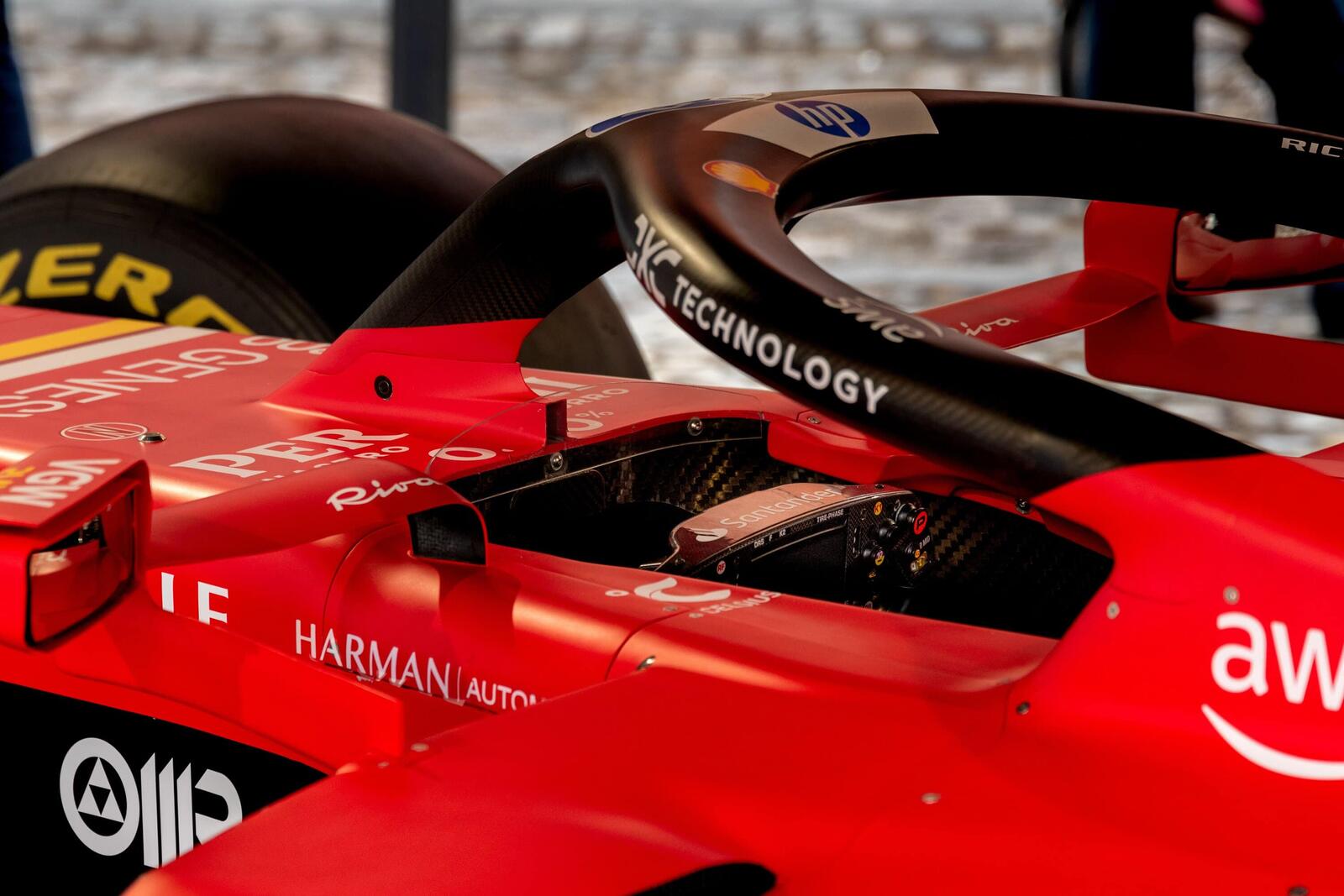
What do a racing bicycle, football technology, a prosthetic limb, a spacecraft, a factory and the car sitting in your driveway have in common? Actually, Formula 1 has something to do with all of them. Teams are constantly working on things like aerodynamics, materials, data and energy, and some of those ideas have ended up being useful in places that have very little to do with racing.
Formula 1 has highlighted examples in cycling, medicine, and road cars. Some of the connections are obvious once you know about them, while others are quite a bit harder to spot.
Why Does F1 Technology End Up Outside Racing?
Formula 1 teams spend a lot of time trying to solve very specific problems, whether that means reducing drag, making a part lighter or finding a better way to manage energy. The technology developed to do that can be highly specialised, but the ideas behind it aren’t necessarily limited to racing.
That’s because F1 is basically a testing ground for engineering, where even small improvements can make a difference. A lighter material, a better understanding of airflow or a more efficient way of using energy can all have uses beyond the car itself. Sometimes those connections are planned from the start, while in other cases technology developed for one purpose finds a use somewhere completely different.
Where Else Can F1 Engineering Be Used?
F1 technology doesn’t always stay within the world of motorsport. Companies are able to take ideas from the sport and adapted them for areas including cycling, sport, medicine and manufacturing, with some of the connections being a lot less obvious than others.
It’s usually the engineering behind the technology that can be adapted, rather than just taking an F1 component and putting it somewhere else. Ideas around aerodynamics, materials, data, energy and efficiency can all be useful when solving problems in other industries. So, what does this actually look like?
More from Tech
- Same Car, Different Driver: The Tech Behind F1’s Custom Set-Ups
- From Web3 Hype To Commercial Advantage: How The Next Phase Of Emerging Technology Will Be Won
- Who Controls The Thermal Skies? The Security And Privacy Questions Behind SatVu’s New Satellite
- The Drone Technology Helping Farmers Cover More Ground In Less Time
- F1’s Pitlane Has Its Own Race, And Technology Is Driving It
- Top Deep-Tech Startups In Finland To Watch In 2027
- Are VoIP Calls Secure? Let’s Talk About Who Could Be Listening
- The Tech That Shapes F1 Car Performance From Circuit to Circuit
1. Biking
F1’s obsession with aerodynamics doesn’t just stop at the circuit, cycling is another place where getting air to behave can make a noticeable difference, especially in time trials where riders are spending so much of their effort fighting drag. The shape of the bike and the position of the rider can both affect how much resistance they have to deal with.
Formula 1 has previously worked with cycling company Specialized on the S-Works Venge racing bike, using its experience with aerodynamics to help develop a faster bicycle. There’s also technology that has travelled from cycling into F1, with TechCrunch reporting that Neural Concept’s aerodynamic software was first used to help develop a highly aerodynamic bicycle before being adopted by some F1 teams.
2. Football
The connection isn’t that F1 engineers are secretly designing football boots between races. It’s that the technology used in both sports often come back to the same conclusions around weight, materials and aerodynamics.
Football boots are starting to be made with lightweight, performance-focused materials, with the same attention going to the weight and performance of the ball. PUMA says its ULTRA 5 Carbon boot uses a carbon-fibre outsole and was developed using engineering insights from its motorsport work.
FIFA states that it uses computational fluid dynamics, 3D scanning and testing to study how a football’s shape and surface affect its movement through the air. So while an F1 car and Football obviously have very different jobs, they both rely on engineers understanding how shape and materials affect performance.
3. Prosthetics
Carbon fibre is one of the materials that links F1 with prosthetic limbs. In F1, it’s praised for being strong without adding unnecessary weight, which makes it useful for parts of the car where both strength and weight matter.
Prosthetics have also become much more technology-focused, with sensors being used to track things like movement, pressure and the way a person is walking. A review published by PubMed found that sensors such as inertial measurement units and force sensors are being used to help prosthetic devices understand movement and improve how they respond.
4. Space
F1 and space technology might seem worlds apart (literally), but their engines have more in common than you’d expect. Both rely on extremely high-speed machinery, where managing things like heat, pressure and vibration becomes a major part of making the engine work.
NASA says the turbopumps inside its RS-25 rocket engine spin at nearly 35,000 rpm. In the same comparison, NASA puts Formula 1 engines at around 19,000 rpm. That level of speed is probably the main part of what makes F1 engines so highly engineered, with teams having to carefully manage the heat, pressure and forces created when the engine is operating at such high speeds just as NASA has to with their rocket engines.
5. Factories
You probably wouldn’t expect F1 technology to have anything to do with making toothpaste, but some of the thinking behind a fast pit stop can also be used in a factory.
Formula 1 says McLaren Applied Technologies worked with GSK to analyse the process of changing between different toothpaste products, which originally took two hours and essentially stopped production. By using computer simulation to look at how the factory team worked, McLaren helped create a new seven-step process that cut the changeover time by 60%.
It’s a really cool and unexpected example of how F1 technology can be about more than the car itself, with the planning, timing and analysis used in racing also helping people work out how to make everyday production more efficient. So, next time you squeeze some toothpaste onto your toothbrush, there’s a tiny bit of F1 thinking behind it.
6. Hybrid Cars
Hybrid cars use a petrol engine alongside an electric motor, with a battery storing electricity that can be used to help power the car. According to the U.S. Department of Energy, regenerative braking allows the car to recover some of the energy normally lost when braking and send it back to the battery, rather than losing it as heat.
That same idea is used in F1, where energy recovered under braking can be stored and used again to help power the car. The technology has developed very differently in road cars and F1, but the basic principle is similar, with both using energy that would otherwise be lost and putting it back to work.
F1 Technology Goes Further Than You Think
F1 might be built around racing, but the technology behind it clearly doesn’t stay on the track. What starts with trying to make a car faster can end up influencing things that have nothing to do with racing at all.
It’s so easy to not even give it a second thought because we tend to think of technology in terms of where we first see it. But a piece of engineering doesn’t necessarily stay there, and F1 tech shows us a perfect example of how something developed for a very specific purpose can eventually find its way into everyday life.


