


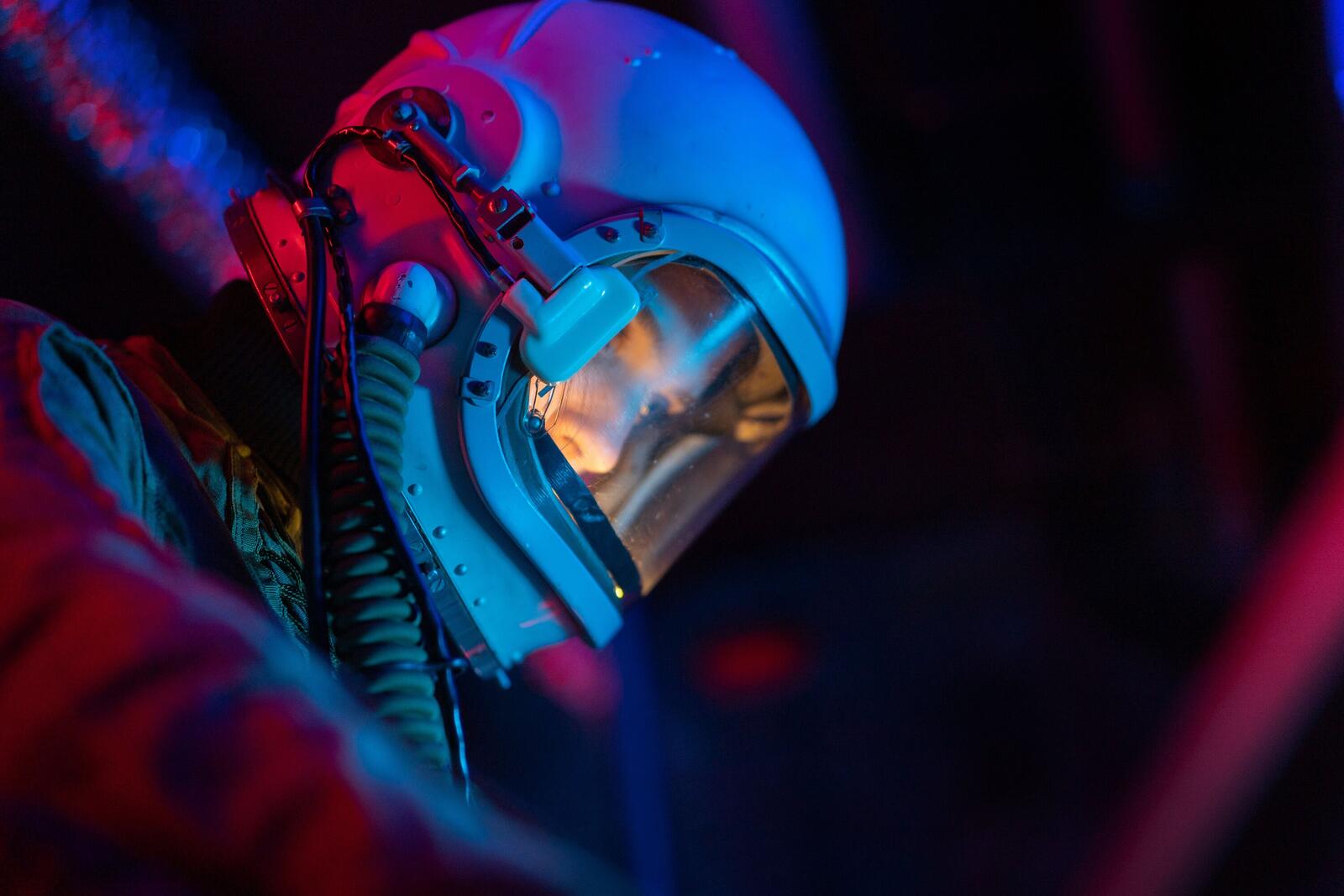
At Airbus, a Mars rover prototype is being driven around a test area with a Steam Deck, which is probably the last place most people would expect to see one outside a bedroom, game room or someone insisting they’ll stop playing after the next level.
The handheld isn’t going to Mars and it isn’t replacing the rover’s autonomous systems. Airbus engineers are using it to control a prototype while they test the vehicle on Earth, but the strange pairing says quite a lot about the technology finding its way into modern space engineering. When you’re building machines for another planet, clearly not every useful tool needs to have been designed specifically for space.
The Steam Deck Meets Mars
The Steam Deck appeared in a video from YouTuber Tom Scott after he visited Airbus in the UK and was given the chance to drive a rover prototype around a Mars-like test environment. An Airbus engineer first demonstrated the vehicle using a laptop, before Scott took over with a modified Steam Deck running custom software. Recent reporting on the demonstration confirms that the Steam Deck was being used as a control interface during ground testing rather than as part of the rover’s final equipment.
Underneath all the gaming branding, the Steam Deck is a compact Linux-based PC with its own display and physical controls, including thumbsticks, buttons and triggers and in Airbus’ test setup, those controls are being used to move the rover prototype through custom software.
The rover is connected to the European Space Agency’s Rosalind Franklin mission, which is currently planned to launch in 2028 and land on Mars in 2030. The European Space Agency says the rover is being designed for autonomous exploration of the Martian surface, meaning nobody will be steering it from Earth with a controller once it is there. The Steam Deck is there for development and testing, not for the final Martian road trip.
More from Tech
- One Crash, Millions At Stake: The Technology Behind F1’s Costliest Mistakes
- How Can Antivirus Software Guard Against Identity Theft?
- 8 Everyday Tech Inventions Originally Designed For Disabled People
- What Is Multisensory Learning, And How Is Edtech Using It?
- Flying Cars Are Now A Reality, But Is There Really A Market For Them?
- Women In Tech: Top 10 Women In Quantum Computing In 2026
- Self-Reliance By Design: The Best Health Tech Makes You Need It Less
- Volvo Wants To Take Your Hands Off The Wheel By 2030 – What Is Level 2++?
Your Gaming Hardware Has Got Surprisingly Serious
The Steam Deck isn’t the first bit of consumer technology to find an unexpected job in space; NASA’s Jet Propulsion Laboratory says the Ingenuity Mars Helicopter used a combination of custom-made and commercial off-the-shelf components, including processors and other technology derived from the world of cellphones.
Perseverance also has a Qualcomm Snapdragon 801 processor in its Helicopter Base Station. According to research from NASA’s Jet Propulsion Laboratory, the Snapdragon 801 acts as a co-processor alongside Perseverance’s radiation-hardened main computer. Unlike the rover’s main RAD750 processor, the Snapdragon isn’t radiation-hardened, which means the system has to account for the effects of radiation.
That processor has now found another job too. NASA’s Jet Propulsion Laboratory says Perseverance is using the HBS processor to run an algorithm that helps the rover determine its location on Mars by comparing images from its navigation cameras with orbital maps.
That approach makes sense when you look at the amount of consumer electronics – smartphones, laptops and gaming devices are produced for enormous markets, so manufacturers have spent years making processors smaller, faster and more capable.
The Steam Deck Doesn’t Have To Survive Mars
The important part about the Airbus example is that the Steam Deck doesn’t need to survive a rocket launch, months in space or the surface of Mars. It only needs to work while engineers are developing and testing the rover on Earth, where replacing a controller doesn’t require a rescue mission across the solar system.
That gives engineers a lot more freedom to experiment with commercial hardware. A device can be useful during development even if it would never meet the requirements for the final mission.
It also explains why consumer technology can have a role in space without actually becoming space hardware. A laptop, handheld computer or commercial processor can help engineers build, test or operate a system without ever being part of the equipment that eventually leaves Earth.
Mars Is Still A Very Hostile Place For Electronics
None of this means aerospace companies can wander into an electronics shop, grab a trolley and start filling it with gaming equipment for Mars. Electronics heading into space have to deal with radiation, extreme temperatures, vibration and severe power constraints, while equipment also needs to keep working for years without anyone being able to open it up and replace a faulty component.
The Snapdragon 801 used in Perseverance’s Helicopter Base Station shows why commercial hardware needs careful engineering before it can be trusted in space. NASA’s Jet Propulsion Laboratory’s research identifies the processor as non-radiation-hardened, while the system uses it alongside the rover’s radiation-hardened computing architecture.
Commercial technology can therefore bring useful processing power or other capabilities to a space project, but the surrounding system still has to deal with everything that comes with taking that hardware far beyond its intended environment.
When Gaming Hardware Starts Driving Robots
A Steam Deck is basically a small computer with a screen and a set of controls designed to let someone move around a digital world. It turns out those same controls can work pretty well when the thing you’re moving around is a real robot.
Airbus isn’t the only organisation to have made the switch. Disney has also used Steam Decks to control its BDX droids at Galaxy’s Edge, with operators using the handheld to move and control the walking robots.
The robots obviously have very different jobs from a Mars rover, but the reasoning behind the controls makes a lot of sense. If a device already gives someone precise control over something complicated, there’s no reason that something has to stay inside a game.
When Consumer Tech Leaves Earth
Space exploration still depends on highly specialised technology, especially when hardware has to survive launch, operate in space and eventually work on another planet. Consumer electronics aren’t about to replace that, but they can give engineers another pool of technology to work with as processors, sensors and controls become smaller and more capable.
A gaming handheld isn’t going to drive the final Rosalind Franklin rover around Mars, but it can still have a role in getting the rover there. And if Airbus ever stops using that Steam Deck, I’d love to see “used to drive a Mars rover” listed as its job history.


